
How to Layer Living Room Lighting (Without Overthinking It)
Last updated: July 30, 2026
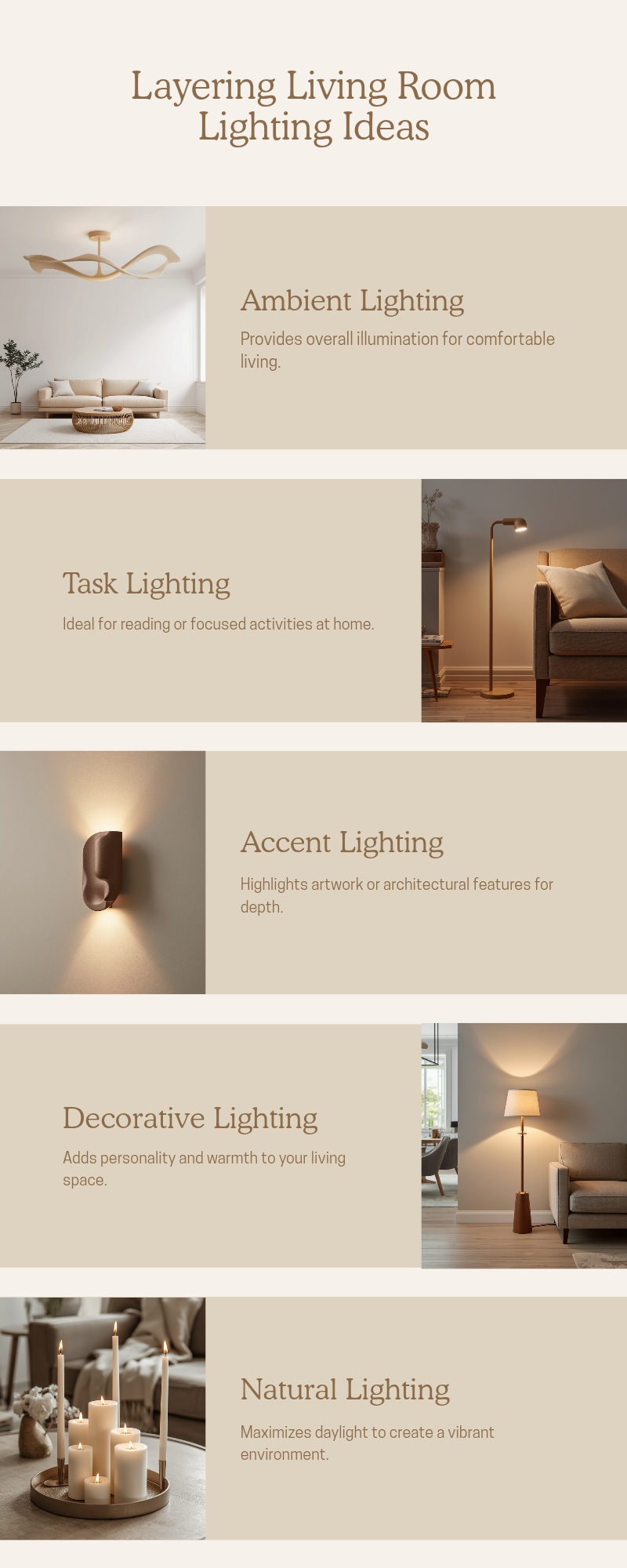
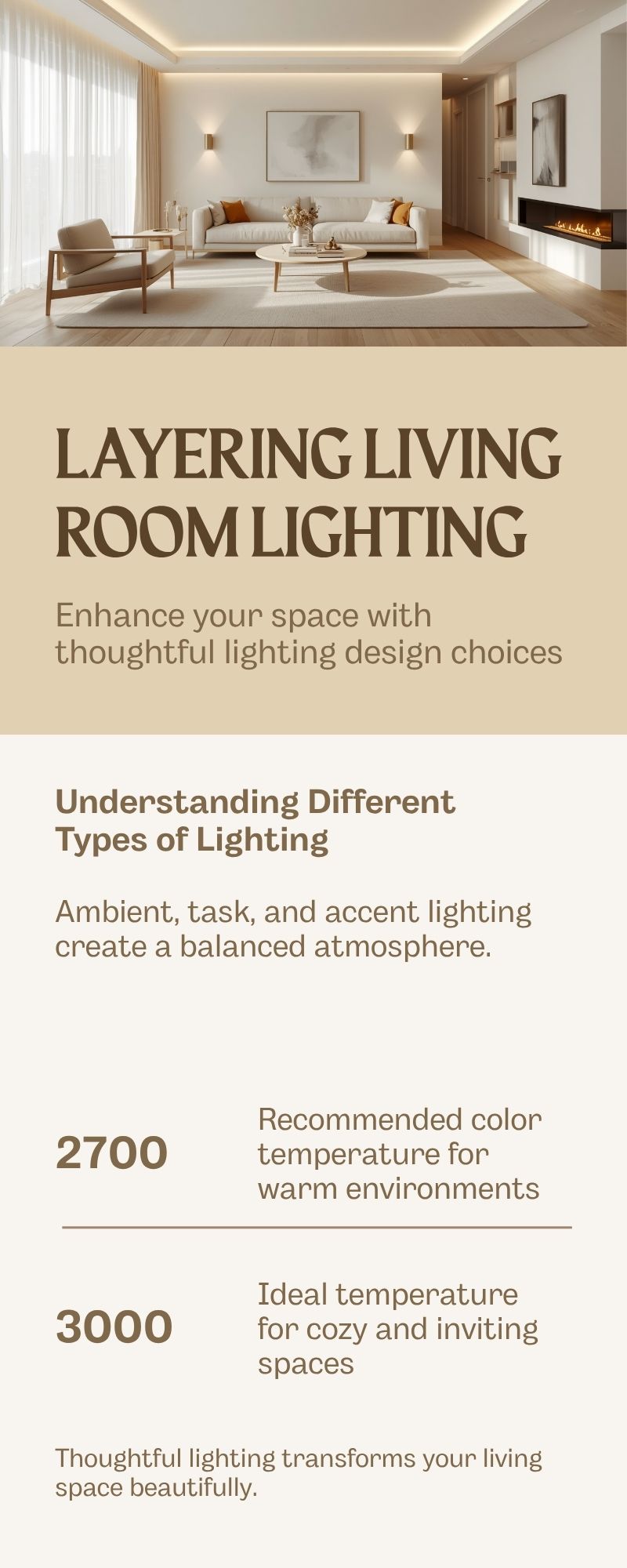
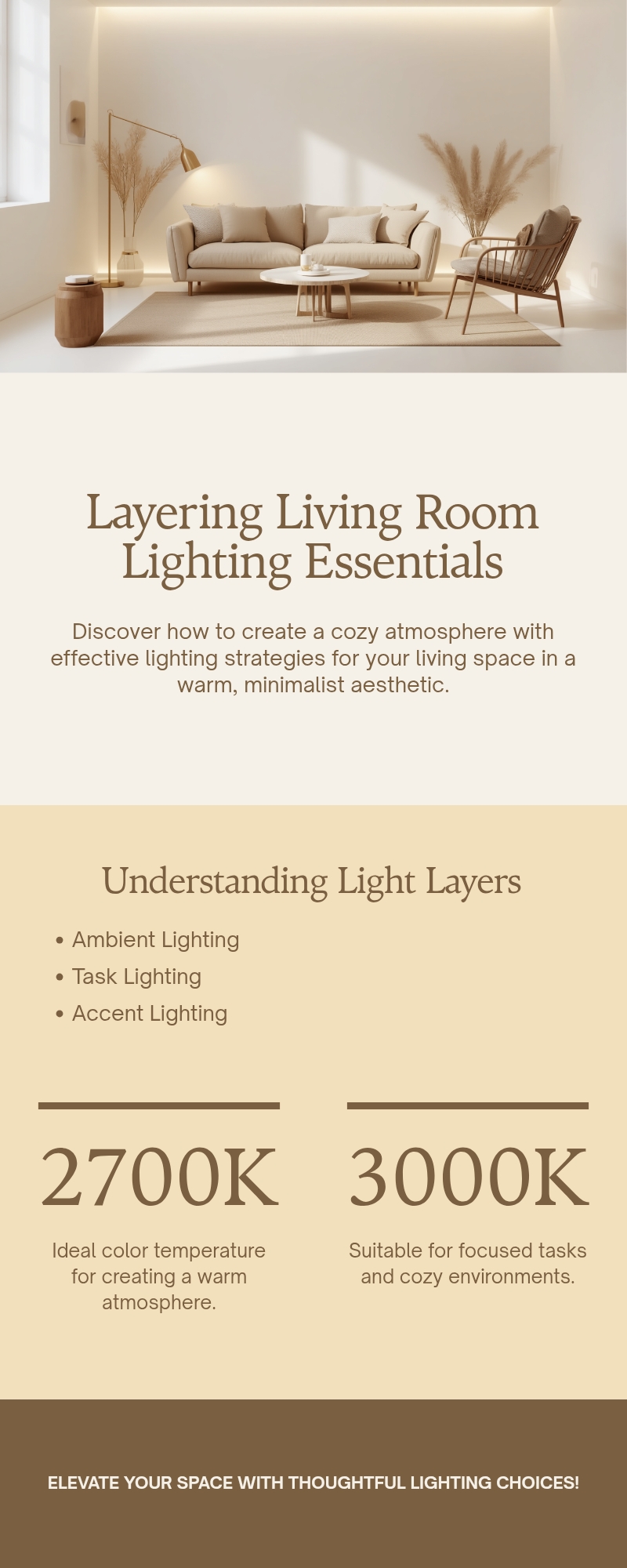
A single ceiling fixture almost never makes a living room feel good. It floods the room evenly, kills shadow and texture, and leaves reading corners either too bright or completely dark. Professional lighting designers solve this with a simple idea: layering. Instead of one light source, you combine three — ambient, task, and accent — so the room adapts to whatever you're doing in it.
Key Takeaways
- Every living room benefits from three light layers: ambient, task, and accent.
- Warm white bulbs (2700–3000K) suit Scandinavian and warm-minimalist interiors.
- The number of fixtures should scale with your room size and furniture zones, not a fixed rule.
Why Living Rooms Need More Than One Light Source
Overhead lighting alone creates flat, shadowless light that can make a room feel more like an office than a home. Layering adds depth: ambient light sets a baseline glow, task light supports specific activities like reading, and accent light adds warmth and highlights the things you actually want to look at — art, texture, a favorite plant.
This is especially important in Scandinavian and warm-minimalist rooms, where the goal is a calm, lived-in atmosphere rather than bright, even illumination.
The Three Layers of Lighting
Each layer serves a different purpose and typically calls for a different fixture type, though all three should share the same warm color temperature.
| Layer | Purpose | Typical Fixtures | Suggested Color Temp |
|---|---|---|---|
| Ambient | Overall room brightness | Ceiling fixture, torchiere floor lamp, cove lighting | 2700–3000K |
| Task | Focused light for an activity | Reading lamp, floor lamp beside a chair, desk lamp | 3000K |
| Accent | Mood and visual interest | Wall sconces, picture lights, small table lamps | 2700K |
Layer 1: Ambient Lighting
Ambient light is your baseline — the light that lets you walk safely through the room and see it as a whole. In many homes this is a ceiling fixture, but a large torchiere floor lamp that bounces light off the ceiling works just as well, and often looks softer.
Aim for even coverage rather than one intense source. If your only ambient light is a single bright overhead fixture, the room will feel harsh the moment the sun sets. Pairing it with a dimmer switch lets you turn ambient light down in the evening while task and accent layers take over.
Layer 2: Task Lighting
Task lighting supports specific activities: reading on the sofa, working at a laptop, doing a puzzle on the coffee table. A floor lamp positioned beside a reading chair, angled so the light falls on the page rather than your eyes, is the classic solution.
Placement matters more than brightness here. A lamp positioned correctly next to a chair does more work than a stronger bulb positioned poorly. If your living room doubles as a home office corner, this is also where a well-placed lamp earns its keep — and if you're planning that layout around a coffee table, keep the lamp's footprint in mind so it doesn't crowd the surface.
Layer 3: Accent Lighting
Accent lighting is the layer most rooms skip, and it's the one that makes a space feel finished. Wall sconces flanking a piece of art, a small picture light, or a low-wattage table lamp tucked into a bookshelf all add warmth without adding brightness. Accent light is usually the dimmest of the three layers — it's there to create contrast and draw the eye, not to light the whole room.
In warm-minimalist interiors, accent lighting often does double duty: a linen-shaded table lamp on a console both highlights a vignette and softens the transition between ambient and task light.
Choosing the Right Color Temperature
Color temperature is measured in Kelvin (K), and it has a bigger effect on mood than most people expect.
- 2700K–3000K (warm white) — Cozy, residential feel. The standard choice for Scandinavian and warm-minimalist living rooms.
- 3500K–4000K (neutral white) — Cleaner, slightly more energetic. Better suited to kitchens or home offices than a living room meant for relaxing.
- 5000K+ (daylight) — Reads as clinical in a home setting; generally avoided in living spaces.
Mixing color temperatures within one room — a 2700K lamp next to a 4000K ceiling fixture — is one of the fastest ways to make a space feel disjointed. Keep every bulb in the room within the same 2700–3000K range.
Layering Lighting by Room Size
Small Living Rooms — Two well-placed sources often outperform three crowded ones. A torchiere floor lamp for ambient light plus one task lamp beside the main seat covers most needs. Wall sconces are a smart accent choice here since they add a layer without taking up floor space — worth considering if you're already working around a narrow layout.
Medium Living Rooms — A ceiling fixture or two pendants for ambient light, one or two task lamps near seating, and a single accent piece (sconce or picture light) is typically enough. This is also the point where a properly sized area rug helps visually anchor each lighting zone to a furniture grouping.
Large or Multi-Zone Living Rooms — Larger rooms with distinct zones — a main seating area plus a reading nook or media corner — need each zone treated almost like its own room, with its own ambient, task, and accent light. If your layout is also built around a TV viewing distance, keep ambient light dimmable so glare doesn't compete with the screen in the evening.
Common Layering Mistakes
Watch out for these before you buy fixtures:
- Relying on one ceiling fixture — it leaves no flexibility for evening or task-focused lighting.
- Mixing color temperatures — warm and cool bulbs in the same room read as mismatched, even if the fixtures themselves coordinate.
- Skipping dimmers — without them, ambient light can't scale down as accent and task lighting take over at night.
- Placing task lamps too far from the activity — a reading lamp across the room does little; it needs to sit directly beside the chair.
- Forgetting accent lighting entirely — this is the layer that makes a room feel designed rather than just lit.
A Layered Lighting Plan at a Glance
This diagram shows how the three layers typically map onto a standard living room layout — ambient light covering the whole space, task light concentrated at seating, and accent light along the walls.
Frequently Asked Questions
How many lamps does a living room need?
Most living rooms work well with three to five light sources total across the three layers — for example, one ambient source, one or two task lamps, and one or two accent pieces.
What color temperature is best for a cozy living room?
2700K to 3000K warm white is the standard choice for a cozy, residential feel, especially in Scandinavian-inspired rooms.
Do I need a ceiling light if I have floor and table lamps?
Not necessarily. A large torchiere floor lamp can provide ambient light on its own, which is a common approach in Scandinavian interiors that favor softer, indirect lighting over a central fixture.
Should living room lighting be warm or cool?
Warm. Cooler, daylight-toned bulbs tend to read as clinical in living spaces and work better in kitchens or offices.
A layered lighting plan doesn't require an electrician or a big budget — it just requires thinking in three layers instead of one. Start with ambient coverage, add task light where you actually sit and read, and finish with one or two accent pieces to give the room warmth after dark.
Sources
- Illuminating Engineering Society, general residential lighting layering principles, retrieved July 2026.
Post a Comment for "How to Layer Living Room Lighting: Ambient, Task, and Accent Explained"