
How to Layer Rugs in the Living Room (Without It Looking Cluttered)
You've got a rug down, the furniture is arranged, and something still feels a little flat. That's rarely a color problem or a furniture problem. It's a texture problem, and layering rugs in the living room is the easiest fix nobody tells you about. Here's how to do it without it looking like an accident.
What Is Rug Layering, Exactly?
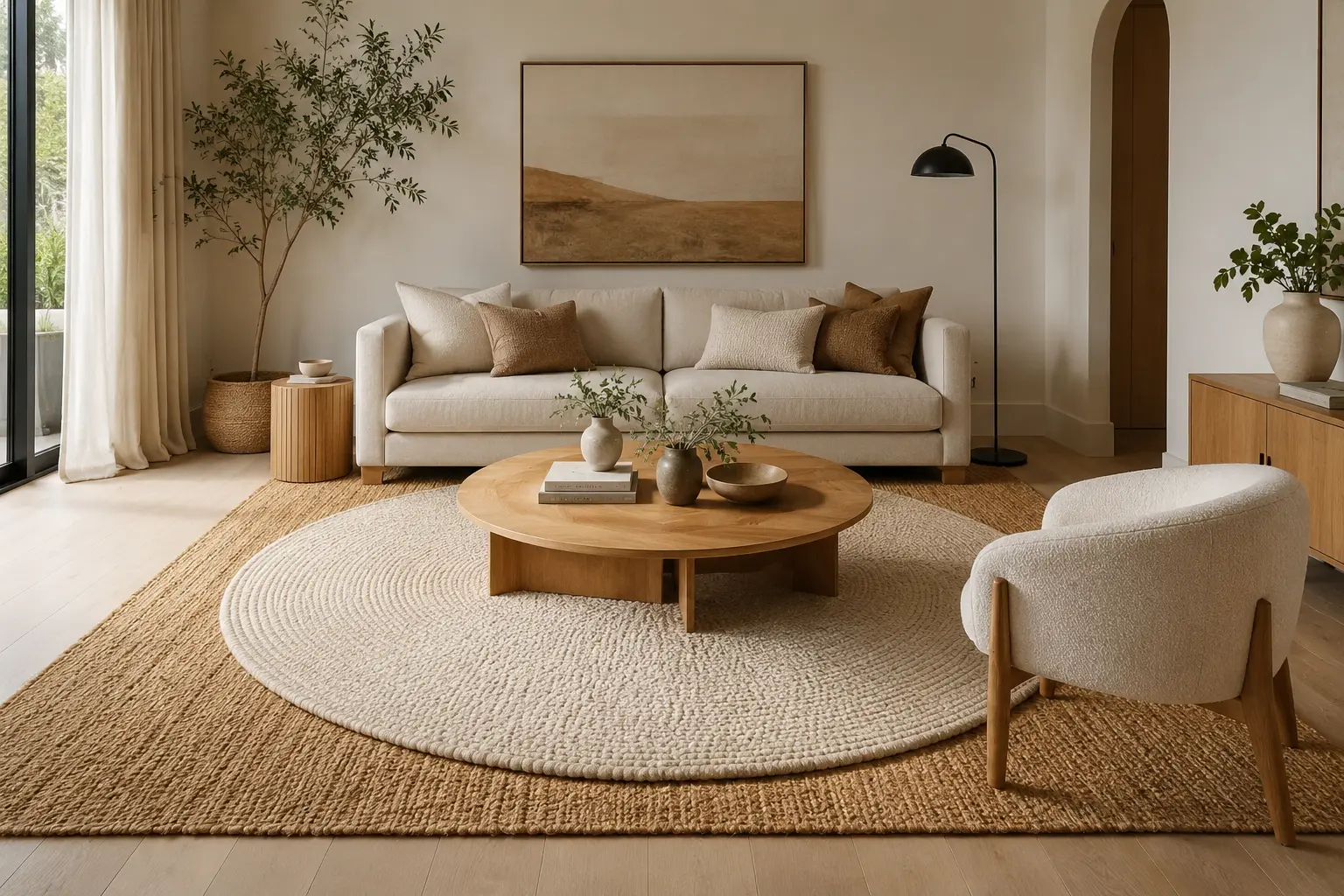
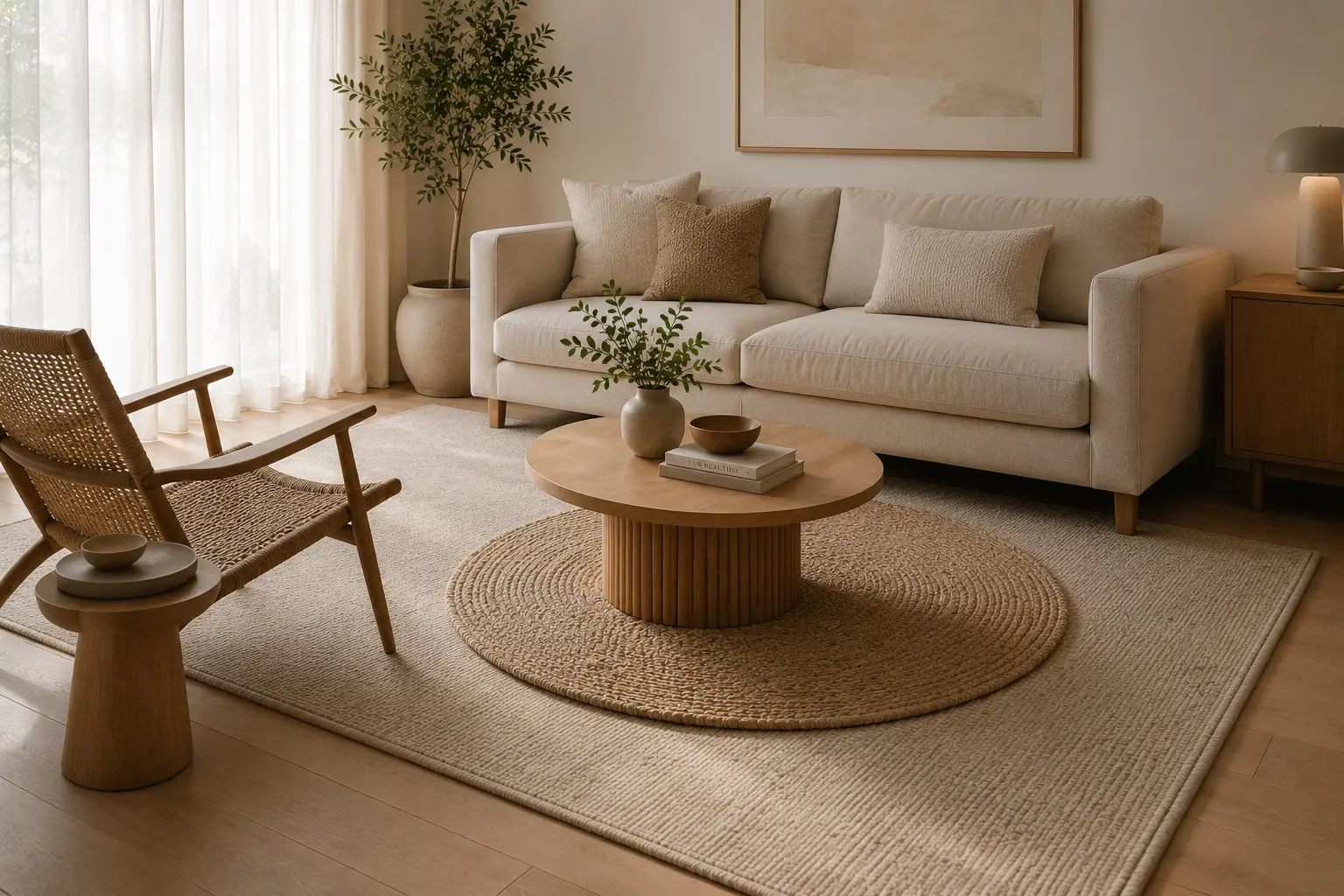
Rug layering is simply placing one rug on top of another. A larger, usually plainer rug goes down first to anchor the room, and a smaller, more decorative rug sits on top of it. Done well, it looks like a deliberate design choice rather than two rugs you couldn't decide between.
It's not a new trick, but it's had a resurgence because it solves a problem a lot of living rooms share: everything is technically "finished," but the space still feels a bit sparse underfoot.
Why Layer Rugs in the Living Room
Adds Depth and Texture
A single rug, no matter how nice, is still one flat plane. Layering introduces height, shadow, and contrast between materials, which makes a room feel considered instead of default-furnished. Even a simple pairing, like a flatweave under a plush rug, adds a dimension a single rug can't.
Defines Zones in Open-Concept Spaces
If your living area flows into a dining space or a reading nook, layered rugs can mark where one zone ends and another begins without adding a wall or a step of elevation. A large base rug under the seating group and a distinct accent rug under a side table or armchair does this quietly and effectively.
Fixes an Undersized Rug
This is the one nobody talks about enough. If you already own a rug that turned out to be too small for your space, layering it over a larger, neutral base rug instantly solves the sizing problem, and gives you an excuse to keep a rug you love instead of replacing it.
The Core Rule: Base Rug + Accent Rug
Every successful layered look follows the same basic structure:
- Base rug — larger, usually more neutral or subdued. Its job is to anchor the seating area and cover the floor space your furniture sits on.
- Accent rug — smaller, more expressive. Its job is to add personality through pattern, color, texture, or shape.
Think of the base rug as the sentence and the accent rug as the punctuation. It should stand out, but it shouldn't be doing all the talking.
Getting the Size Ratio Right
Size is where most layered looks succeed or fail. If the top rug is too close in size to the base, the layering effect disappears. Too small, and it looks like an afterthought instead of an intentional layer.
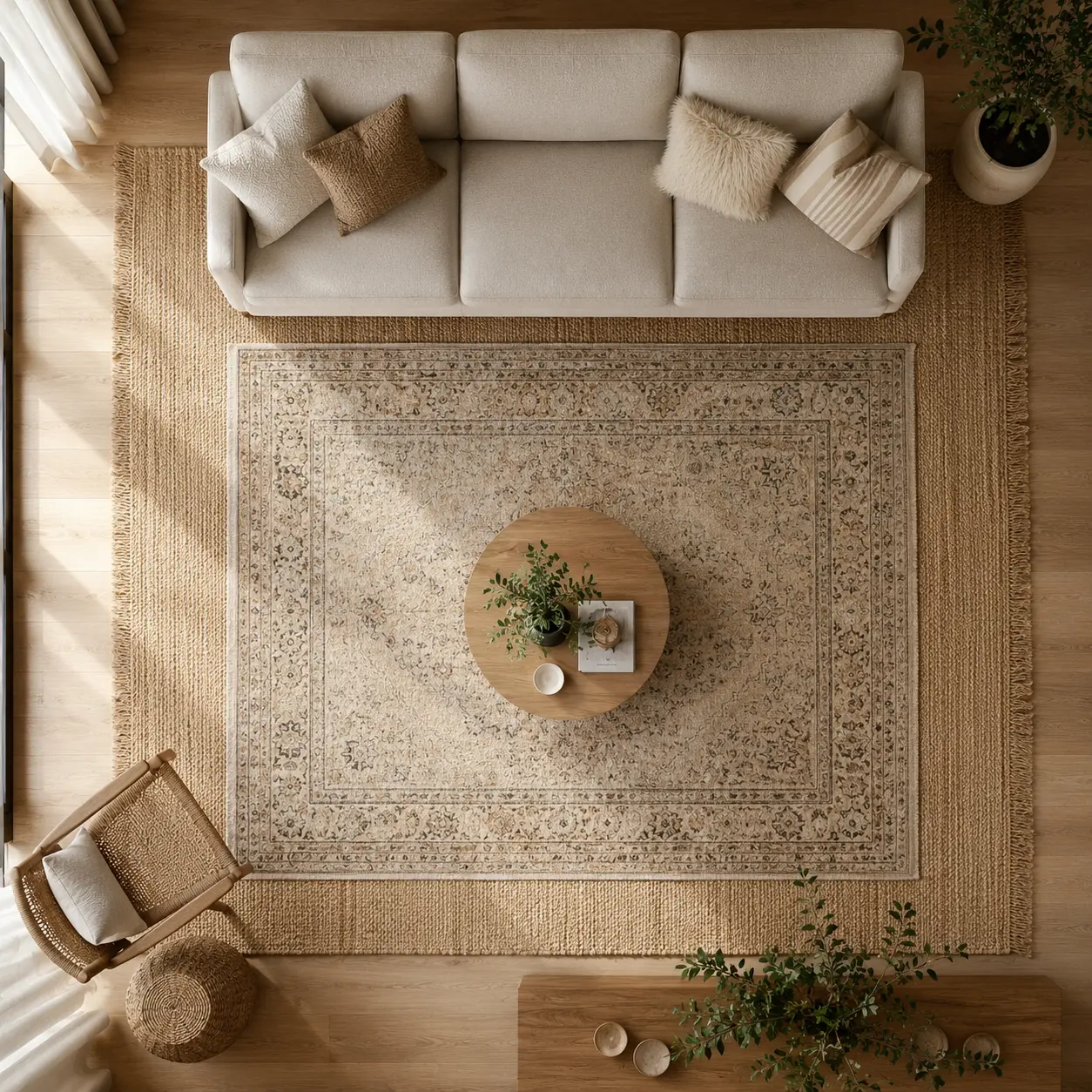
A commonly used starting point: the accent rug covers roughly 60–70% of the base rug's surface, leaving a visible, even border of the base rug on all sides. If you're still deciding on your base rug's footprint in the first place, this guide on choosing the best rug size for a small living room is a useful starting point before you layer anything on top.
| Base Rug Size | Suggested Accent Rug Size |
|---|---|
| 240 x 300 cm (approx. 8' x 10') | 150 x 240 cm (approx. 5' x 8') |
| 200 x 300 cm (approx. 6'6" x 10') | 150 x 200 cm (approx. 5' x 6'6") |
| 170 x 240 cm (approx. 5'6" x 8') | 120 x 180 cm (approx. 4' x 6') |
These are starting points, not fixed rules. Always measure your own furniture footprint before buying.
Layering by Shape
Rectangular Base + Round Top
This is the most common, and most forgiving, combination. A round accent rug breaks up the straight lines of a rectangular base and softens the geometry of the furniture around it. It works especially well centered under a round coffee table, where the contrast in shape reads as intentional instead of random. If you're weighing round against rectangular as your only rug, it's worth reading the fuller comparison of round vs rectangular rugs to understand how each shape behaves before layering them together.
Rectangular Base + Oval or Irregular Top
Oval, hide-shaped, or irregularly cut accent rugs create a similar softening effect to round rugs, but with a bit more visual edge. These work particularly well in more eclectic or maximalist spaces, where a perfectly round shape might feel too tidy against everything else going on in the room.
Layering by Pattern
Pattern layering sounds like it could go wrong quickly, but the underlying principle is simple: contrast the scale, and let color do the connecting.
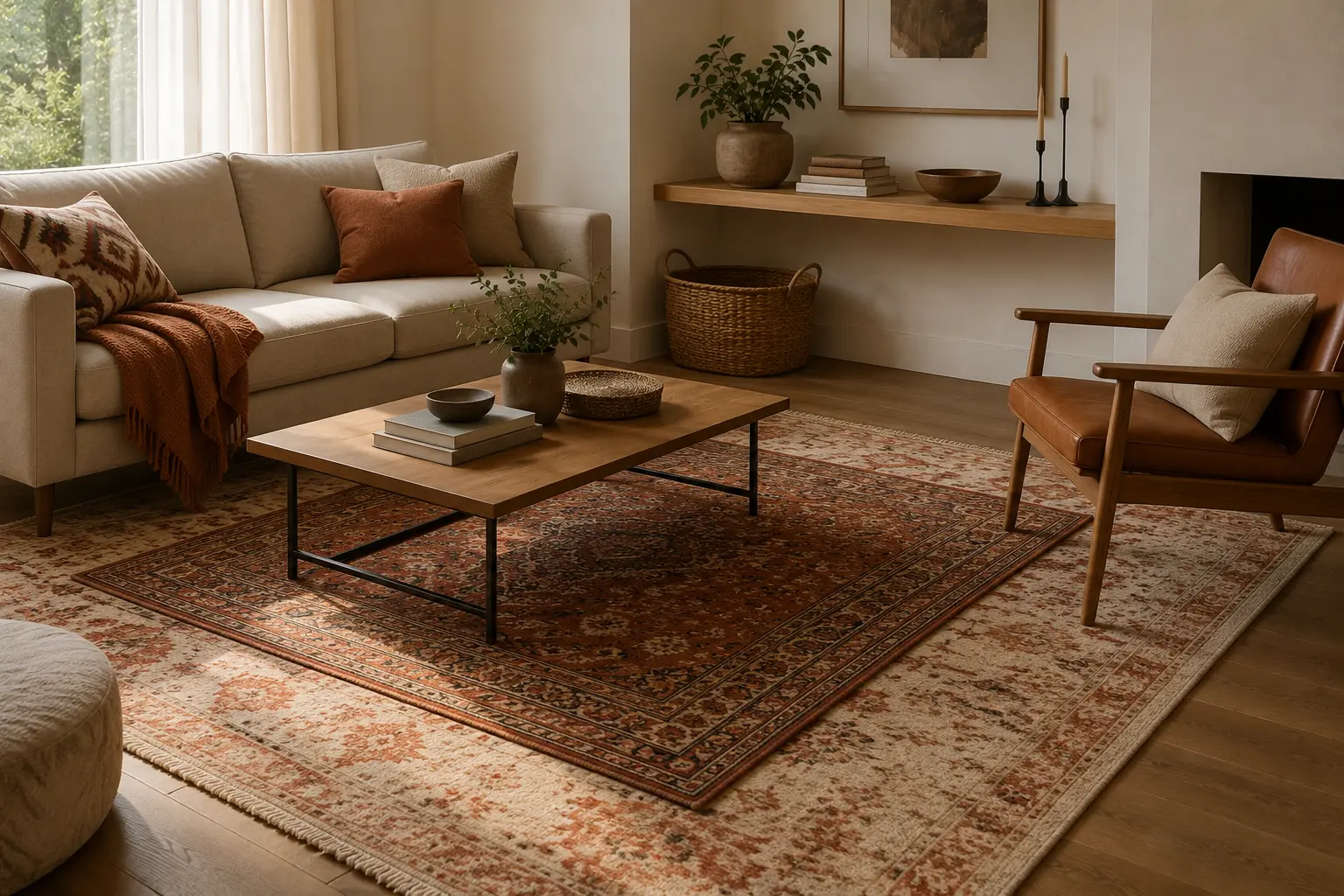
- Start large — use a large-scale pattern (a traditional medallion, a bold weave, a Persian-style design) as your base
- Layer tighter — add a smaller, tighter pattern on top
- Share a color — make sure both rugs share at least one color, so the eye reads them as a pair instead of a mismatch
If pattern-on-pattern feels risky, a solid or lightly textured accent rug over a patterned base is a safer entry point that still creates visual interest.
Layering by Color
Tonal or Neutral Layering
If you want a calm, cohesive look, keep both rugs within the same color family — different shades of the same warm neutral, for example. The colors don't need to match exactly, but they should feel like they belong to the same palette.
Bold, Complementary Layering
If you're comfortable with more contrast, pairing complementary colors can make a layered look feel more energetic. The rule that holds either way: the colors in your rugs should already exist somewhere else in the room, whether in a cushion, a throw, or an accent wall. That's what keeps a bold pairing from feeling random.
Layering by Texture and Material
Texture is arguably the most underrated layering tool, since it works even when color and pattern stay simple.
- Base rug materials — jute, sisal, wool flatweave, which are durable, low-pile, and good for anchoring high-traffic areas
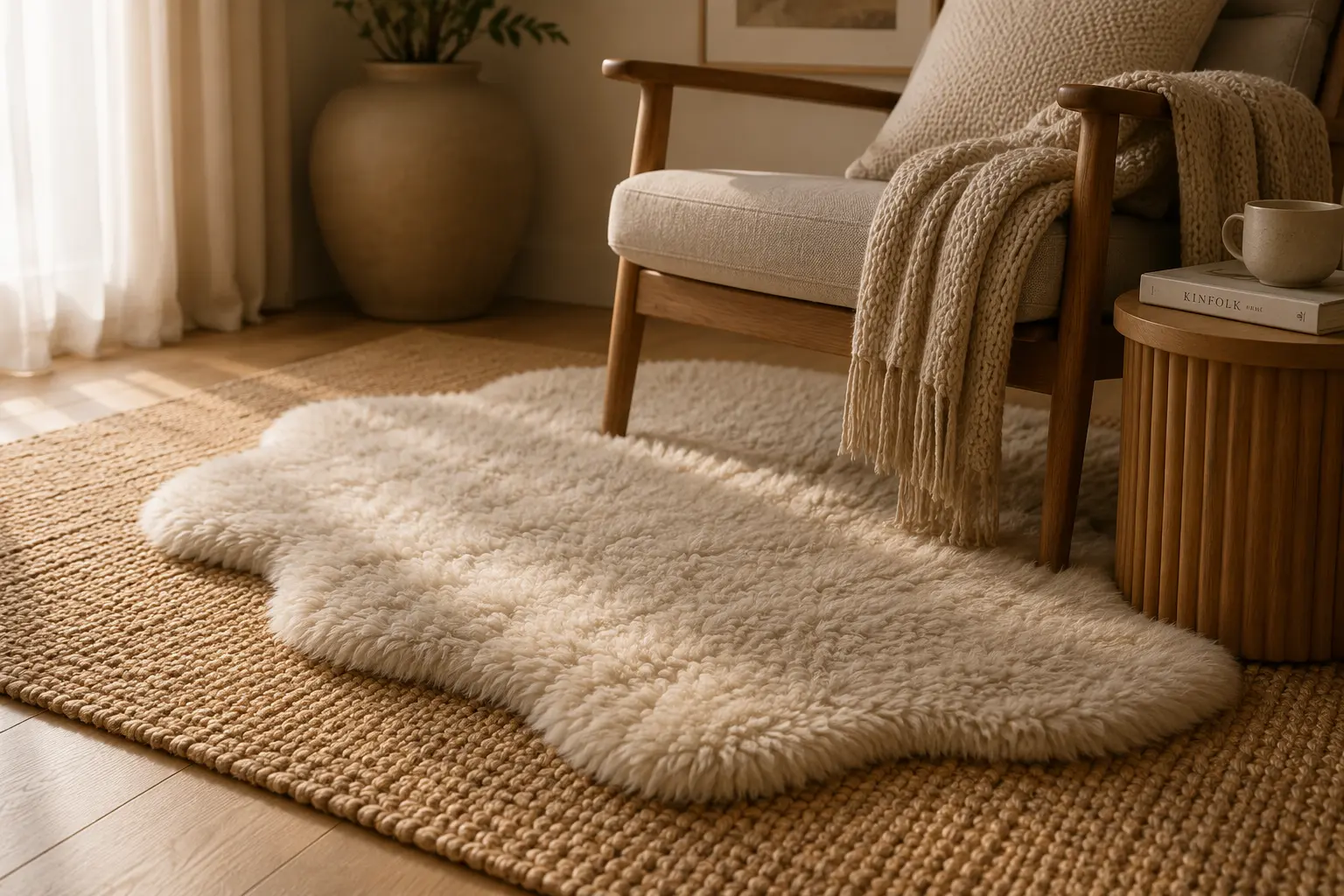
- Accent rug materials — shag, plush wool, sheepskin, cowhide. These see less direct wear, so it's a good place to be a little indulgent
Mixing pile heights is part of the appeal, but keep an eye on thickness. A very thick accent rug stacked on a thick base can tilt furniture legs or become a trip hazard, so if in doubt, go thinner on at least one layer.
Furniture Placement Rules for Layered Rugs
Getting furniture placement right is what makes a layered look feel grounded instead of staged. As a general guideline:
- Front legs on the base — at least the front legs of your sofa and armchairs should sit on the base rug
- Coffee table on top — all coffee table legs should ideally rest on the top rug
- Extend past seating — the base rug should extend at least 45–60 cm (about 18–24 inches) beyond your main seating group
For a closer look at how much of your furniture actually needs to touch the rug, it's worth reading whether furniture should sit on the rug as a general placement principle. The same logic applies whether you're working with one rug or two.
Can You Layer Rugs Over Wall-to-Wall Carpet?
Yes. Layering over existing wall-to-wall carpet is a common and effective way to add texture, define a seating area, or simply refresh the look of a room without pulling up the carpet underneath. Choose a rug in a different color or texture than the carpet so the layering reads as a deliberate choice, and stick to a low or looped-pile carpet as your "invisible" base for the best results.
Common Rug Layering Mistakes to Avoid
These are the mistakes that most often stop a layered look from landing:
- Size too close — choosing an accent rug too close in size to the base, so the layers blur together
- No shared color — mixing two busy patterns without a shared anchor color
- Stacking thick piles — stacking two very thick, high-pile rugs, which can create an uneven, unstable surface
- Floating base rug — letting the base rug float in the middle of the room without any furniture legs anchoring it
- Skipping a rug pad — especially under the base layer, which keeps everything from sliding
Quick Rug Layering Checklist
- Is your accent rug roughly 60–70% the size of your base rug? — Good ratio
- Do both rugs share at least one color? — Cohesive pairing
- Are your sofa's front legs on the base rug? — Grounded
- Is your base rug on a non-slip pad? — Safe and stable
- Are you mixing two heavy patterns with nothing tying them together? — Reconsider
Frequently Asked Questions
Is layering rugs in the living room still in style?
Yes. It's stayed popular because it solves real problems: texture, zoning, and sizing, not because it's a passing trend.
What size rug should I use for layering?
As a general guideline, aim for the accent rug to cover 60–70% of the base rug, leaving a visible border on all sides.
Do the rugs need to match in color or pattern?
No, but they should share at least one color or tonal quality so the pairing feels intentional rather than random.
Can you layer two patterned rugs together?
Yes, as long as the patterns differ in scale — a large-scale base pattern with a smaller, tighter pattern on top tends to work best.
Should furniture sit on the top rug or the base rug?
Larger seating pieces like sofas should generally have at least their front legs on the base rug; smaller pieces like a coffee table can sit on the top rug.
Can you layer rugs over carpet?
Yes, it works well over low-pile or looped wall-to-wall carpet, and can even help disguise carpet you're not fond of.
Is layering rugs a good fix for a rug that's too small?
It's one of the most practical fixes. Placing an undersized rug over a larger neutral base solves the sizing issue while letting you keep the rug you already like.
What rug materials work best for layering?
Durable, low-pile materials like jute, sisal, or flatweave work well as a base, with softer materials like wool, shag, or sheepskin layered on top.
Rug layering isn't about owning more rugs. It's about letting two simple pieces do more work than one ever could. Start with a base that can anchor the room, choose an accent that says something you actually want said, and let the size, color, and texture guidelines steer you rather than restrict you. Once you see it work in your own space, it's hard to go back to just one rug.
Post a Comment for "How to Layer Rugs in the Living Room (Without Clutter)"