
How to Match Rug Colors with Your Sofa
Choosing a rug color can feel more complicated than it should be. You already committed to your sofa, and now every rug you look at either fights with it, disappears next to it, or just feels "off" in a way you can't quite explain. The good news: matching rug and sofa colors comes down to a handful of principles you can learn in one sitting and apply to any room after.
Why Rug and Sofa Colors Matter for Room Design
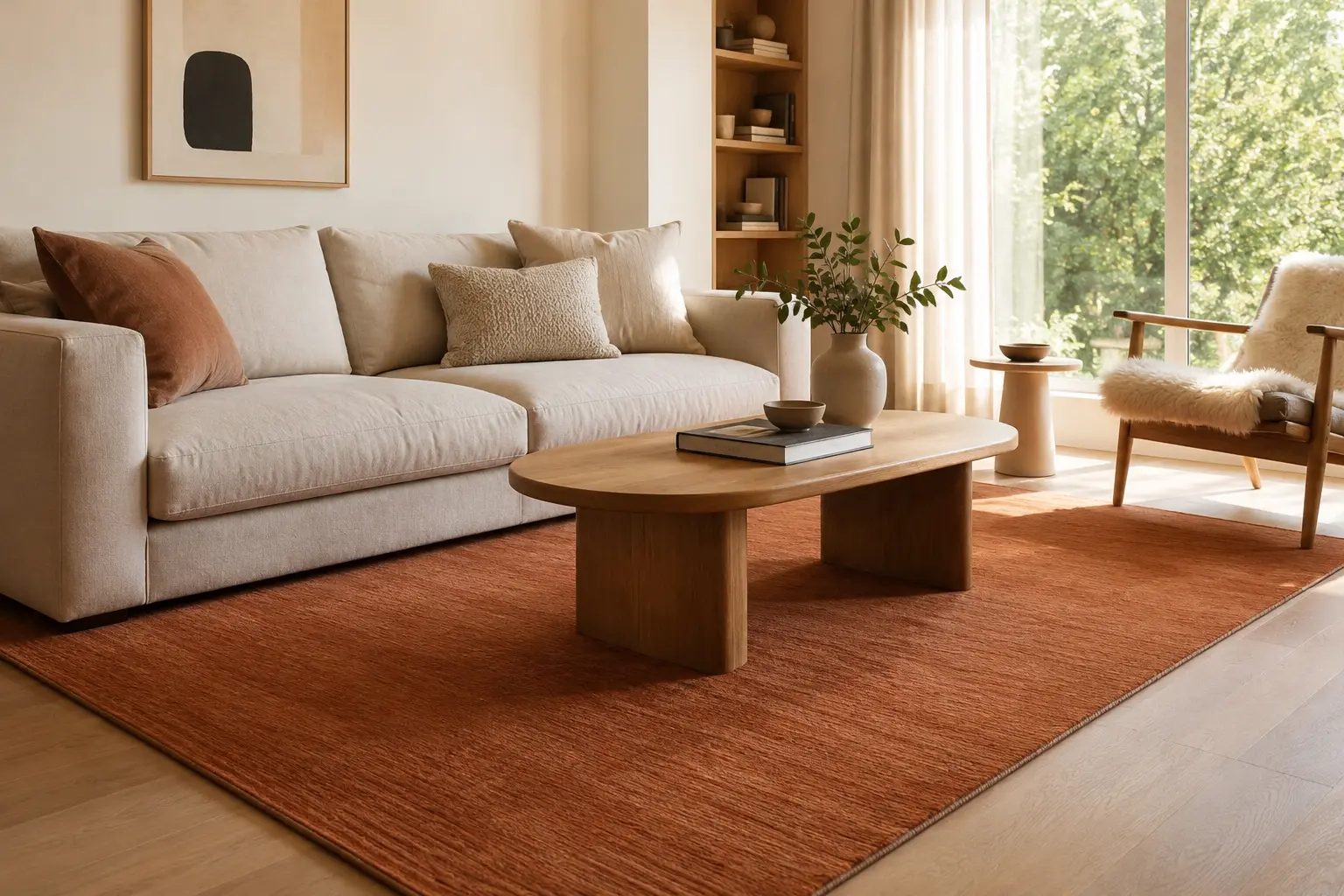
The sofa and rug are usually the two largest color blocks in a living room, so together they set the tone for everything else. When they work well together, the room feels intentional even if the rest of the decor is simple. When they clash, no amount of styling elsewhere quite fixes it.
Treat the rug and sofa as a pair, not two separate decisions. Once that pairing feels right, choosing cushions, curtains, and artwork gets a lot easier.
Understand Your Sofa's Undertone First
Before picking a rug color, it helps to know the undertone of your sofa. Two sofas that look "gray" or "beige" from a distance can actually pull in very different directions, which is one of the most common reasons a rug that looked great in a photo feels wrong once it's home.
Warm vs. Cool Undertones
- Warm undertones — lean yellow, orange, or red, think creamy beige, taupe, or terracotta-adjacent gray.
- Cool undertones — lean blue, green, or purple, think icy gray, dove gray, or true white.
Pairing a warm rug with a cool sofa (or the reverse) won't ruin the room, but it does mean you'll need to balance things more deliberately elsewhere.
How to Test Undertone in Natural Light
Artificial lighting can distort color, especially warm-toned bulbs. Look at your sofa fabric in daylight, ideally near a window, and compare it to a plain white sheet of paper. The contrast usually shows whether the fabric leans warm or cool. It's a simple test, but it's also the step most people skip before buying a rug online.
Core Color-Matching Strategies
Most successful rug-and-sofa pairings fall into one of three approaches.
Complementary Colors (High Contrast)
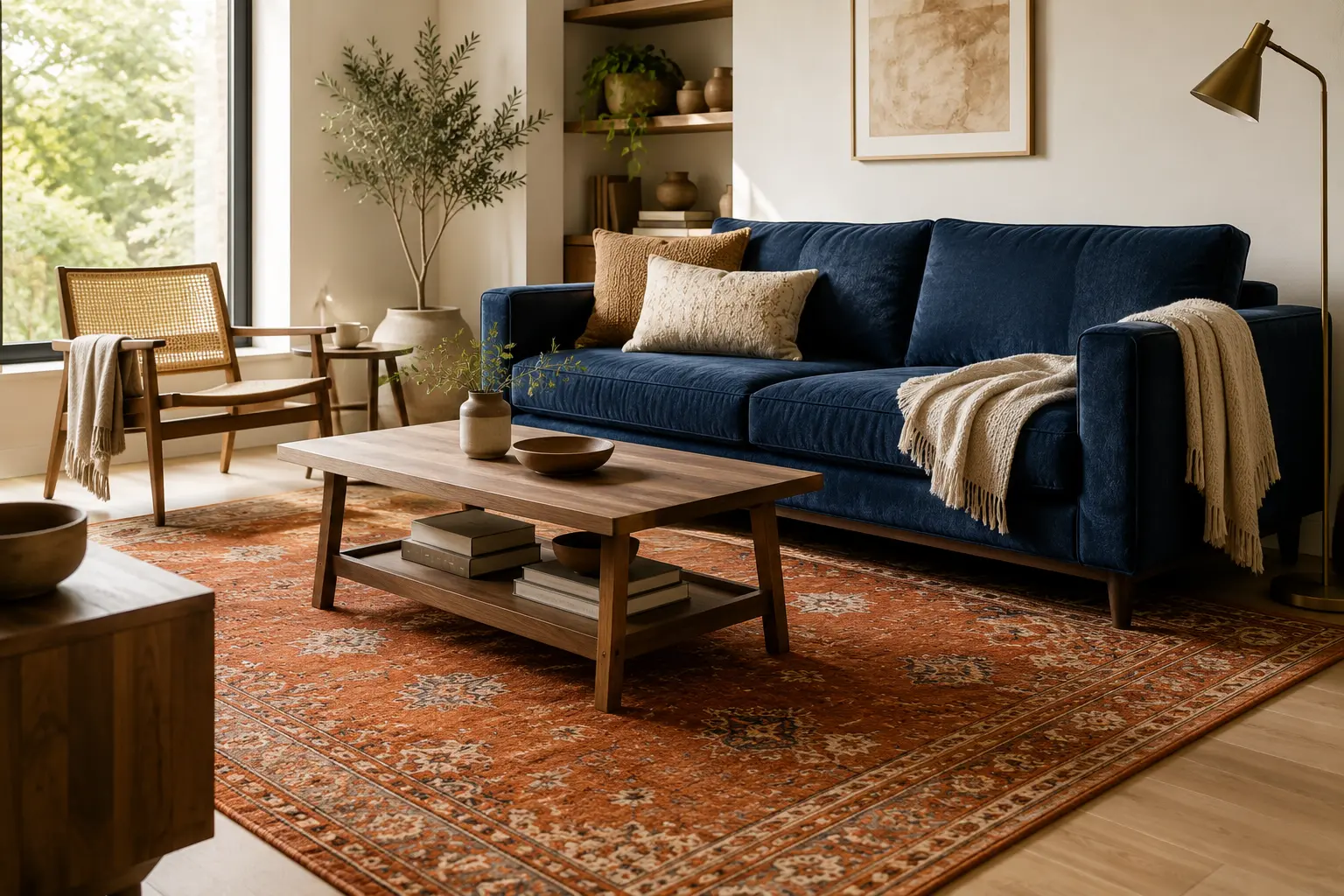
This means choosing colors from opposite sides of the color wheel, like a navy sofa with a warm rust or mustard rug. It creates energy and visual interest, and works particularly well in rooms that otherwise feel a little flat.
Analogous Colors (Soft Harmony)
Analogous colors sit next to each other on the color wheel, such as a sage green sofa with a soft blue-green rug. This creates a calm, cohesive look without being matchy.
Monochromatic Looks (Tonal Layering)
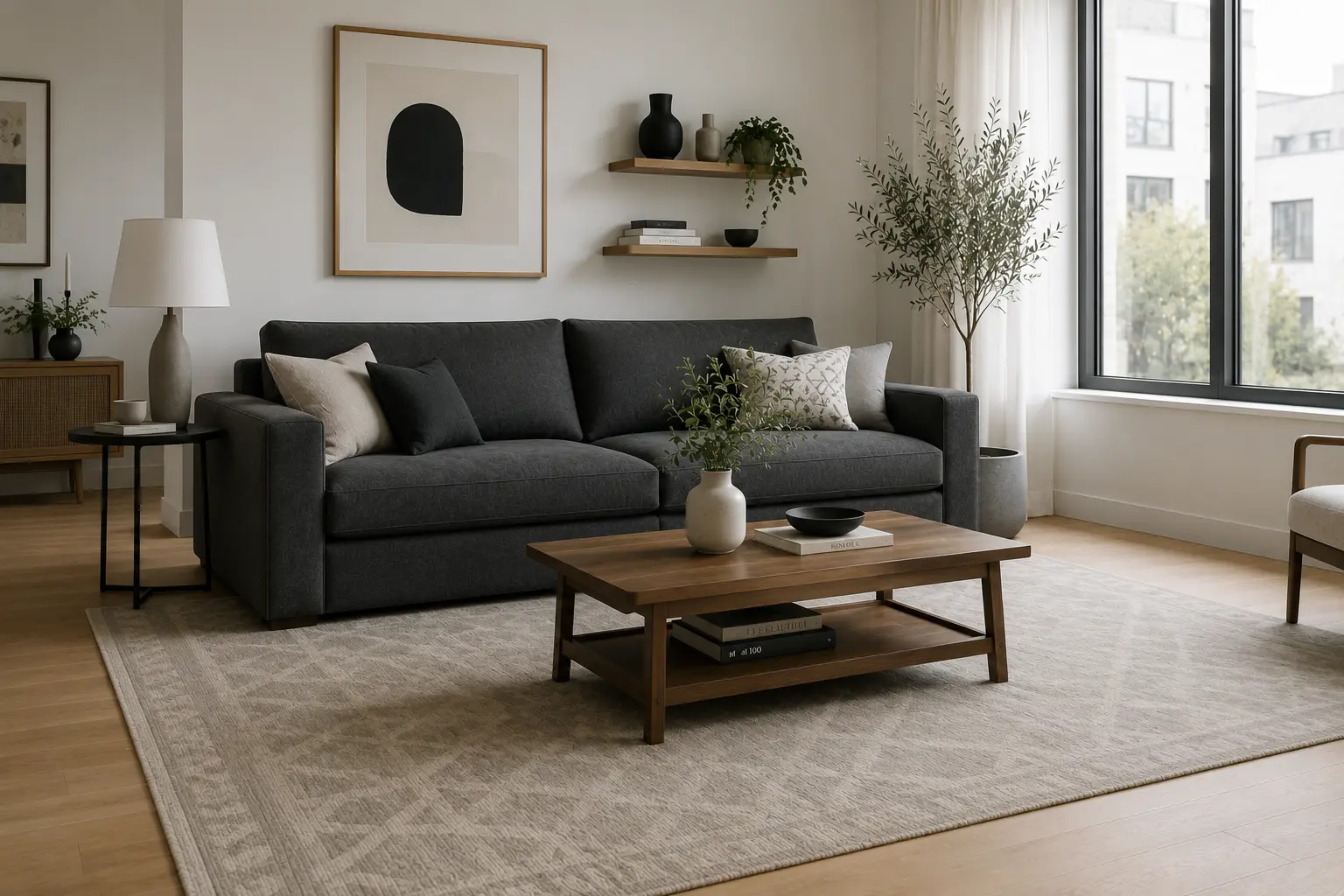
This approach uses different shades and textures of the same color family, a charcoal sofa with a lighter gray rug, for example. It's a dependable option, especially in smaller rooms where too much contrast can feel busy.
Matching Rugs to Neutral Sofas
Neutral sofas are the easiest starting point, since they pair with almost anything. The main decision is whether you want the rug to blend in or stand out.
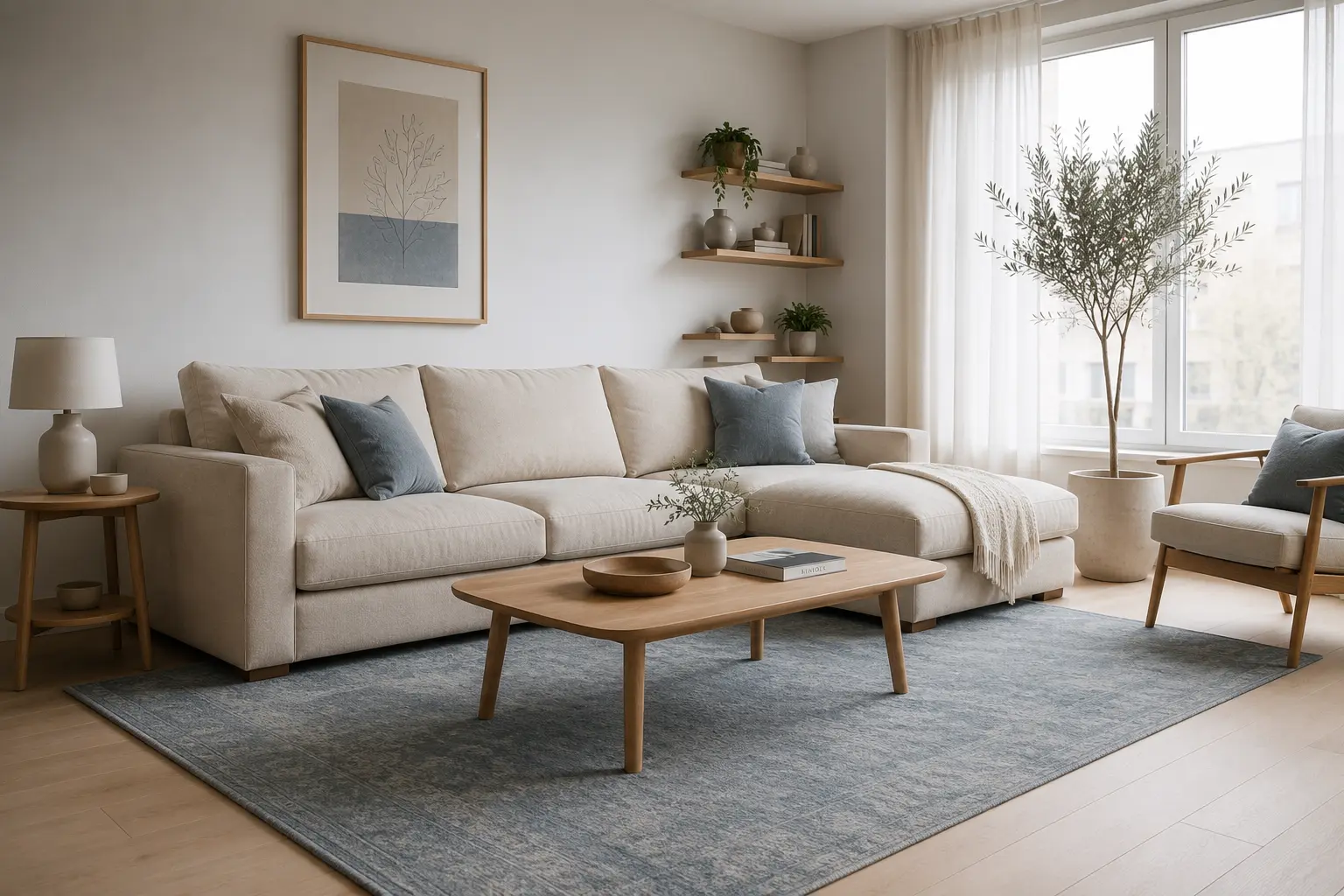
- Beige or tan sofa: try warm gray, soft terracotta, or muted blue for gentle contrast.
- Gray sofa: works with almost every rug tone, blush, deep blue, and warm ivory are all safe bets.
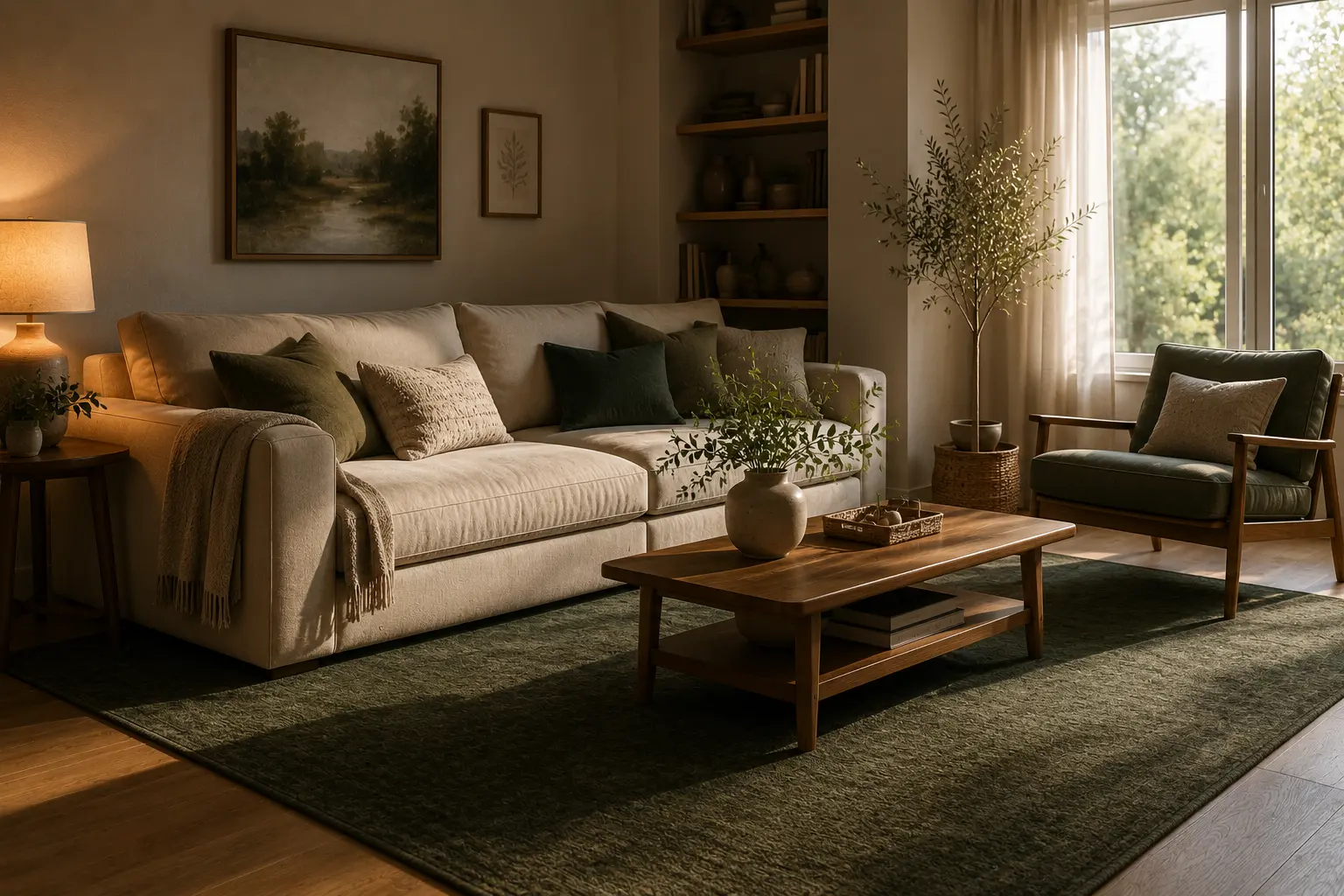
- White or cream sofa: pairs well with a rug in a richer tone, like forest green or navy, so the room doesn't feel washed out.
Matching Rugs to Bold or Colorful Sofas
A statement sofa needs a rug that supports it rather than competes with it. In most cases, a more neutral or muted rug lets the sofa remain the focal point.
- If your sofa is a strong solid color (emerald, mustard, burnt orange), choose a rug in a neutral tone that shares its undertone.
- If your sofa is patterned, a solid rug in one of the pattern's secondary colors usually works best.
- Avoid pairing two bold, high-saturation colors unless you're confident with strong contrast. It can overwhelm the room quickly.
Pairing Patterns: Rug and Sofa Combinations
Pattern mixing is where a lot of people hesitate, but there are some dependable guidelines to lean on.
Patterned Sofa + Solid Rug
This is generally the safest combination. Pull one color from the sofa's pattern and use it as the rug color. It ties the room together without adding visual noise.
Solid Sofa + Patterned Rug
Also reliable. A patterned rug adds texture and interest to a room anchored by a plain sofa, especially in neutral or minimalist spaces. If you want even more depth underfoot, layering a second rug is a natural next step once your base colors are settled.
Can You Mix Two Patterns?
Yes, but it takes a lighter touch. Vary the scale of the patterns (a large-scale sofa print with a smaller, subtler rug pattern, or vice versa), and keep the color palette consistent between the two so they read as coordinated instead of competing.
The 60-30-10 Rule for Rug and Sofa Colors
This classic design ratio is a useful starting framework for deciding how much of each color to introduce:
| Proportion | Role in the Room | Typical Element |
|---|---|---|
| 60% | Dominant color | Walls, large furniture |
| 30% | Secondary color | Sofa or rug |
| 10% | Accent color | Cushions, art, small decor |
If your sofa is taking up the "30%" role, your rug can either reinforce that color subtly or serve as the "60%" dominant tone in the room, depending on which piece you want to lead visually.
Other Factors to Consider
Room Lighting
North-facing or low-light rooms tend to make colors look cooler and darker than they are, while bright, sun-filled rooms can wash out subtler tones. If possible, look at rug swatches in your space at different times of day before deciding. It's a small step, but it catches a lot of mismatches before they become permanent.
Wall Color and Flooring
The rug doesn't only need to work with the sofa, it needs to sit comfortably against your walls and floor too. A rug that clashes with wood flooring or wall color can undo an otherwise good sofa pairing.
Room Size and Mood
As a general design principle, darker rugs tend to make a room feel cozier and more grounded, while lighter rugs can open up a space visually. In smaller rooms, a rug close in tone to the flooring often helps the space feel larger, though the effect varies depending on lighting and ceiling height. The right rug thickness plays a role here too, since a plush pile can change how a color reads underfoot compared to a flat weave.
Common Mistakes to Avoid
A few missteps come up again and again, even with an otherwise solid color plan.
- Matching too exactly. A rug in the identical color as the sofa often looks flat rather than coordinated.
- Ignoring undertones. Two "neutral" tones can clash if one is warm and the other cool.
- Choosing the rug in isolation. Always consider it alongside walls, flooring, and existing furniture, not just the sofa.
- Overlooking texture. Material affects how a color reads. A wool rug and a jute rug in the "same" color can look noticeably different in a room, and thickness affects it further, our rug thickness guide breaks down how pile height changes both look and feel.
Quick Reference: Sofa Color to Rug Color Chart
Use this as a fast starting point when you're short on time.
| Sofa Color | Rug Colors to Try |
|---|---|
| Beige / Tan | Warm gray, terracotta, muted blue |
| Gray | Blush, navy, warm ivory |
| White / Cream | Forest green, navy, charcoal |
| Navy | Mustard, rust, soft cream |
| Emerald / Green | Warm neutral, blush, soft gray |
| Patterned | Solid rug in a secondary pattern color |
Frequently Asked Questions
What color rug goes with a gray sofa?
Gray is one of the most flexible sofa colors. Blush pink, navy, warm ivory, and even mustard all work, depending on the mood you want.
Should a rug match the sofa exactly or contrast with it?
A slight contrast usually looks more intentional than an exact match, which can flatten the room's visual depth.
What rug color goes with a beige or tan sofa?
Warm gray, soft terracotta, and muted blue tones tend to complement beige and tan sofas nicely.
Can you mix patterns on a rug and sofa?
Yes. Vary the scale of the patterns and keep the color palette consistent so they feel coordinated rather than chaotic.
Does a dark rug make a room feel smaller?
Not necessarily smaller, but it can add coziness. In smaller spaces, a rug closer in tone to the flooring often helps the room feel more open.
What's the safest rug color for a colorful or bold sofa?
A neutral or muted rug that shares the sofa's undertone generally lets the sofa remain the room's focal point.
How do I know if my sofa has warm or cool undertones?
Check the fabric in natural daylight next to a plain white sheet of paper. Warm or cool leanings become much easier to spot.
Should the rug match the curtains or the sofa?
Ideally, both should share a common thread, whether that's an undertone, a color family, or a shared accent tone, rather than matching either one exactly.
There's no single "correct" rug color for any sofa, just a set of principles that help you narrow down options with more confidence. Once you understand your sofa's undertone and decide whether you want contrast or harmony, the right rug tends to reveal itself pretty quickly.
Post a Comment for "How to Match Rug Colors with Your Sofa: 2026 Guide"