
Best Rug Size for Small Living Rooms: A No-Guesswork Guide
Stand in a rug store long enough, or open fifty browser tabs, and you'll start second-guessing whether a 5x7 will actually work in a small living room. It's one of the most common sizing questions in decorating, especially when every square foot matters. Here's how to pick a size that makes the room feel put together instead of squeezed.
Why Rug Size Matters More in Small Rooms
In a big open room, an undersized rug just reads as a style choice. In a small room, it's the difference between cozy and cramped. A rug that's too small chops the floor into pieces, and that can make the space feel smaller and messier than it actually is.
A properly sized rug does the opposite. It anchors the furniture and pulls the seating area together, which matters even more when you don't have much floor to work with in the first place.
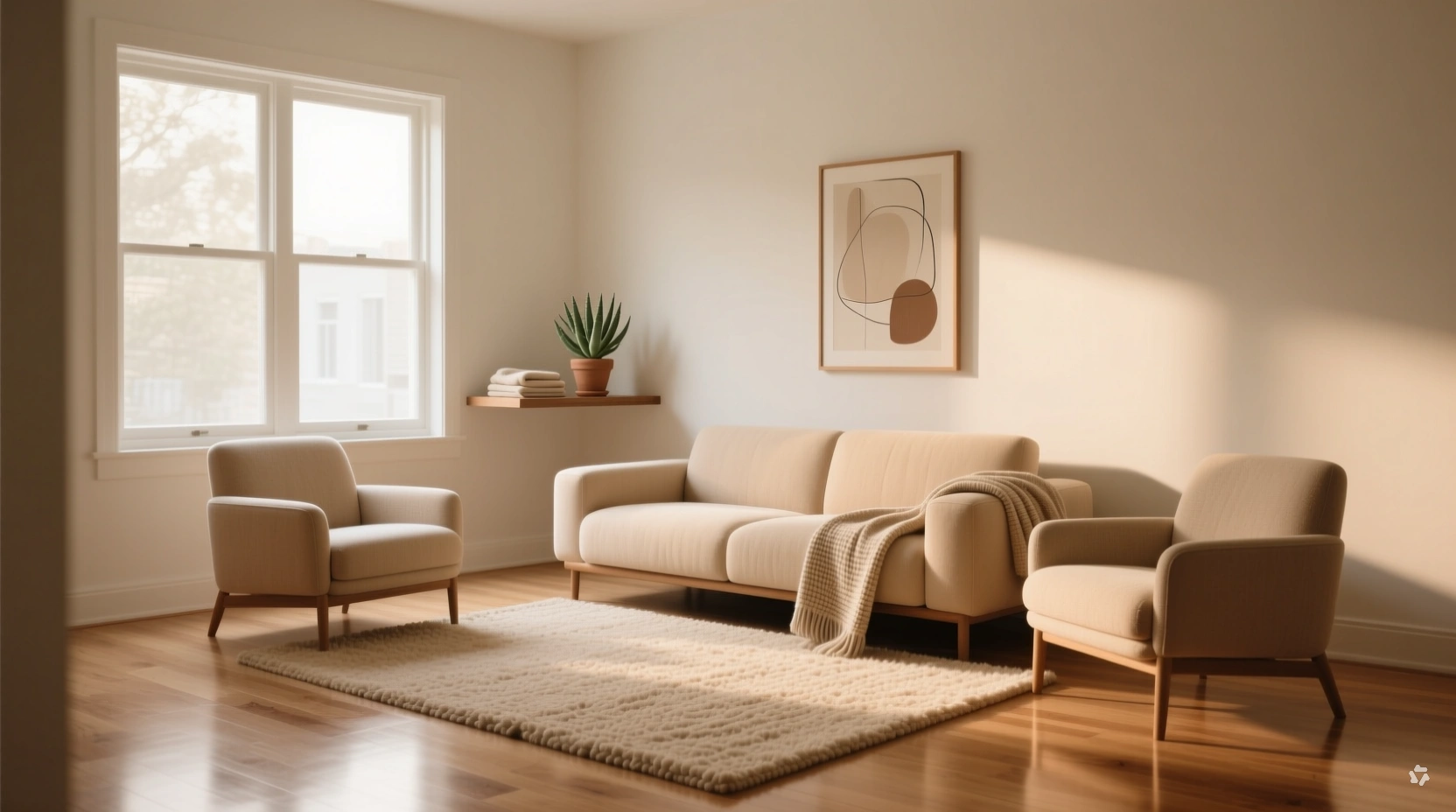
Standard Rug Sizes at a Glance
Here's a quick reference for common rug dimensions and the room sizes they tend to fit.
| Rug Size (ft) | Rug Size (cm, approx.) | Best Suited For |
|---|---|---|
| 4' x 6' | 120 x 180 cm | Studio apartments, small nooks, layering |
| 5' x 7' | 150 x 210 cm | Compact seating areas, under coffee table only |
| 5' x 8' | 150 x 240 cm | Small living rooms, tight furniture groupings |
| 6' x 9' | 180 x 270 cm | Small-to-medium living rooms, front-legs-on layout |
| 8' x 10' | 240 x 300 cm | Medium living rooms, most furniture on rug |
Treat this table as a starting point, not a rule. The right size for your room really comes down to furniture layout and room shape, which we'll get into next.
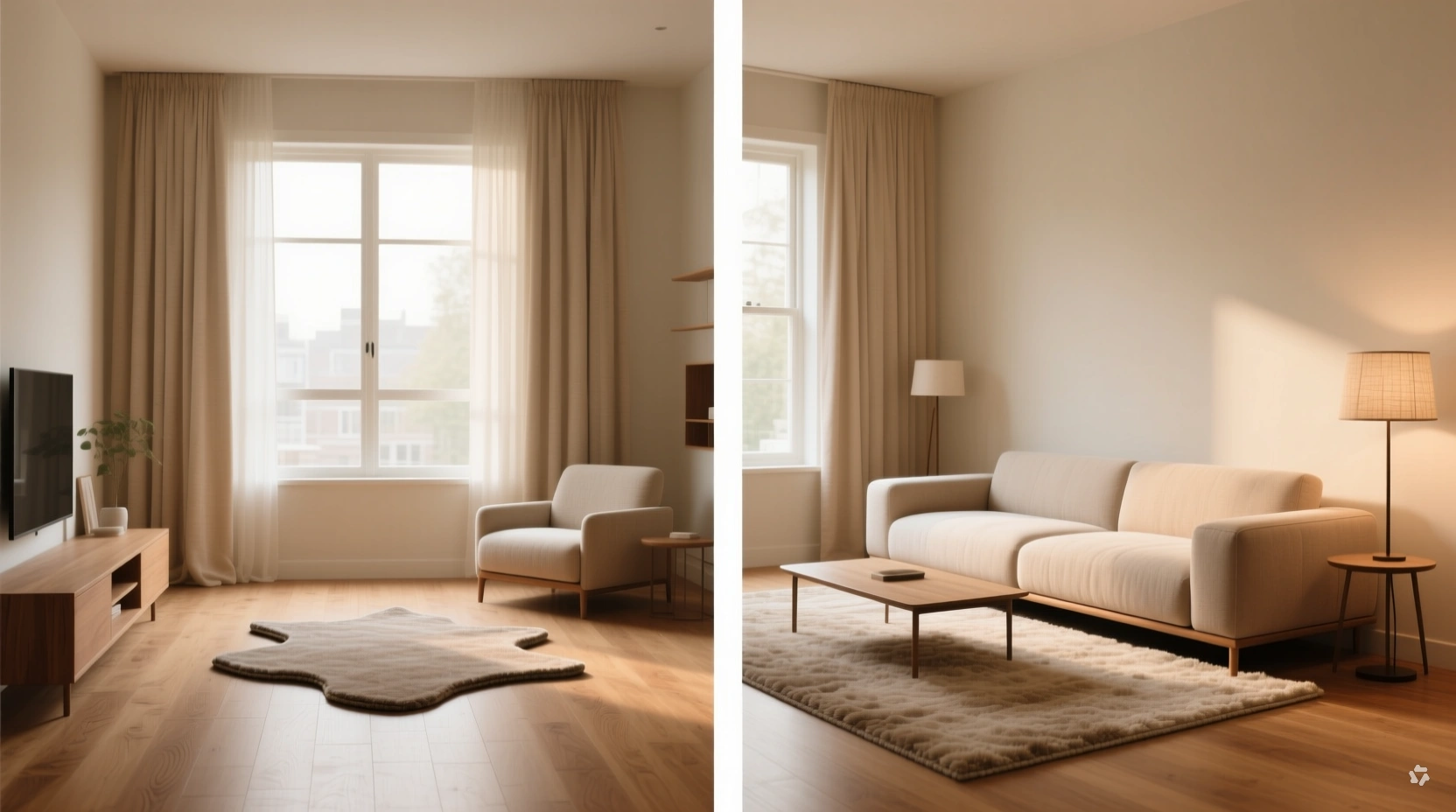
How to Measure Your Small Living Room the Right Way
Before you buy anything, grab a tape measure. This single step avoids most of the "why does this look wrong?" moments that show up after a rug arrives, and it's a lot easier to fix now than once the rug is already unrolled on your floor.
Measuring the Seating Area vs. the Whole Room
Don't just measure the four walls of the room. Measure the footprint of your actual seating group instead. The rug needs to relate to your sofa, chairs, and coffee table as a cluster, not to the entire room, especially if your living room shares space with a dining area or entryway.
A simple way to approach it:
- Measure the width and depth of your sofa, including arms.
- Measure the distance between your sofa and any facing chairs.
- Note where your coffee table sits in that gap.
The Floor-Border Guideline
A commonly used guideline is to leave roughly 12 to 18 inches (about 30 to 45 cm) of visible flooring between the rug's edge and the wall. This tends to create a natural "frame" around the rug instead of making it look like mismeasured wall-to-wall carpet. In very small rooms, that border often shrinks to around 8 to 10 inches (20 to 25 cm). What matters more than hitting an exact number is keeping it consistent on all sides.
Best Rug Sizes by Small Living Room Scenario
There's no single correct answer here, since it depends on your layout. These three sizes tend to work hardest in compact spaces.
5x7 Rug — Best For…
A 5x7 (150 x 210 cm) works well when you want a defined zone under a coffee table without extending under any seating. It's a solid floating-rug option for very small rooms or awkward layouts where a bigger rug simply won't fit. Just make sure it extends a few inches beyond the coffee table on every side. A rug that matches the table's footprint exactly tends to look like an afterthought.
6x9 Rug — Best For…
For most small living rooms, a 6x9 (180 x 270 cm) is the sweet spot. It's large enough to sit under the front legs of your sofa and chairs, tying the furniture together, while still staying proportional to a modest-sized room. If you're torn between a 5x7 and something bigger, this is usually the safer bet.
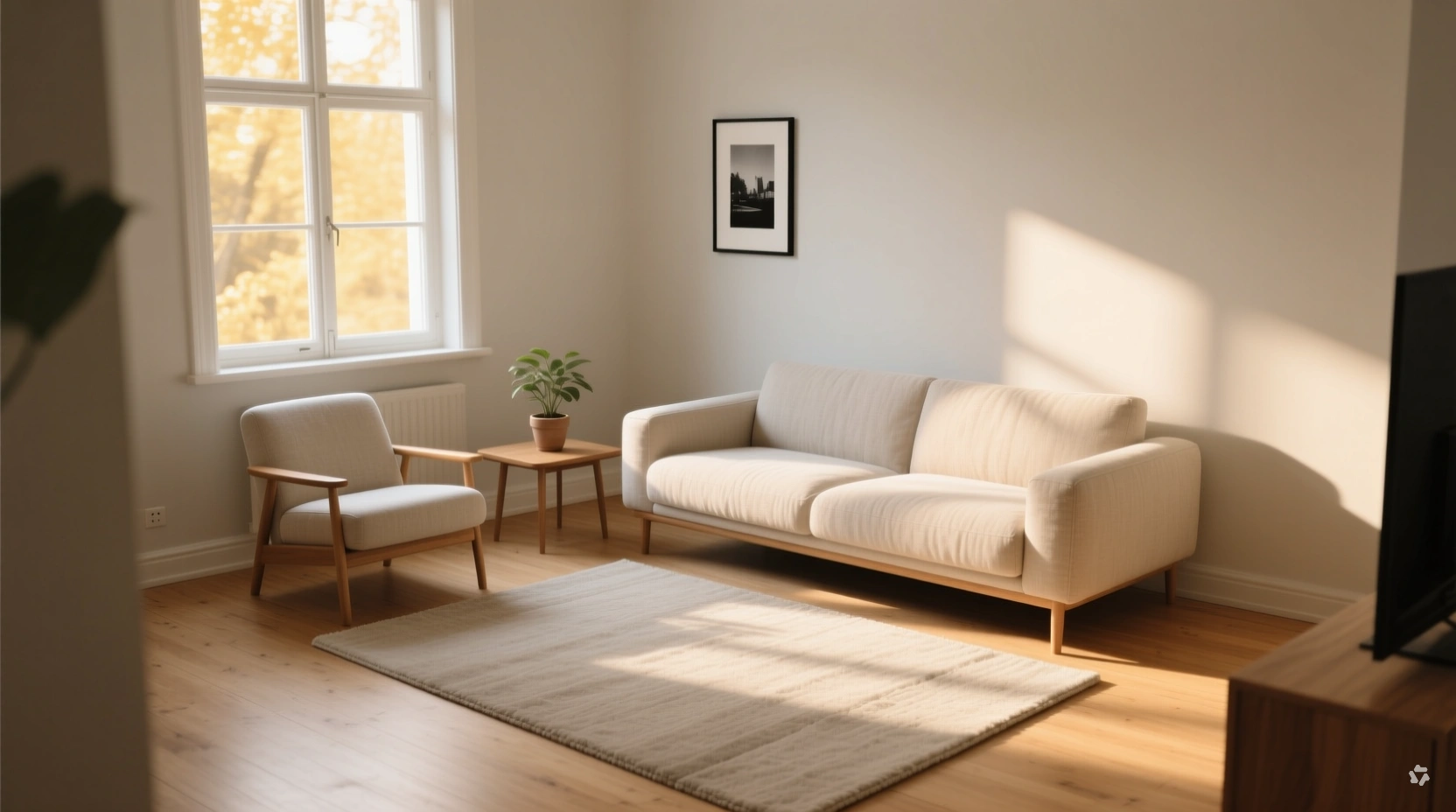
4x6 Rug — Apartment / Studio Layouts
A 4x6 (120 x 180 cm) is best reserved for very tight apartment or studio layouts, or as a layering piece over a larger neutral rug. On its own in a full living room, it can start to look more like a bath mat than a design feature, so it's worth choosing on purpose rather than defaulting to it because it's cheap.
Matching Rug Size to Your Furniture
Room dimensions get you in the right ballpark, but furniture is what actually determines the ideal fit. For a deeper breakdown of how furniture and rugs should relate, see our guide on whether furniture should sit on the rug.
Sofa Width and Clearance
A common guideline is to let your rug extend about 6 to 10 inches (15 to 25 cm) beyond each side of your sofa. This keeps the rug from looking narrower than the furniture sitting on it, which is one of the more common giveaways that a rug is undersized.
Coffee Table Placement on the Rug
Your coffee table should sit comfortably within the rug's edges, ideally with the rug extending a few inches past the table on every side. A table that hangs off the rug, even slightly, tends to look unintentional rather than styled.
Front-Legs-On vs. All-Legs-On vs. Floating Rug
In small living rooms, you generally have three workable layouts:
- All legs on the rug: the most polished, cohesive look, but it takes the most floor space
- Front legs on the rug: a practical middle ground that ties furniture together without needing a huge rug
- Floating rug: the rug sits in front of or beneath just the coffee table, with no furniture legs touching it; works well when the sofa is pushed against a wall
Front-legs-on tends to be the most flexible choice for compact rooms, since it gives a connected look without needing an oversized rug. For more layout examples, check out our full rug placement rules guide.
The #1 Mistake: Buying a Rug That's Too Small
If there's one thing worth repeating: an undersized rug is one of the most common, and most avoidable, decorating mistakes in small living rooms. A rug that floats in the middle of the room with no relationship to the furniture around it tends to shrink the whole space visually instead of opening it up. When you're stuck between two sizes, it's usually safer to size up than size down.
Rug Shape Options for Tight Layouts
Rectangular rugs aren't your only option, and in awkward small rooms, a different shape can sometimes solve a layout problem a rectangle can't.
- Round rugs: work well in tight corners, under round coffee tables, or in small reading nooks
- Square rugs: a natural match for square-shaped rooms or square furniture groupings
- Runner rugs: useful in narrow or oddly proportioned living spaces or as a secondary accent alongside a smaller area rug
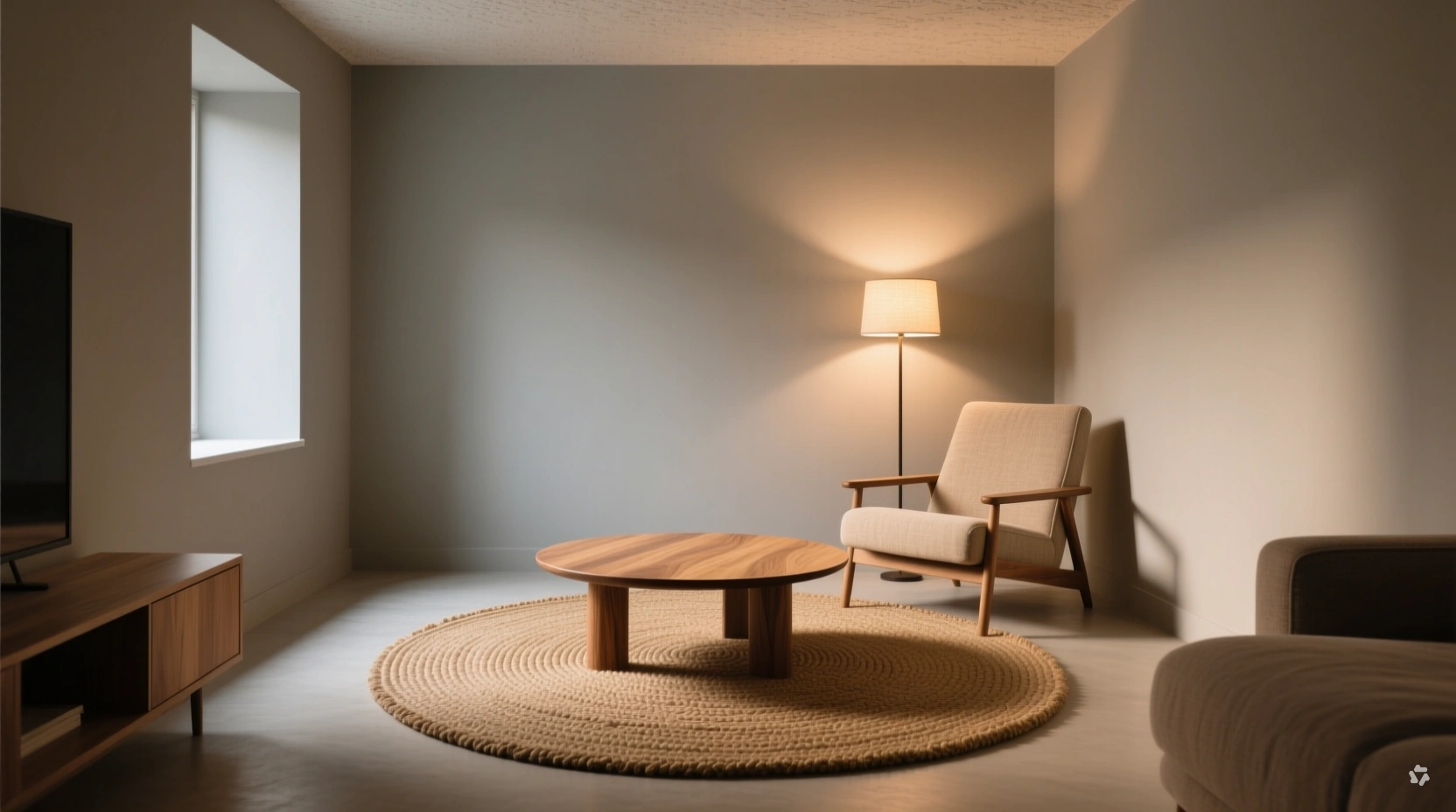
Tricks to Make a Small Rug (and Room) Look Bigger
If you're working with real space constraints, a few small adjustments can help your rug, and your room, feel more generous than the square footage suggests.
- Choose a rug that runs the same direction as the room's longest wall, rather than fighting the room's natural proportions.
- Stick to a low or medium pile height, which tends to read as less bulky in a small footprint.
- Opt for lighter tones or subtle patterns, which often visually expand a space more than dark, dense colors.
- Keep your border consistent on all sides rather than pushing the rug closer to one wall.
Test Before You Buy: The Painter's Tape Method
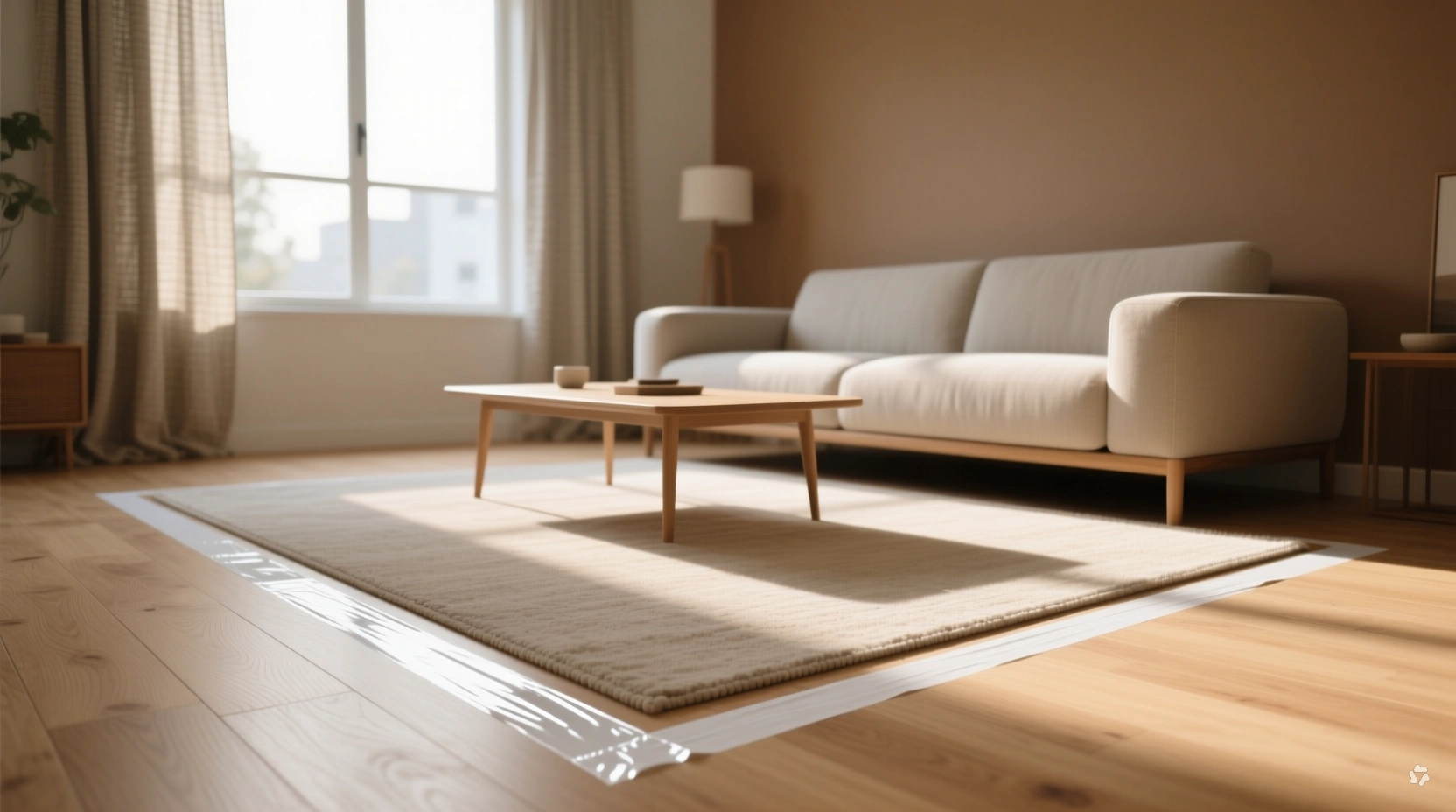
Before committing, mark out your prospective rug size directly on the floor using painter's tape. Live with it for a day or two, walk around it, and see how it interacts with your furniture. It's a simple step, but it's one of the more reliable ways to catch a sizing mistake before it becomes a returned rug sitting in your hallway.
Frequently Asked Questions
What size rug is best for a small living room?
For most small living rooms, a 6x9 (180 x 270 cm) offers a good balance: big enough to anchor the front legs of your seating without overwhelming the space.
Is a 5x7 rug too small for a living room?
Not necessarily. A 5x7 (150 x 210 cm) works well as a floating rug under a coffee table, but it's usually too small to comfortably fit any part of a sofa or chairs.
Should furniture legs be on or off the rug in a small space?
Either can work. The key is consistency. If your sofa's front legs are on the rug, it generally looks best to keep any accent chairs following the same rule.
How much space should be between the rug and the wall?
A common guideline is roughly 12 to 18 inches (30 to 45 cm), though 8 to 10 inches (20 to 25 cm) is often acceptable in especially tight rooms.
Can I use two rugs (layering) in a small living room?
Yes. Layering a smaller patterned rug over a larger neutral one, like jute or sisal, can add texture without requiring a single oversized rug.
What shape rug works best for an awkward or small layout?
Round or square rugs often solve tight corners or unconventional layouts better than a standard rectangle.
Does a bigger rug make a small room look bigger or smaller?
Generally bigger and better proportioned. A rug that's too small tends to fragment the floor, which can make the room feel more cramped, not less.
What size rug fits under a coffee table only?
A 5x7 (150 x 210 cm) is usually enough, as long as it extends a few inches beyond the table's edges on all sides.
A Final Thought
Choosing the best rug size for a small living room comes down to how the rug relates to the furniture and floor around it, more than hitting some magic number. Measure your seating group rather than just your walls, and don't be afraid to size up if you're stuck between two options.
It's also worth thinking about color and pattern alongside size, since both affect how spacious the room feels. A lighter shade or a subtle pattern can help a small living room feel more open, even before the furniture layout comes into play.
Get that balance of size, layout, and color right, and even the coziest living room stops feeling squeezed.
Post a Comment for "Best Rug Size for a Small Living Room (Sizing Guide)"