
How to Choose the Right Rug Thickness (And Why It Matters More Than You Think)
Most people choose a rug by color and pattern first, then wonder later why it feels wrong underfoot or won't sit flat by the door. Thickness is the quiet detail that decides how a rug actually performs day to day, from comfort underfoot to how well it holds up over time. Here's how to get it right before you buy.
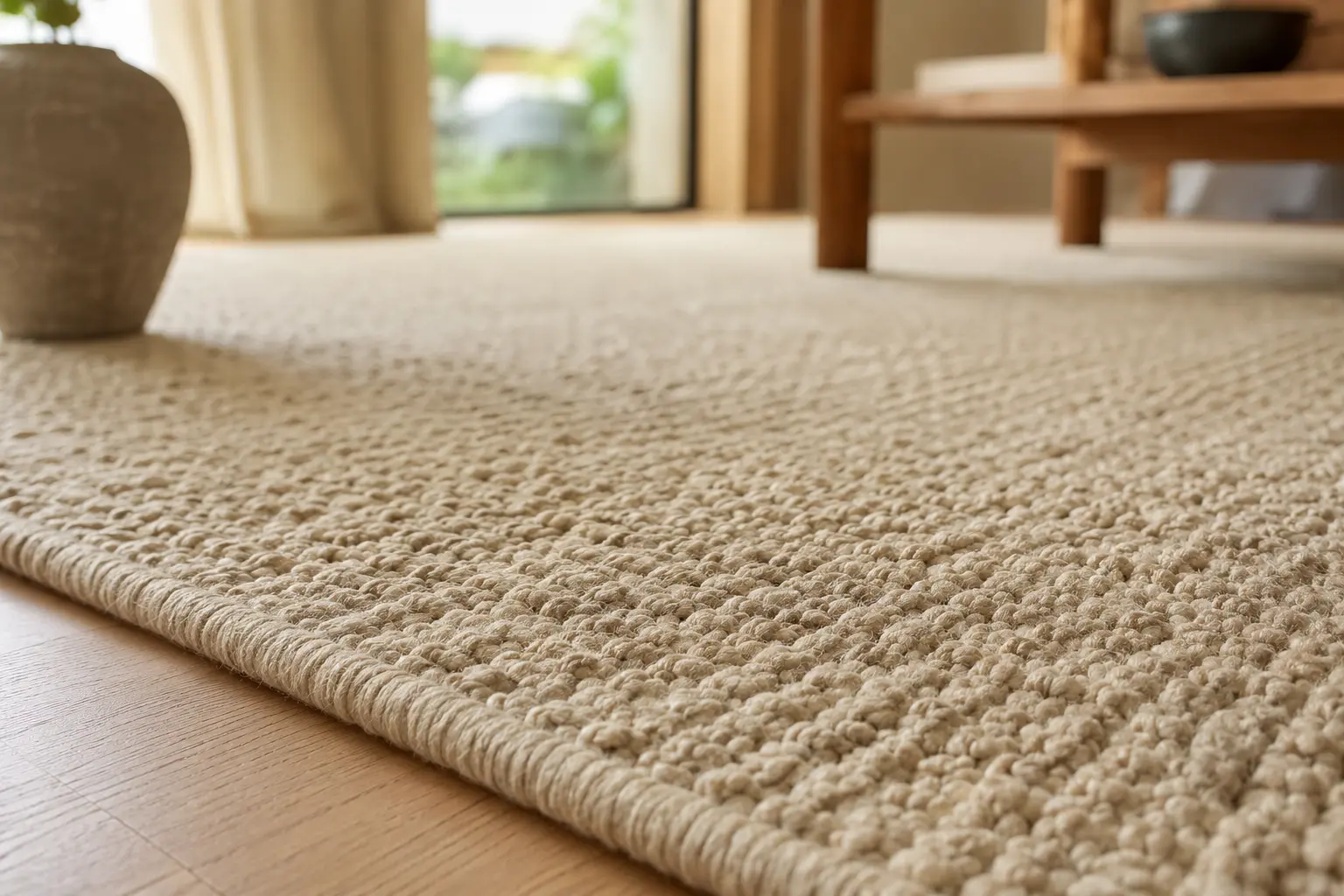
What Does "Rug Thickness" Actually Mean?
Rug thickness isn't just one number. It's a combination of a few different factors that together determine how a rug looks, feels, and behaves over time.
Pile Height vs. Pile Thickness: What's the Difference?
These two terms get used interchangeably, but they describe different things.
- Pile height — the exact measurement of the rug's fibers, from the backing to the tip of the yarn, measured in millimeters or inches.
- Pile thickness (sometimes called pile density) — how full and dense the rug feels underfoot, or how tightly packed those fibers are.
A rug can have a tall pile height but still feel thin if the fibers are sparse. In practice, a shorter pile with tightly woven fibers often feels more substantial underfoot than a taller, sparser one. When comparing rugs, it helps to think about both numbers, not just one.
How Rug Thickness Is Measured
If you want to measure a rug yourself, use a ruler or caliper and measure straight up from the rug's surface (the top of the backing) to the tip of the fibers. Don't include any rug pad or extra backing material in that measurement. Pile height refers only to the yarn itself.
Rug Thickness Categories at a Glance
Most rugs fall into one of three general categories. These aren't strict industry standards (exact ranges vary slightly between manufacturers), but they're a useful starting point when comparing options.
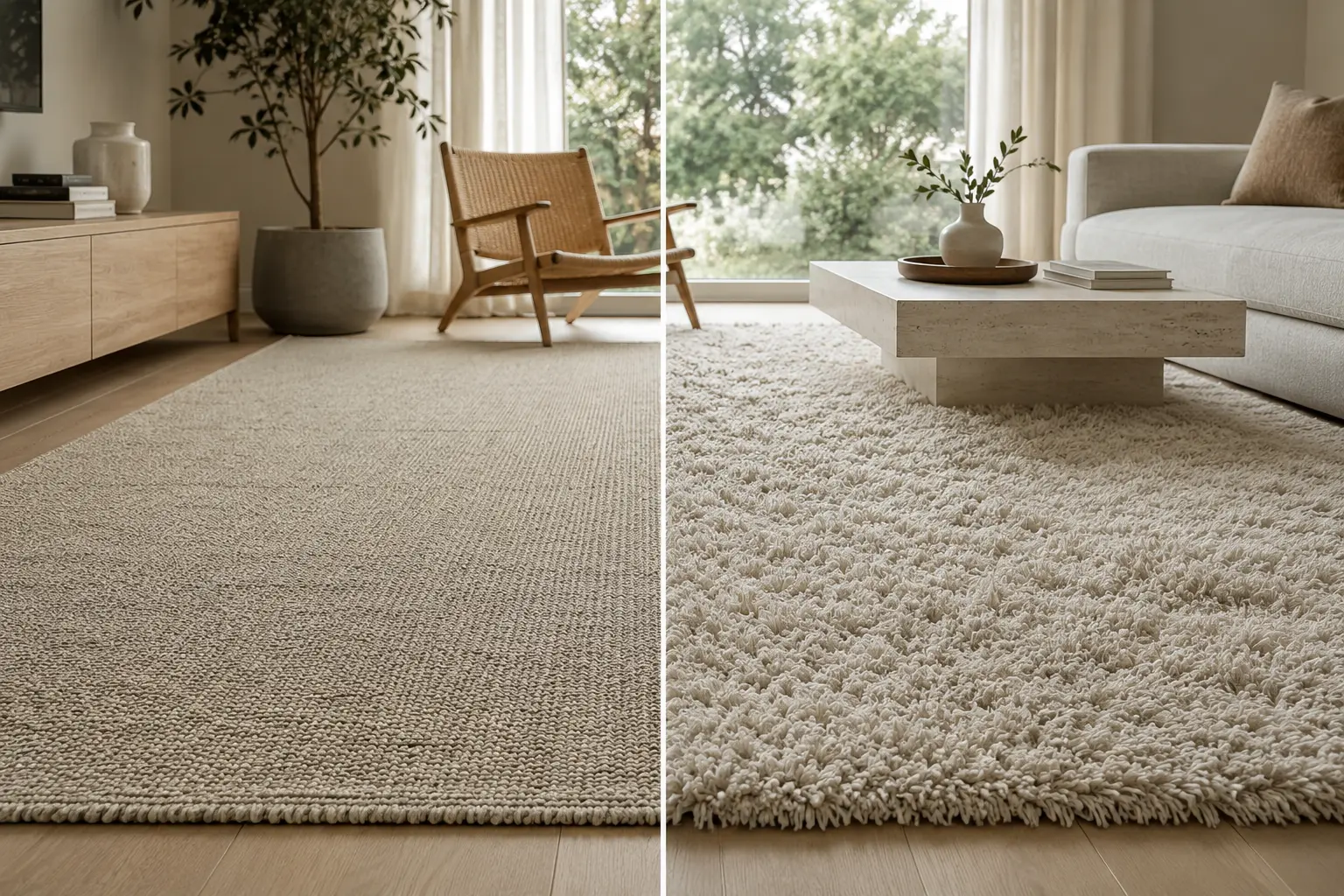
Low-Pile Rugs (Flatweave & Berber)
Low-pile rugs generally sit around 0–6 mm (0–¼ in). This includes flatweaves like kilims and dhurries, plus most Berber-style loop rugs. They lie close to the floor, don't trap much dust or debris, and are easy to vacuum and clean.
Medium-Pile Rugs
Medium-pile rugs typically range from 6–12 mm (¼–½ in). This is the most versatile category — soft enough to feel comfortable, but stable enough for everyday use. Many hand-tufted and machine-made rugs fall into this range.
High-Pile Rugs (Plush & Shag)
High-pile rugs generally start around 12 mm (½ in) and can go well beyond that for shag or frieze styles. They feel plush and cozy underfoot, but come with real trade-offs in maintenance and stability, covered below.
How to Choose Rug Thickness by Room
The "right" thickness depends on how a room is actually used. A rug that feels perfect in a bedroom might be impractical in an entryway. And thickness isn't the only variable worth planning around — shape matters too, so it's worth reading our guide on choosing between a round vs. rectangular rug once you've settled on pile height.
Living Room
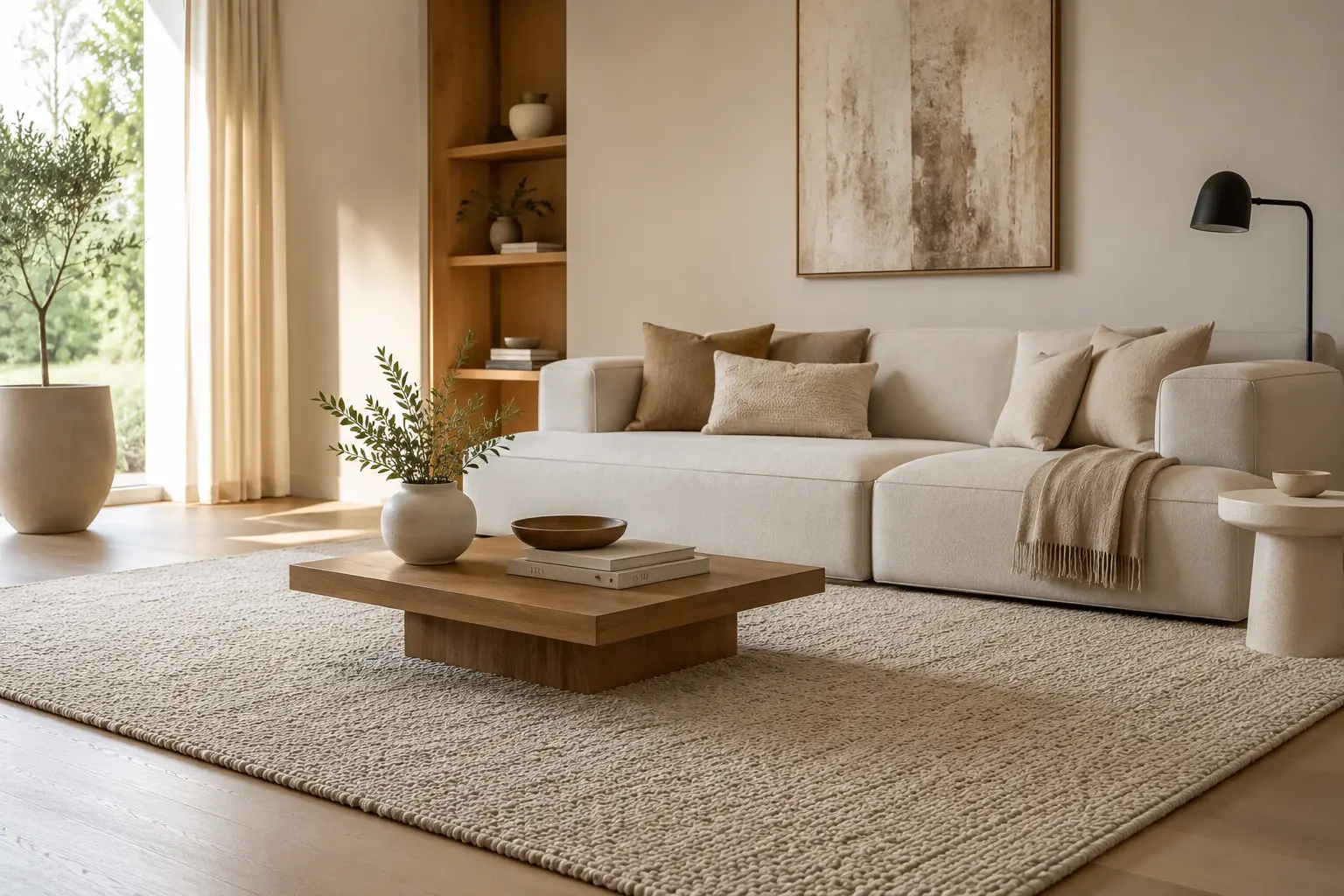
Living rooms generally do well with a medium-pile rug: soft enough for bare feet and lounging, but practical under regular foot traffic. If your living room sees heavy use from family, guests, or pets, lean toward the lower end of medium pile for easier upkeep. If you're building out a layered look, our guide to rug layering in the living room covers how thickness plays into that.
Bedroom
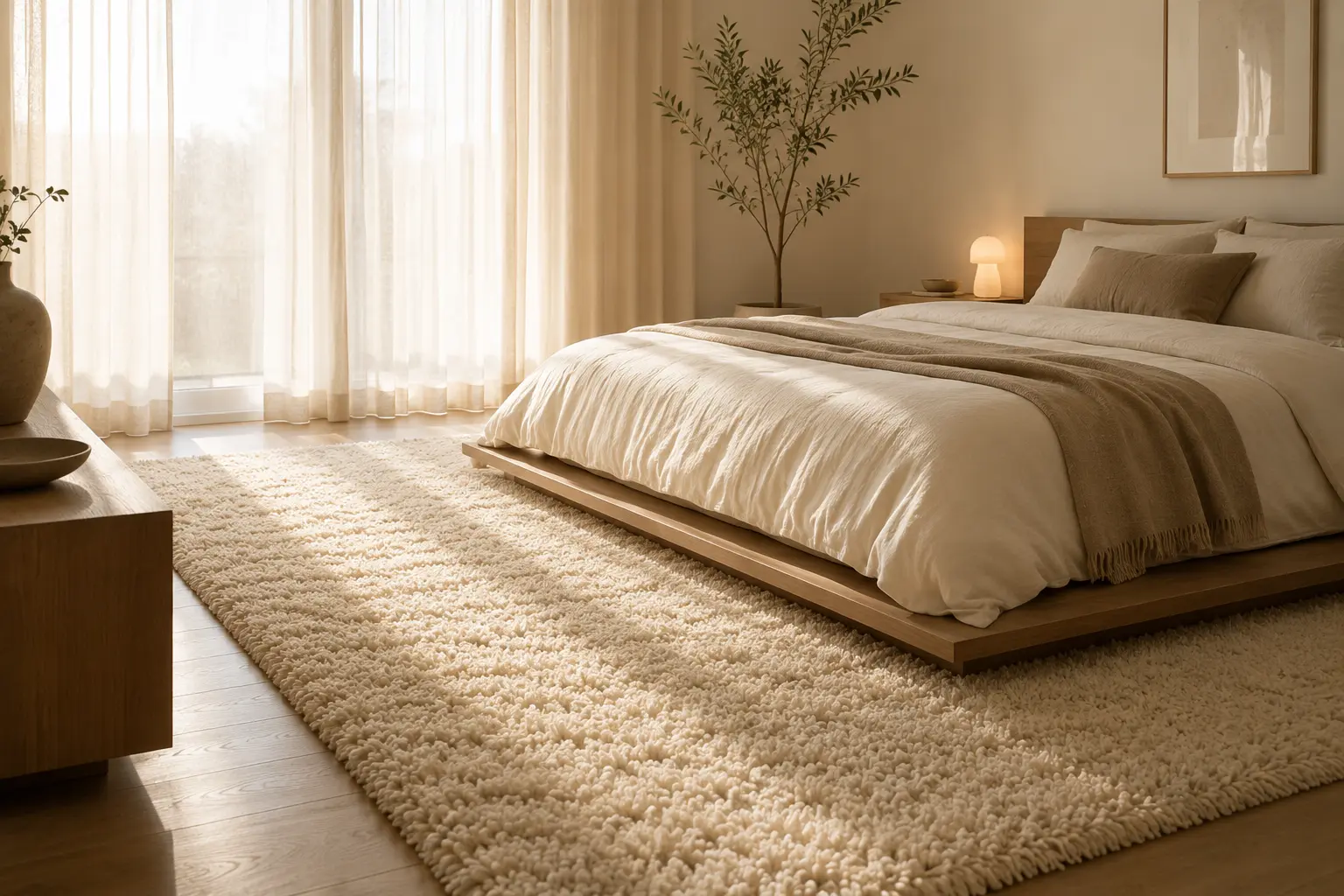
This is where a higher pile can really shine. Bedrooms tend to have lighter foot traffic, so a plush, high-pile rug under or beside the bed adds a soft landing for bare feet first thing in the morning.
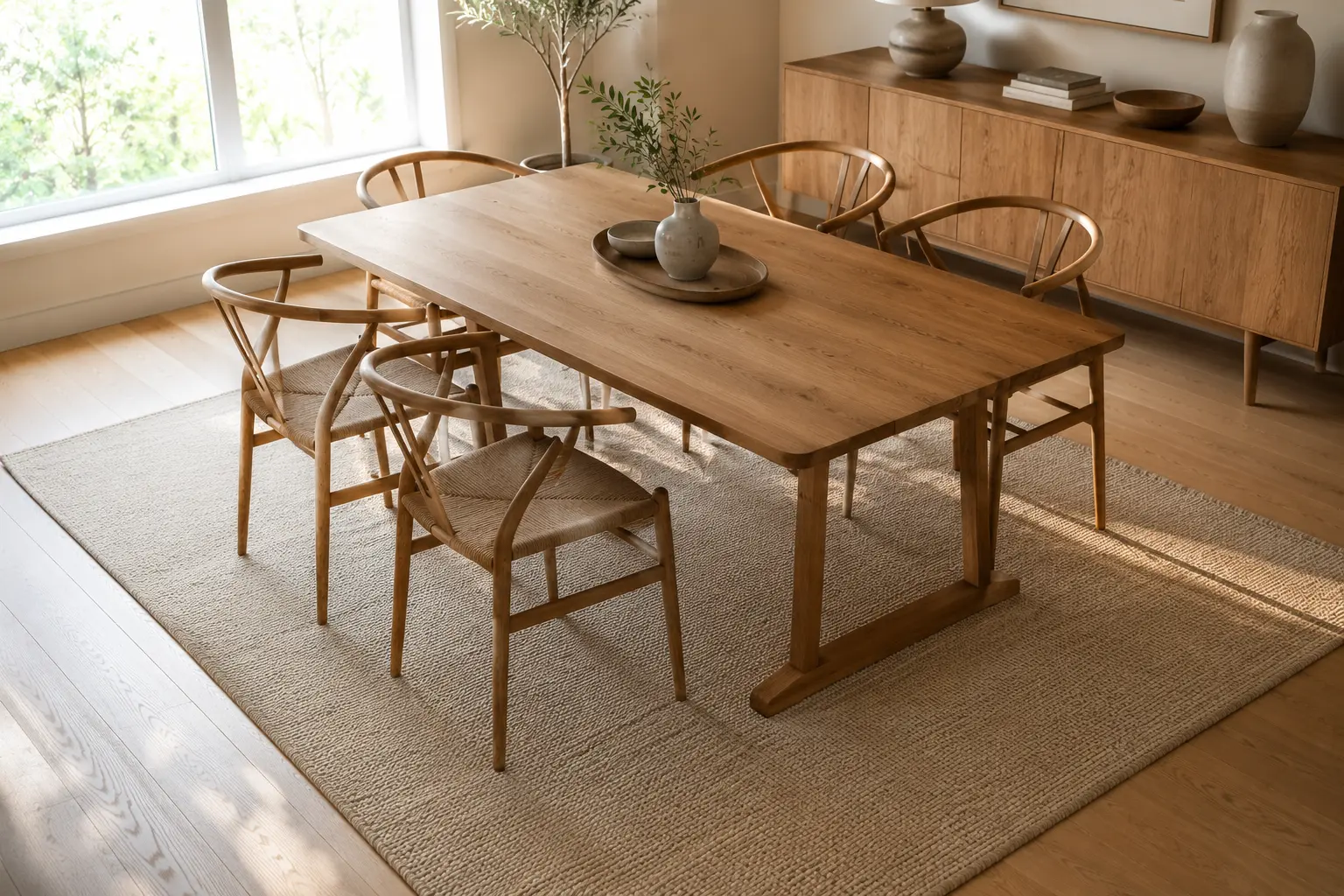
Dining Room
Stick to low-pile here. Chair legs need to glide smoothly, and a thick pile can make chairs wobble or drag unevenly, which is both inconvenient and hard on the rug fibers over time.
Entryway & Hallway
Low-pile is generally the better choice. These high-traffic zones are exposed to dirt and moisture, and a flatter, denser weave tends to hold up better than something plush.
Stairs & Runners
Low to medium pile is the safer option. A thick pile on stairs can become a trip hazard, and it tends to wear unevenly on stair edges faster than on flat floors.
Homes with Kids or Pets
A densely woven, medium-pile rug tends to be the sweet spot in these households: forgiving enough for comfort and play, but manageable when it comes to spills, fur, and everyday mess.
Thickness vs. Durability: The Trade-Off You Need to Know
It's tempting to assume "thicker equals better," but that's not quite accurate. Thicker, plusher rugs generally feel softer and more luxurious, but they also tend to:
- Crush and flatten more easily — under furniture and heavy foot traffic.
- Trap dust, pet hair, and allergens — more readily than a flatter weave.
- Take longer to dry — if they get damp, which can raise the risk of odor or mildew over time.
- Cost more — since they use significantly more material.
Low-pile rugs trade some of that plushness for durability, easier cleaning, and better performance in busy spaces. Neither option is "better" in absolute terms. It comes down to matching the rug to how the room actually gets used.
Rug Thickness and Doors/Furniture Clearance
A rug that's too thick can physically stop doors from swinging open or closed, particularly in rooms with limited clearance underneath. Before buying a high-pile rug for a space near a door, it's worth checking that gap first.
Thick piles can also affect furniture stability, since chair and table legs may sink unevenly into a plush rug and cause wobble. If a room includes dining chairs, desk chairs, or anything on casters, a lower pile is usually the more practical choice.
Matching Your Rug Pad Thickness to Your Rug
Your rug pad should complement your rug's thickness, not work against it. As a general guideline:
| Rug Type | Recommended Pad Thickness | Notes |
|---|---|---|
| Flatweave / low-pile | 3–5 mm (⅛–3/16 in) | Prioritize grip over cushion to prevent slipping |
| Medium-pile | 6 mm (¼ in) | A reliable, all-purpose choice for most rooms |
| High-pile / shag | 6 mm (¼ in) or less | Avoid extra-thick pads, which can create instability or a trip hazard |
A pad that's too thick under a plush rug can actually make the whole setup feel less stable. When in doubt, match the pad to the rug rather than defaulting to the thickest option available.
Cleaning & Maintenance by Pile Height
Pile height has a direct impact on how much upkeep a rug needs.
- Low-pile — easy to vacuum, quick to dry, and generally low-maintenance. A solid choice for busy households.
- Medium-pile — reasonably easy to maintain with a standard vacuum, though occasional deeper cleaning helps prevent matting.
- High-pile — needs more frequent vacuuming, ideally with a setting designed for plush rugs, and professional cleaning is often worth considering for hand-knotted or wool styles.
Quick Reference: Rug Thickness Chart
| Category | Pile Height (approx.) | Best For | Maintenance |
|---|---|---|---|
| Low-pile | 0–6 mm (0–¼ in) | Entryways, hallways, dining rooms, stairs | Easy |
| Medium-pile | 6–12 mm (¼–½ in) | Living rooms, family spaces, kids/pets | Moderate |
| High-pile | 12 mm+ (½ in+) | Bedrooms, low-traffic cozy corners | Higher effort |
Frequently Asked Questions
What is a good rug thickness for a living room?
A medium pile, roughly 6–12 mm (¼–½ in), tends to offer the best balance of comfort and everyday durability for most living rooms.
Is a thicker rug always better?
Not necessarily. Thicker rugs feel softer, but they crush more easily, trap more dust, and can be harder to maintain. The right thickness depends on the room and how it's used.
What thickness rug do I need under a dining table?
Choose a low-pile rug so dining chairs can move smoothly without dragging or wobbling.
How thick should a rug pad be compared to the rug?
As a rule, match your pad thickness to your rug's pile height rather than reaching for the thickest pad available. Thin rugs pair with thin pads, and even plush rugs generally do best with a moderate pad, not an extra-thick one.
Does rug thickness affect how long a rug lasts?
Generally, yes. Low-pile rugs tend to hold up better in high-traffic areas, while high-pile rugs are better suited to lighter-use spaces where they won't be constantly compressed.
What's the best rug thickness for pets or high-traffic areas?
A dense, medium-pile rug is usually the most practical choice: soft enough to be comfortable, but manageable when it comes to cleaning and everyday wear.
Will a thick rug stop my door from closing?
It can, especially in rooms with minimal floor clearance. It's worth measuring the gap under your door before choosing a high-pile rug for that space.
How do I measure rug pile height at home?
Use a ruler or caliper to measure from the top of the rug's backing to the tip of the fibers, leaving out any pad or extra backing material.
The "right" rug thickness isn't really about finding the plushest option on the shelf. It's about matching the rug to the room, the traffic it sees, and how you actually live in the space. Get that part right, and the rest tends to sort itself out.
Post a Comment for "How to Choose the Right Rug Thickness"