
Should All Furniture Sit on the Rug? A Designer-Backed Answer
If you've ever stood in your living room wondering whether your sofa is supposed to sit fully on the rug or just graze the edge of it, you're not alone. It's one of the most common styling questions in interior design, and after rearranging more than a few rugs myself over the years, I can tell you the honest answer is: it depends on your rug, your room, and the look you're going for. Here's how to figure out what actually works in your space.
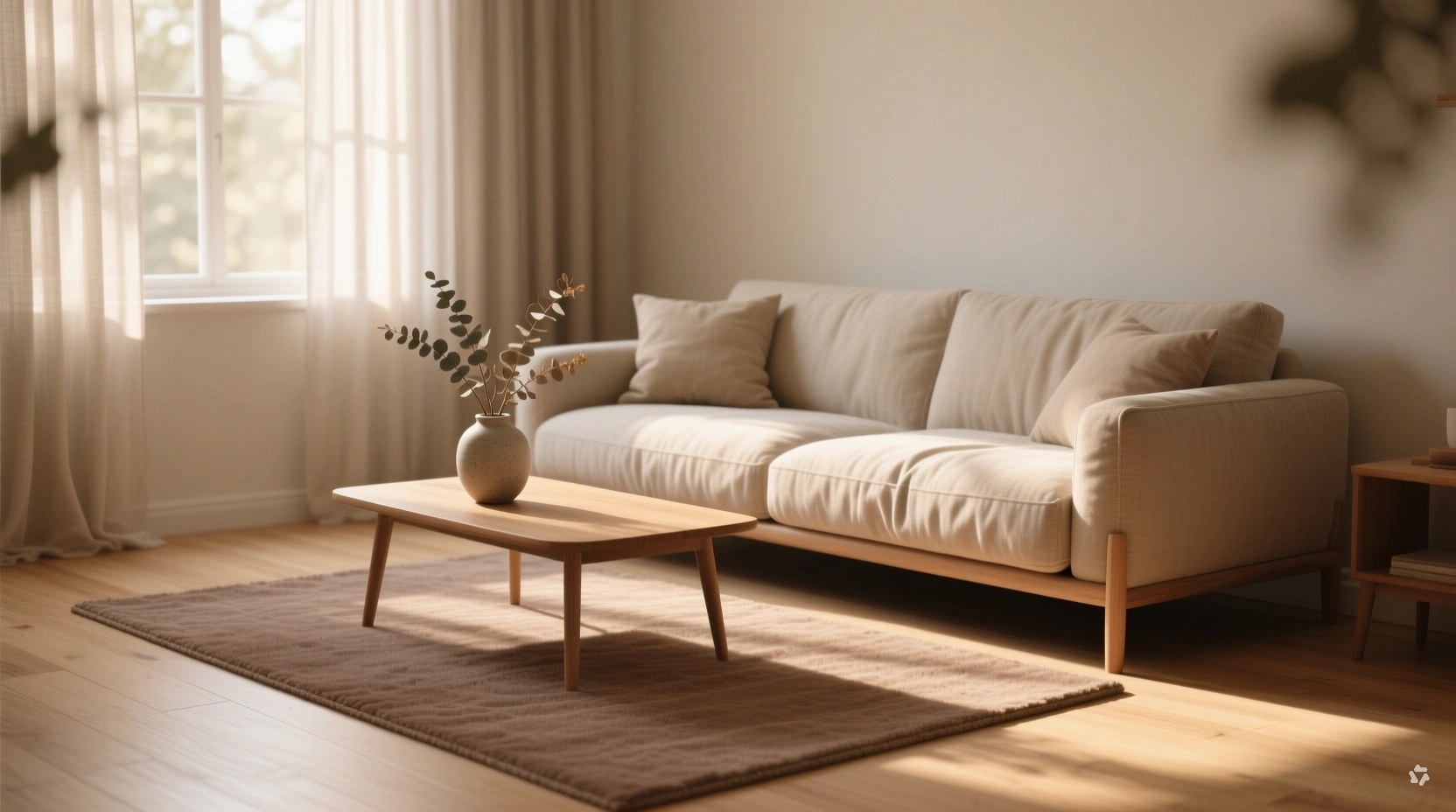
The Short Answer: It Depends on Rug Size and Room Function
There's no single rule that applies to every room. What matters most is the size of your rug relative to your furniture, and whether you want the rug to visually anchor the whole seating area or simply add warmth underfoot.
As a general guideline, a larger rug gives you more flexibility to get all furniture legs on it, while a smaller or medium rug usually works best with just the front legs resting on top. Both are valid design choices — it's really about proportion and intention, not a fixed law. For a deeper look at sizing logic, our complete rug placement rules guide breaks this down room by room.
The Three Furniture-on-Rug Placement Styles
All Legs on the Rug
This is the most polished, "pulled-together" look, and it's the go-to approach in larger living rooms. When every piece of seating sits fully on the rug, it reads as one cohesive, grounded arrangement rather than furniture scattered around a rug.
The tradeoff is size: you'll need a rug substantial enough to comfortably fit your entire seating group, which usually means a bigger investment.
Front Legs On, Back Legs Off
This is the most common compromise, and for good reason — it works in almost any room size. The front legs of your sofa and chairs sit on the rug, while the back legs rest on the bare floor.
This approach still visually connects the furniture to the rug without requiring an oversized piece. It's particularly forgiving in small to mid-sized living rooms where a floor-to-floor rug just isn't realistic.
No Legs on the Rug (Floating/Accent Style)
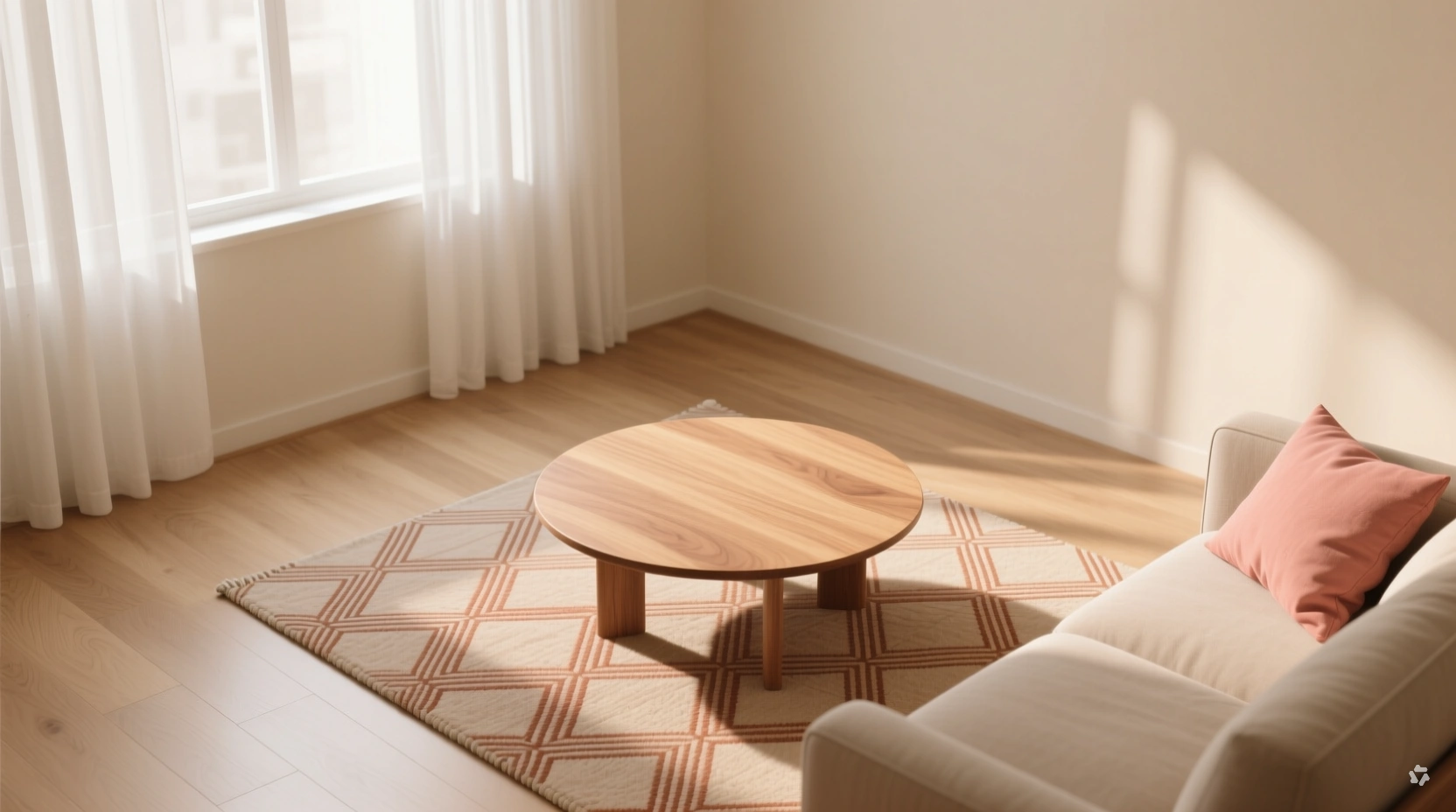
Sometimes a rug isn't meant to anchor furniture at all — it's there purely to add color, texture, or softness to a space. In this case, the rug floats independently, perhaps under a coffee table or in the open area in front of a seating group, with no furniture legs touching it.
This works well for smaller accent rugs, layered looks, or rooms where the furniture arrangement is already well-defined by other elements, like a fireplace or built-in shelving. If your seating includes a large sectional, our guide on choosing an area rug for a sectional sofa covers sizing specifics for that layout.
How to Decide Which Style Fits Your Room
The right placement style comes down to your room's size, layout, and how much of a statement you want the rug to make.
Small Rooms and Smaller Rugs
In compact spaces, trying to force "all legs on" often means buying a rug that overwhelms the room. Stick with the front-legs-on approach — it keeps furniture grounded without eating up all your visual floor space.
Large Living Rooms and Open-Concept Layouts
Bigger rooms — especially open-concept layouts — tend to benefit from the all-legs-on look. A generously sized rug helps define a distinct "zone" for conversation or lounging, which is especially useful when there's no wall to naturally separate spaces.
When the Rug Is Meant as an Accent, Not an Anchor
If your rug's job is purely decorative — adding pattern, warmth, or a pop of color — rather than functionally defining the room, it's perfectly fine to let it float with no furniture touching it at all.
Room-by-Room Guidelines
Furniture-on-rug placement isn't just a living room question — each room in the house has its own practical considerations.
Living Room
Aim for at least the front legs of your sofa and chairs on the rug. If your rug is large enough, extending to all legs creates the most cohesive, finished look.
Bedroom
A popular approach many designers suggest is letting the rug extend roughly 45–60 cm (18–24 in) beyond the sides and foot of the bed, so your feet land on softness when you get up — even if the head of the bed and nightstands remain off the rug. Treat this as a starting point rather than a strict measurement, since bedroom layouts vary a lot.
Dining Room
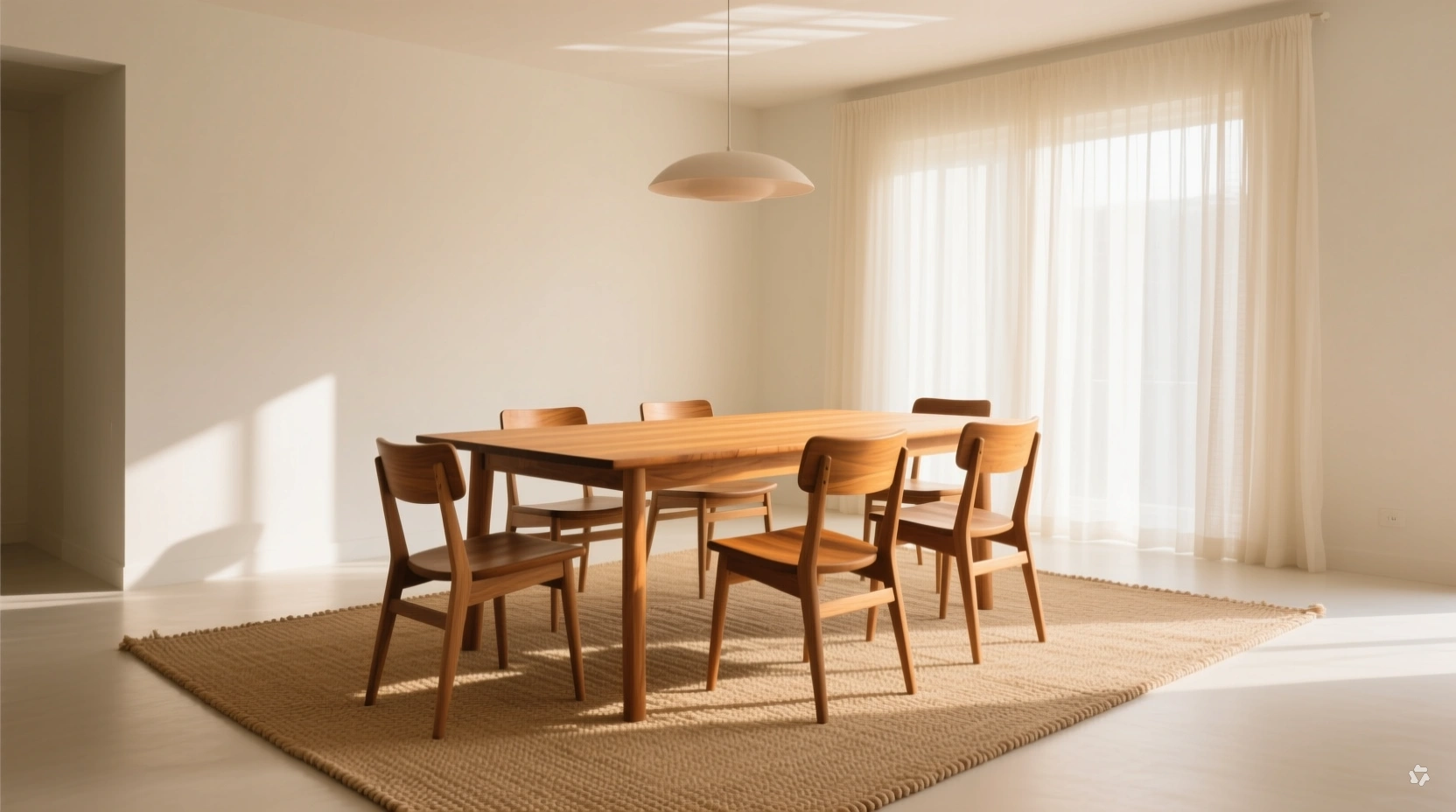
This is one space where "all legs on" really matters practically, not just aesthetically. You'll want enough rug that the back chair legs stay on it even when pulled out to sit down — otherwise chairs can catch on the rug edge or wobble on an uneven surface.
Entryway & Hallway
Runners and entry rugs typically don't involve furniture legs at all — the priority here is coverage of the walking path for comfort and safety, not furniture placement.
Quick Rule of Thumb: Rug Size vs. Furniture Placement
These figures are general starting points based on common design guidance, not fixed standards — always measure your own furniture and room before buying.
| Room Type | Recommended Placement | Approx. Rug Size Guideline |
|---|---|---|
| Small living room | Front legs on, back legs off | 160 x 230 cm (approx. 5'3" x 7'7") |
| Large/open-concept living room | All legs on | 250 x 350 cm (approx. 8'2" x 11'6") or larger |
| Bedroom (queen/double) | Rug extends beyond sides & foot of bed | 200 x 300 cm (approx. 6'6" x 9'10") |
| Dining room (6-seat table) | All chair legs stay on rug when pulled out | Table size + approx. 60–75 cm (24–30 in) on all sides |
| Entryway/hallway | No furniture legs involved; covers walkway | Runner sized to hallway width and length |
Common Mistakes to Avoid
A few small missteps are behind most rug-and-furniture layouts that feel "off." Here's what to watch for:
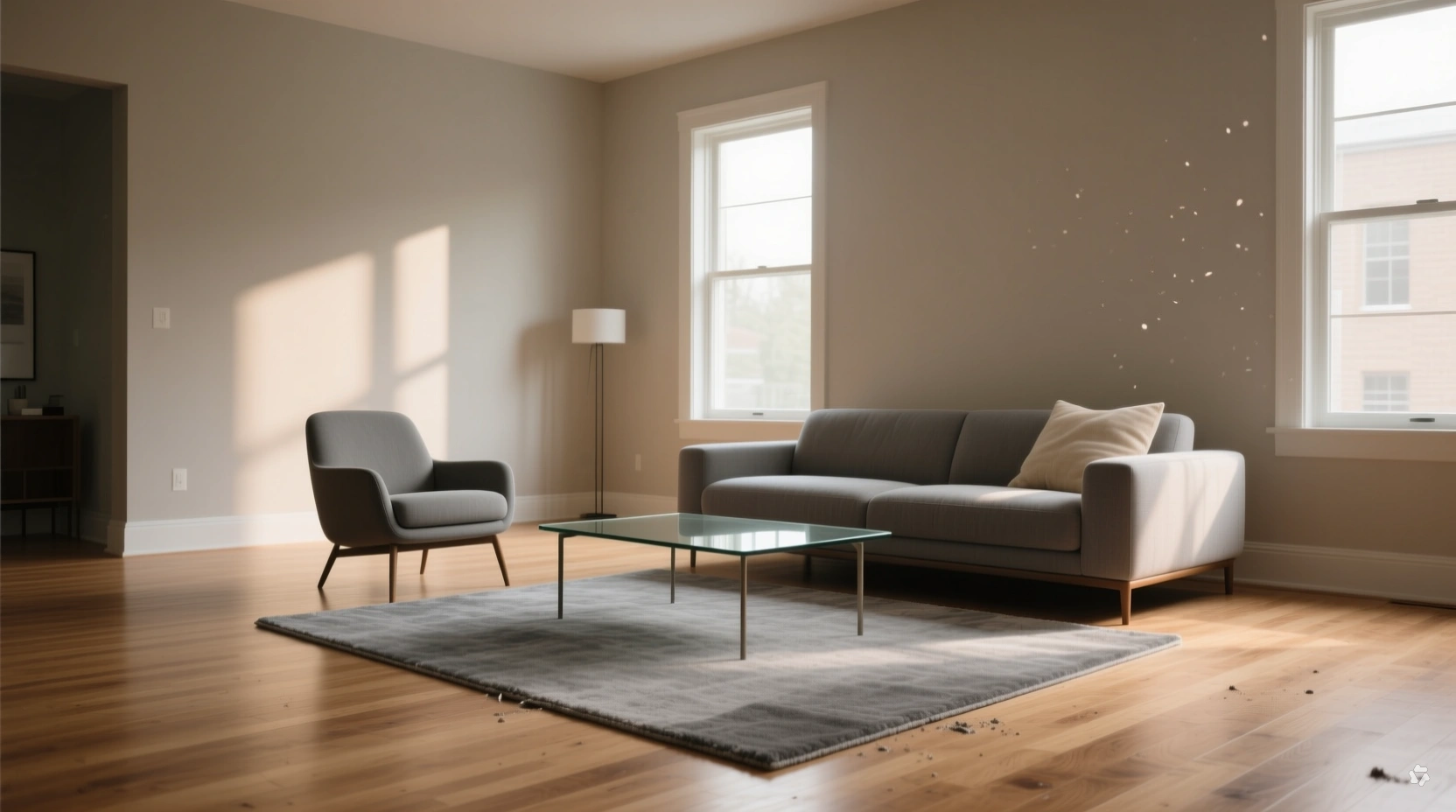
- Choosing a rug that's too small for the furniture grouping, leaving pieces looking stranded around the edges
- Placing a rug dead center under just a coffee table, disconnected from the surrounding seating
- Forgetting the dining chair pull-out distance, so chairs slide off the rug when someone sits down
- Mixing placement styles inconsistently within the same room — for example, one chair fully on and another fully off — without a clear visual reason
- Skipping a rug pad, which affects both how the rug sits and how furniture legs settle onto it
Frequently Asked Questions
Do all four legs of a sofa need to be on the rug?
No. Having just the front legs on the rug is a widely used and perfectly acceptable approach, especially in smaller rooms.
What happens if my rug is too small for my furniture?
It tends to make the room feel visually disconnected, with furniture appearing to float around the rug rather than relate to it. Sizing up, or switching to a "no legs on" accent style intentionally, both solve this.
Is it OK for only the front legs of a couch to be on the rug?
Yes — this is one of the most common and flexible placement styles, and it works in nearly any room size.
How much rug should show around a dining table?
A commonly used guideline is roughly 60–75 cm (24–30 in) of rug extending beyond the table edge on all sides, so chairs remain on the rug even when pulled out. Measure your own table and chair layout to be sure.
Should a bedroom rug go under the whole bed or just partially?
Either works. Many people prefer the rug extending 45–60 cm (18–24 in) beyond the sides and foot of the bed, so it's underfoot when getting up, without needing to cover the entire floor.
What size rug do I need for all furniture legs to fit on it?
Measure your full seating arrangement, including armrests, and add a small margin — a common guideline is around 15–20 cm (6–8 in) beyond the outer edges of the furniture.
Do I need a rug pad if furniture legs are on the rug?
Yes, a rug pad helps prevent slipping, protects flooring, and keeps the rug from bunching under furniture weight over time.
Can a small accent rug work in a living room?
Absolutely — as long as it's used intentionally as a decorative layer rather than trying to anchor a full seating arrangement it's not sized for.
At the end of the day, there's no design police checking whether your rug rules are followed to the letter. The goal is simply a room that feels balanced and intentional — so trust your eye, measure before you buy, and let your space's size and function guide the decision rather than a strict rulebook.
Post a Comment for "Should All Furniture Sit on the Rug? A Designer-Backed Answer"