
Round vs Rectangular Rugs: Which Works Best?
You've picked the furniture, painted the walls, maybe even tracked down the perfect coffee table. The room still doesn't feel finished, and the reason is often shape, not color or texture. A round rug and a rectangular rug change how a room reads and functions in different ways, and the choice usually comes down to a few practical questions about your space.
Round vs. Rectangular Rugs at a Glance
Before getting into room-by-room specifics, here's a quick comparison of what each shape naturally does in a space.
| Round Rugs | Rectangular Rugs | |
|---|---|---|
| Best for | Circular furniture, focal points, softening angles | Linear furniture groupings, larger rooms |
| Visual effect | Soft, casual, dynamic | Structured, grounded, classic |
| Works well in | Reading nooks, entryways, kids' rooms, round dining tables | Living rooms, dining rooms, bedrooms, open-concept zoning |
| Placement difficulty | Slightly trickier to center and align | Easier to align with walls and furniture |
| Common sizes | 120–240 cm diameter (approx. 4'–8') | 160×230 cm to 300×400 cm (approx. 5'3"×7'6" to 10'×13') |
Neither shape is objectively better. The right one depends on your room's proportions, your furniture layout, and the mood you're after. In practice, when a room feels a little off and it's hard to say why, shape is usually one of the first things worth checking, often before color or pattern.
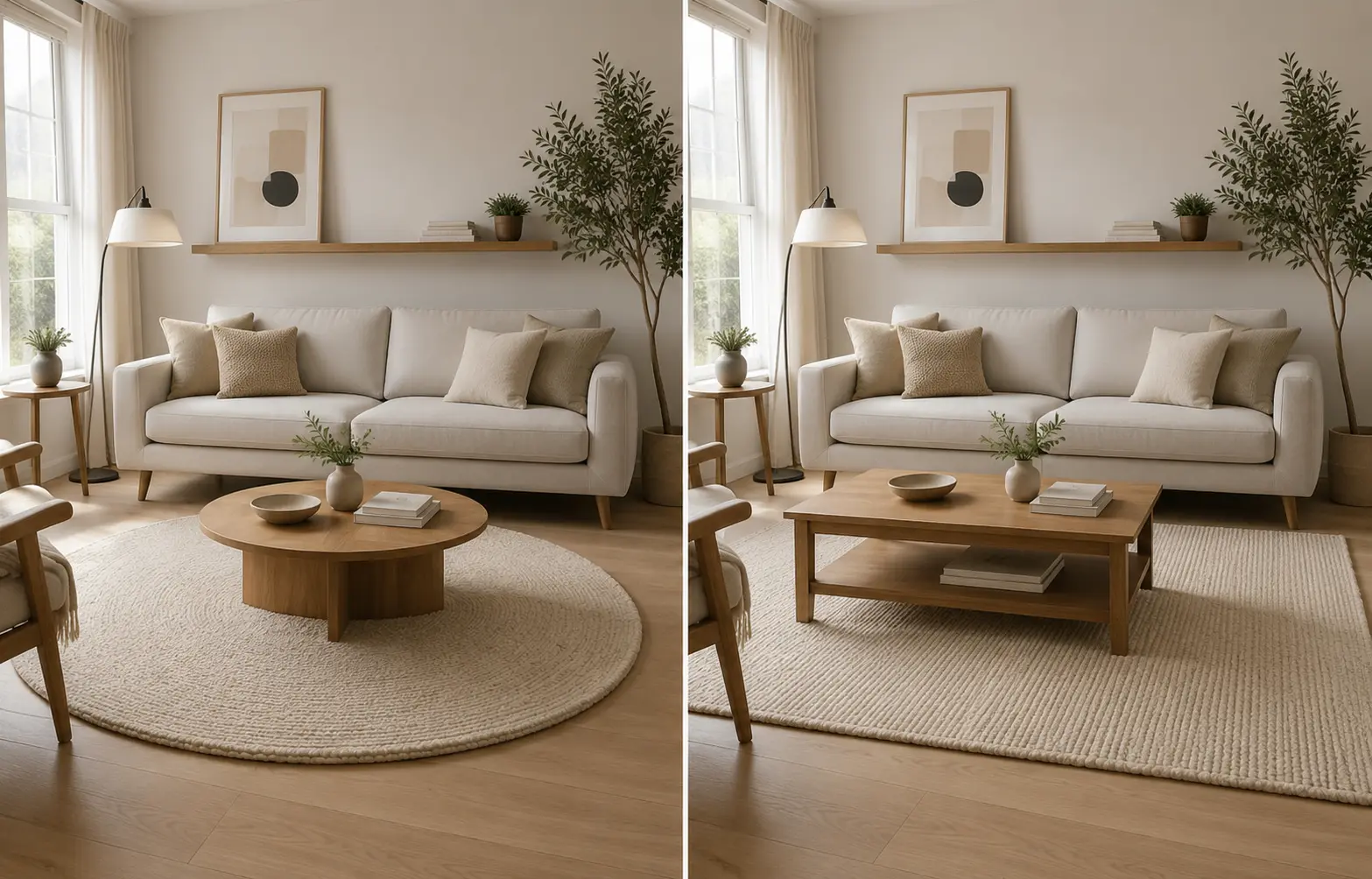
How Room Shape Should Guide Your Choice
Most rooms are naturally rectangular, which is why a rectangular rug tends to feel at home in them: it echoes the room's own lines and adds a sense of order. A round rug works against those lines on purpose. That's what makes it read as a deliberate design choice rather than the default.
If your room already has curves, a bay window, an arched doorway, a round dining table, a round rug picks up on that and ties the space together. In a strictly boxy room with no curves at all, a round rug can still work, but it will usually read as an accent rather than a backdrop.
Reading Your Furniture Layout
Beyond the room itself, look at how your furniture is arranged. That's usually the clearest signal of which shape will actually work underfoot.
Linear Furniture Groupings (Rectangular Rugs)
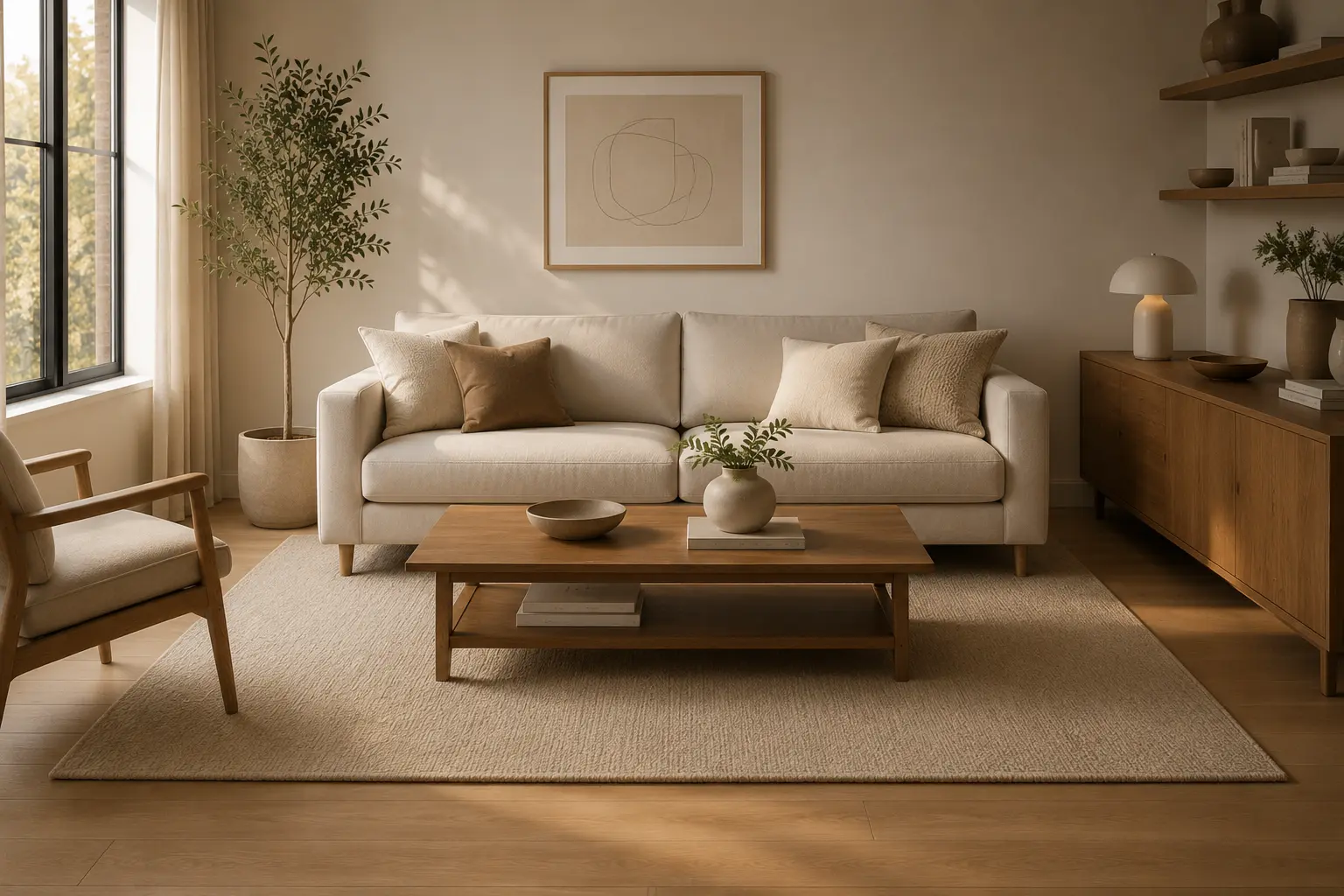
If your sofa, armchairs, and coffee table sit in straight lines facing each other (the most common living room setup), a rectangular rug generally looks more intentional. It gives each piece of furniture a clear home base and keeps the whole grouping visually connected.
Curved or Circular Arrangements (Round Rugs)
If you've got a round coffee table, a curved sectional, or chairs pulled into a loose circle for conversation, a round rug reinforces that shape instead of fighting it. It also tends to work well in corners or nooks, where a rectangle would leave awkward leftover space.
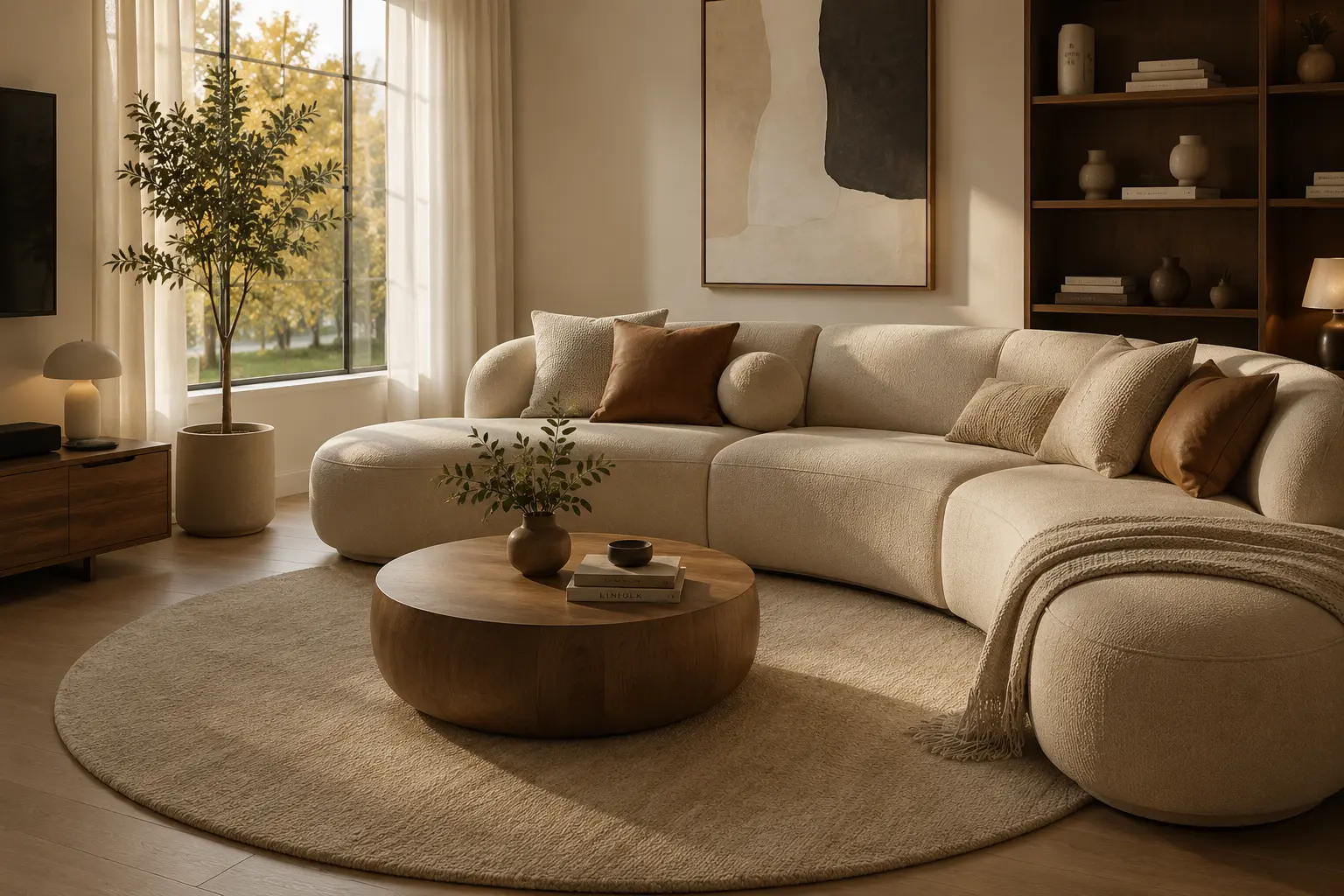
The Visual Effect Each Shape Creates
Why Rectangular Rugs Feel Structured
Rectangular rugs do a lot of unglamorous work. They anchor furniture, mark boundaries in open-plan spaces, and give a room a sense of order without drawing attention to themselves. If you want a room to feel calm and grounded rather than showy, a rectangular rug is usually the safer, more versatile choice.
Why Round Rugs Feel Soft and Dynamic
Round rugs do the opposite job. They interrupt straight lines and add a bit of movement. In a room full of boxy furniture, a round rug softens the overall look and gives the eye somewhere to rest. It's also good at pulling attention toward a single focal point, like a chandelier, a piano, or a standout coffee table.
Choosing by Room
Living Room
Rectangular is the traditional pick here, especially for anchoring a full seating arrangement. A round rug works well as an alternative in smaller living rooms, or layered under a round coffee table for a softer look.
Dining Room
As a general guideline, it helps to match the rug shape to the table shape:
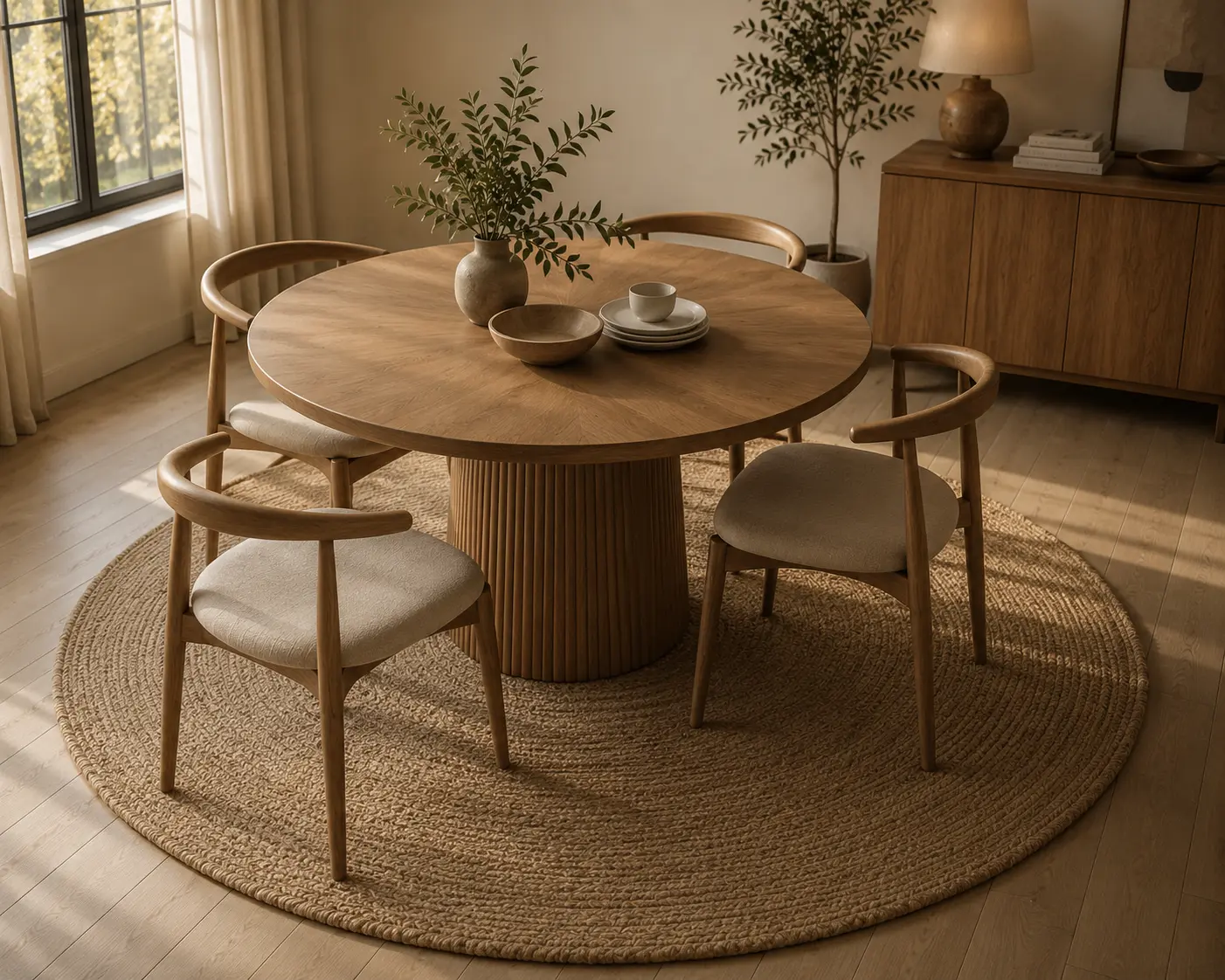
- Round table → round rug, sized generously so chairs stay on the rug even when pulled back
- Rectangular table → rectangular rug, extending well beyond the table's edges
Bedroom
Rectangular rugs are the natural pick for spanning the width of a bed or running alongside it. Round rugs can work nicely as a smaller accent at the foot of the bed or beside a reading chair.
Entryway
Long, narrow entryways usually call for a rectangular runner. In smaller or more open foyers, a round or oval rug can soften the space and slow down the transition into the home.
Kids' Room or Nursery
Round rugs are a popular choice here since they have no sharp corners and pair naturally with open floor play. Rectangular rugs still work well under a bed or desk if the room's layout is more linear.
Home Office
If your desk sits against a wall, a rectangular rug underneath keeps things clean and grounded. In a smaller or oddly shaped office, a round rug can make tight corners feel less cramped.
Sizing and Placement Rules to Get Right
Shape only gets you halfway there. Size and placement do the rest. These are general design guidelines rather than fixed rules, but they're a solid starting point in most rooms:
- Leave roughly 45–60 cm (about 18–24 inches) of bare floor between the rug's edge and the walls in a living room
- In dining rooms, aim for the rug to extend at least 60 cm (about 24 inches) beyond the table's edge on all sides, so chairs stay on the rug when pulled out
- At minimum, the front legs of major furniture pieces should rest on the rug; full coverage looks even more polished if your budget allows
- When in doubt, size up rather than down. An undersized rug is one of the most common styling mistakes in real rooms
- For round rugs specifically, measure from the center of the intended furniture grouping outward in every direction so nothing hangs off the edge
Note: exact spacing preferences can vary depending on room size and personal taste, so treat the numbers above as a flexible starting point, not a strict standard.
Can You Mix Round and Rectangular Rugs in One Space?
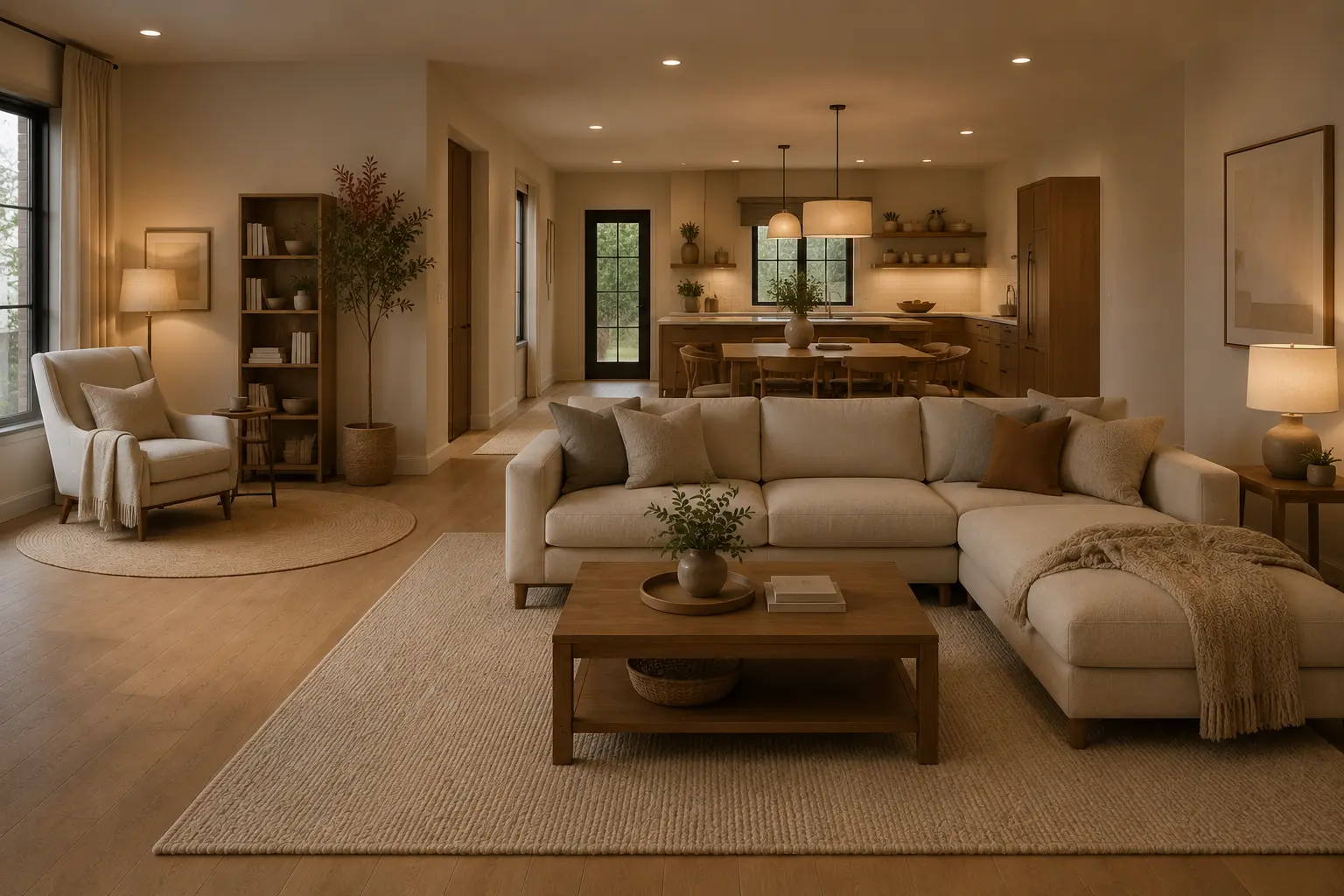
Yes, and it's a useful trick in open-concept homes. Use a round rug to define a reading nook or accent chair while a rectangular rug anchors the main seating area, and you can visually separate zones without adding a single wall. The contrast in shapes reads as intentional rather than mismatched, especially if you keep the color palette consistent between the two.
If you'd rather keep things simple, sticking to one shape throughout an open space works just as well. It creates a calmer, more unified look instead of a layered one.
Quick Decision Checklist
- Is your furniture arranged in straight lines? → Rectangular
- Do you have a round table, curved sofa, or circular architectural feature? → Round
- Is the room long and narrow? → Rectangular
- Is the space small, boxy, or in need of softening? → Round
- Are you zoning an open-concept room? → Either — consider mixing shapes
Frequently Asked Questions
Is a round rug or rectangular rug better for a living room?
Rectangular is more common and generally easier to work with for a full seating arrangement, but round works well in smaller rooms or under a round coffee table.
What size round rug do I need for my living room?
As a starting point, measure the width of your seating grouping and add enough diameter so at least the front legs of each piece sit on the rug — often somewhere between 180–240 cm (about 6'–8') in an average living room, though this varies by room size.
Can you put a round rug under a rectangular coffee table?
Yes, this is a popular contrast look. Just make sure the rug is large enough that the table doesn't visually overwhelm the circular shape beneath it.
Do round rugs make a small room look bigger?
They can. Because a round rug has no hard corners, it tends to make a small space feel more open and less boxed-in, especially in lighter colors.
What shape rug is best for a small dining table?
Match it to the table — a round table pairs with a round rug, and a small rectangular table pairs with a small rectangular rug, sized to keep chairs on the rug when pulled out.
Should the rug shape match the table shape or the room shape?
Table shape usually takes priority in dining areas; room shape and furniture layout matter more in living rooms and bedrooms.
Can I mix round and rectangular rugs in the same open-concept space?
Yes — it's an effective way to define separate zones, as long as you keep colors or materials cohesive so the space still feels connected.
What's the rule for how much rug should be under furniture?
At minimum, the front legs of major furniture pieces should touch the rug; full coverage under all furniture legs gives the most polished, grounded look.
There's no single correct answer here. It's whatever shape makes sense for your room, your furniture, and how you actually want the space to feel. Pay attention to the lines already in the room, use the sizing guidelines as a starting point, and the right choice usually becomes obvious pretty quickly.
Post a Comment for "Round vs Rectangular Rugs: Which Works Best?"