
Rug Placement Rules Every Homeowner Should Know
You've found the rug you love, brought it home, and rolled it out, and somehow the room still feels off. Usually the rug itself isn't the problem. It's where it's sitting. Rug placement gets less attention than color or pattern, but it's often the thing quietly holding a room together, or quietly working against it.
Why Rug Placement Matters More Than You Think
A rug does more than sit underfoot. It tells your eye which furniture belongs together, defines the edges of a "zone" within a room, and can make an open-plan space feel intentional rather than scattered.
Placed well, a rug makes a room feel calmer and more resolved. Placed poorly, floating in the middle of the floor, disconnected from the furniture, or sized too small for the space, it can undo an otherwise well-designed room. In our experience this is the detail that trips people up more than color or pattern ever does, so it's worth getting right first.
The 3 Universal Rules of Rug Placement
Before getting into specific rooms, there are three principles that apply almost everywhere in the home.
Rule 1: Anchor to Furniture, Not the Walls
A rug should relate to the furniture grouping it sits beneath, not simply fill floor space between four walls. Think of it as the piece that ties your sofa, chairs, bed, or table together, not as wall-to-wall flooring.
If a room has an off-center fireplace, an awkward walkway, or a shared living-dining zone, center the rug on the furniture or activity area, not on the room itself. This becomes especially important in open-concept living rooms, where the rug often does the work of defining a zone that walls no longer do.
Rule 2: Leave the Right Amount of Floor Showing
Rugs need breathing room. As a general guideline, leave at least 15–20 cm (about 6–8 inches) of bare floor between the rug's edge and the wall in smaller rooms, and up to 45–60 cm (18–24 inches) in larger ones.
Too little exposed floor and the rug overwhelms the room; too much and it looks like an afterthought, floating in the middle of the space.
Rule 3: Match Rug Size to Room Size
A too-small rug is one of the most common styling mistakes we see. It's an easy trap even for people who've decorated several rooms before. When in doubt, size up rather than down. A slightly larger rug will almost always look more intentional than one that leaves furniture stranded off its edges.
Living Room Rug Placement Rules
The living room is where most people get stuck, mainly because there are so many possible layouts.
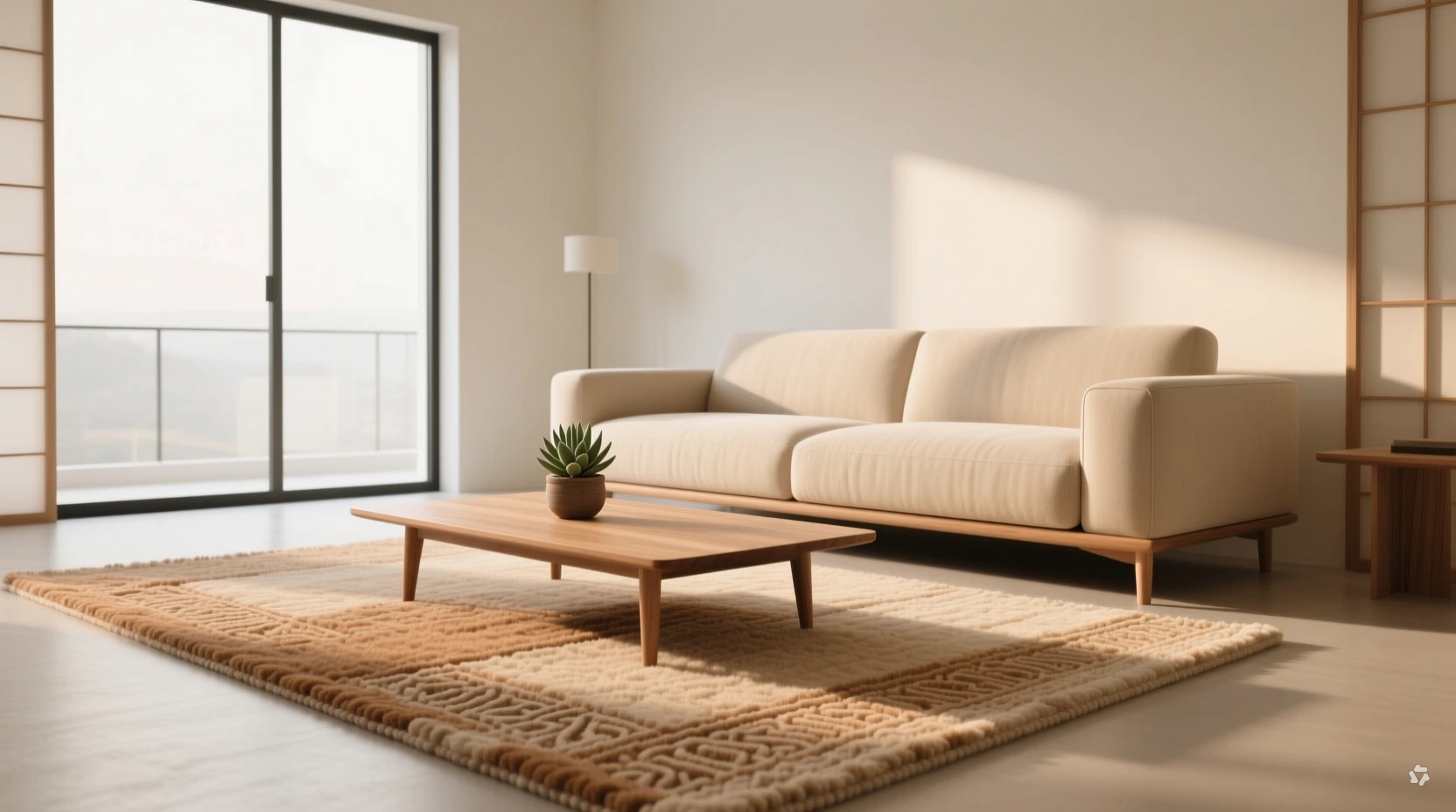
All Legs On vs. Front Legs On
There are two reliable approaches:
- Front legs on the rug: The front legs of your sofa and accent chairs rest on the rug, while the back legs stay off it. This is the most flexible option and works well in small to mid-sized rooms.
- All legs on the rug: Every piece of seating sits fully on the rug. This creates a more expansive, grounded look and suits larger rooms or open-concept living areas.
Either approach works; the key is consistency. Avoid a rug that only reaches the coffee table, leaving the sofa and chairs off it entirely, since that's what makes a room feel unanchored. If your living room is built around a large sectional sofa, sizing gets a bit trickier, and it's worth a closer look before you shop.
Best Sizes for Common Living Room Layouts
Use this as a starting point, then adjust based on your actual seating area.
| Room size (approx.) | Rug size (metric) | Rug size (imperial) |
|---|---|---|
| Small living room | 200 x 250 cm | 6'6" x 8'2" |
| Medium living room | 240 x 300 cm | 8' x 10' |
| Large living room | 270 x 360 cm | 9' x 12' |
Measure your seating area (not the whole room) before shopping, and choose the closest size up from that measurement.
Bedroom Rug Placement Rules
Bedroom rugs are as much about comfort as proportion. That first step out of bed should land somewhere soft.
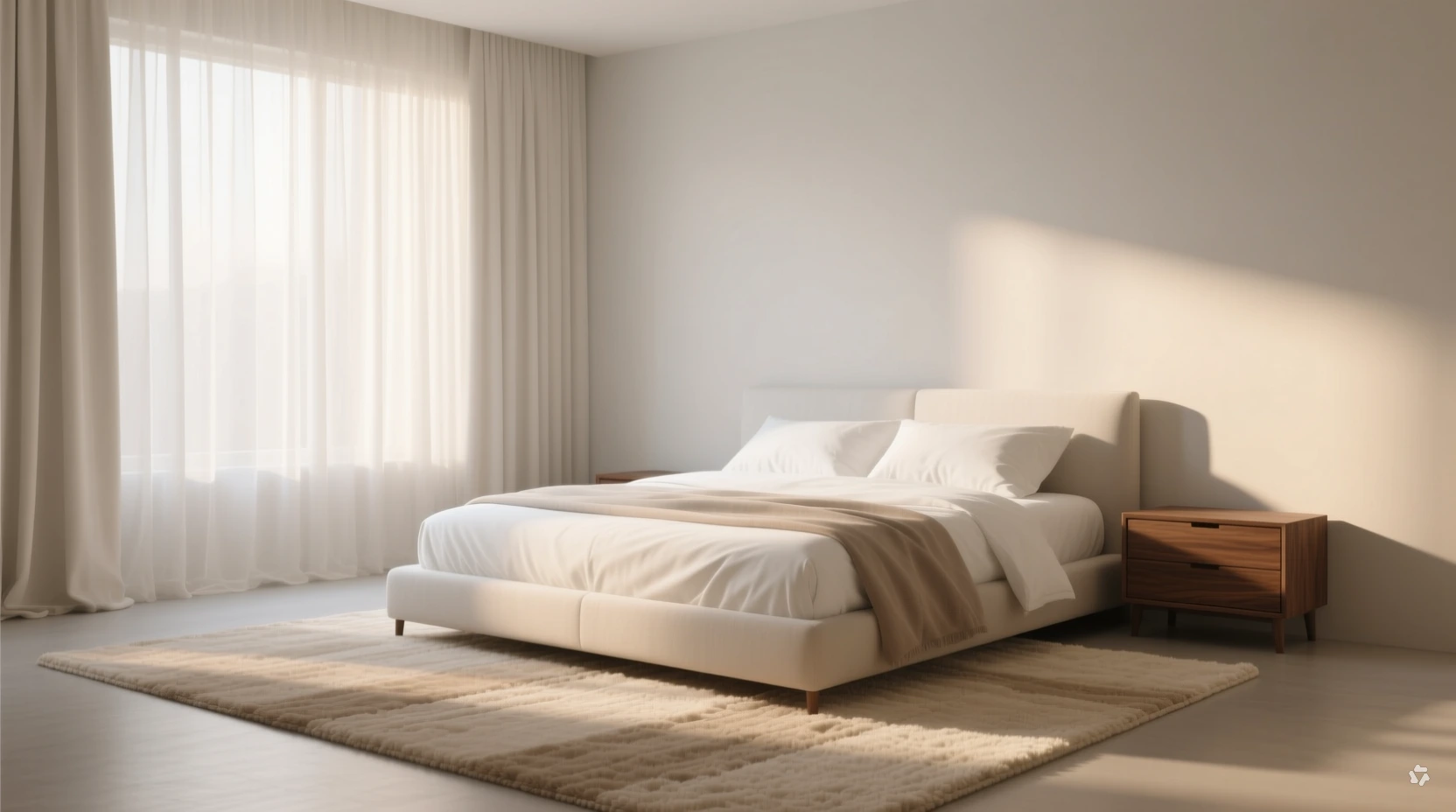
There are three common approaches, depending on the size of the room and the rug:
- Full coverage: The rug extends well beyond the sides and foot of the bed, with nightstands sitting fully on top. This creates the most luxurious, cohesive look and suits larger bedrooms.
- Two-thirds coverage: The rug sits under the lower two-thirds of the bed, extending beyond the foot and both sides. This tends to be the go-to option in design guides, since it balances softness underfoot with a manageable size.
- Runners on each side: Two runners placed on either side of the bed, not extending past the foot. This works well in smaller rooms or with beds pushed against a wall.
A helpful guideline: aim for the rug to extend 45–60 cm (18–24 inches) beyond the sides of the bed where space allows.
Rug Size by Bed Size
| Bed size | Suggested rug size (metric) | Suggested rug size (imperial) |
|---|---|---|
| Twin/Single | 150 x 240 cm | 5' x 8' |
| Full/Double | 180 x 270 cm | 6' x 9' |
| Queen | 240 x 300 cm | 8' x 10' |
| King | 270 x 360 cm | 9' x 12' |
If a room can't accommodate the "ideal" size, which is common in smaller or older homes, don't force it. A well-placed smaller rug will always look better than an oversized one climbing the walls.
Dining Room Rug Placement Rules
Dining rooms are more forgiving in layout (there's really only one focal point, the table) but less forgiving in function. Chairs need room to move without catching on the rug's edge.
The Chair Pull-Out Rule
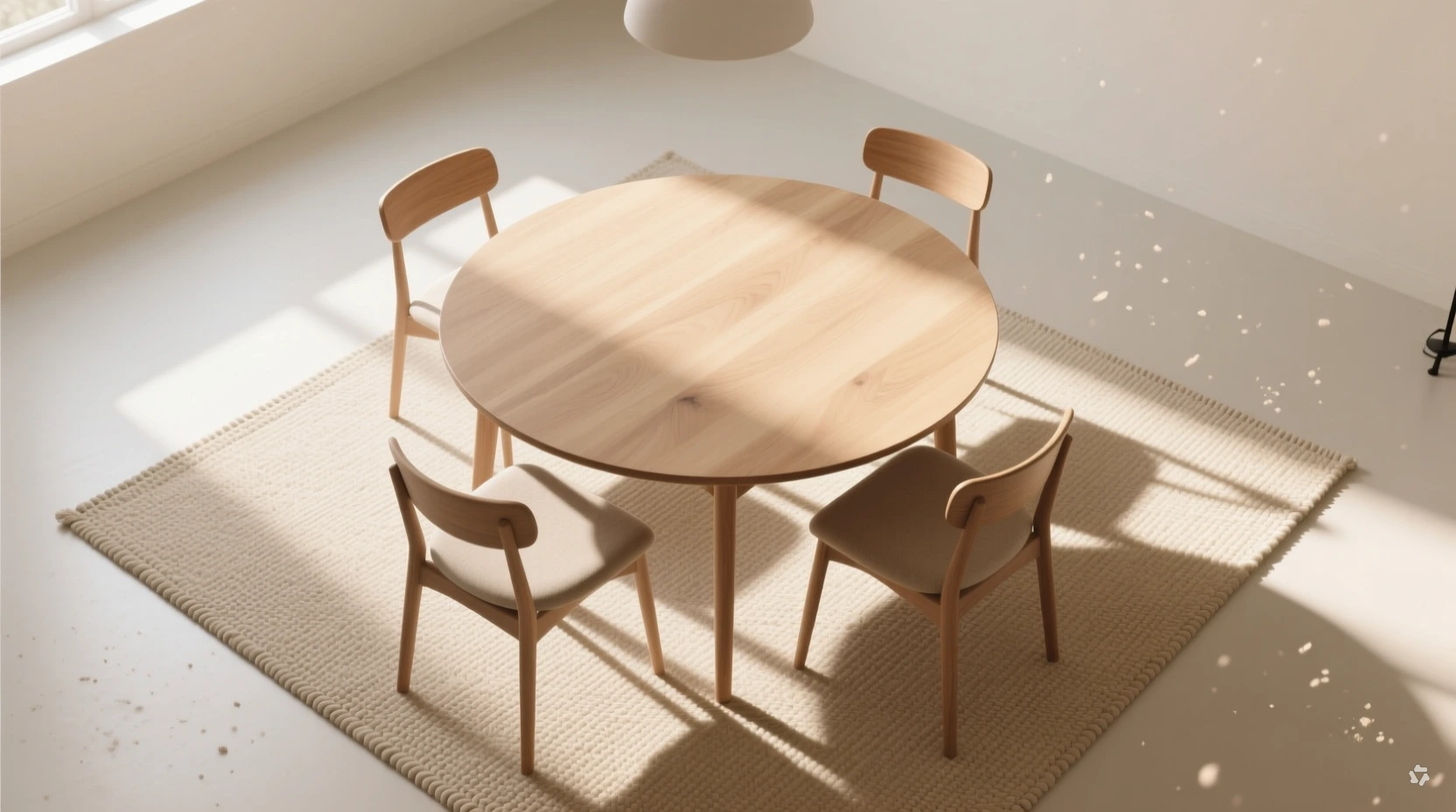
Leave at least 60–90 cm (24–36 inches) of rug beyond the edge of the table on all sides. This ensures chairs stay fully on the rug even when pulled out to sit down or stand up, a detail that's easy to overlook until someone trips on the edge mid-dinner.
Matching Rug Shape to Table Shape
- Round table → round rug
- Rectangular table → rectangular rug
- Oval table → oval or rectangular rug with generously rounded proportions
For pile height, a low-pile or flatweave rug is worth considering here, since it allows chairs to glide smoothly rather than catching on thicker fibers.
Kitchen, Entryway & Hallway Rug Rules
These high-traffic zones call for a slightly different mindset: durability and safety take priority over plushness.
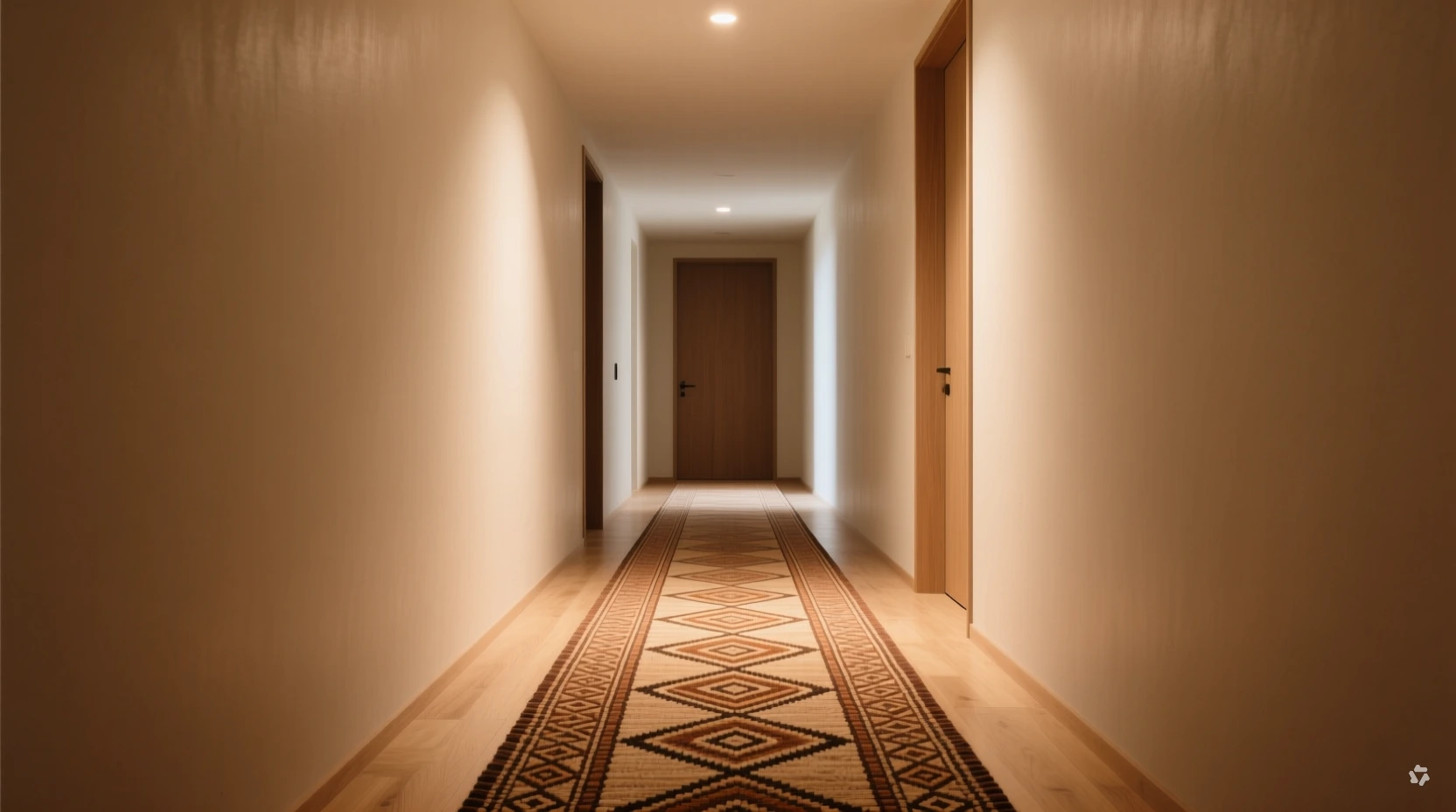
- Kitchen: Choose low-pile, washable rugs. Place a small rug (roughly 60 x 90 cm / 2' x 3') in front of the sink or stove, and use a runner along a walkway or prep aisle, leaving about 30 cm (a foot) of flooring visible on each side.
- Entryway: A rug here should be substantial enough to handle foot traffic and, ideally, sit fully within the space without blocking doors from swinging open.
- Hallway: Runners work best. Leave 10–13 cm (4–5 inches) of visible flooring on each side, and avoid a runner that's the exact length of the hallway, since a slightly shorter length looks more considered.
Home Office & Bathroom Rug Placement
A home office rug should let the desk sit centrally, with enough rug behind the chair for smooth, uninterrupted movement, ideally extending 60–70 cm (about 24–28 inches) beyond the chair when it's pulled out.
In the bathroom, a small rug (around 60 x 90 cm / 2' x 3') placed just in front of the sink is usually enough. For double-vanity bathrooms, a longer runner spanning both sinks works well.
Choosing the Right Pile Height and Material by Room
Placement and material go hand in hand: the wrong pile height can undercut even a perfectly placed rug.
- Living room & bedroom: Higher-pile or plush rugs (wool, viscose blends) add softness and comfort where you're likely to sit or walk barefoot.
- Dining room & kitchen: Low-pile or flatweave rugs (wool flatweave, cotton kilim, or performance fiber) allow chairs to move easily and are simpler to clean.
- Entryway & hallway: Durable, tightly woven materials that can handle repeated foot traffic and shoes.
Common Rug Placement Mistakes to Avoid
A few small missteps show up again and again. Here's what to watch for.
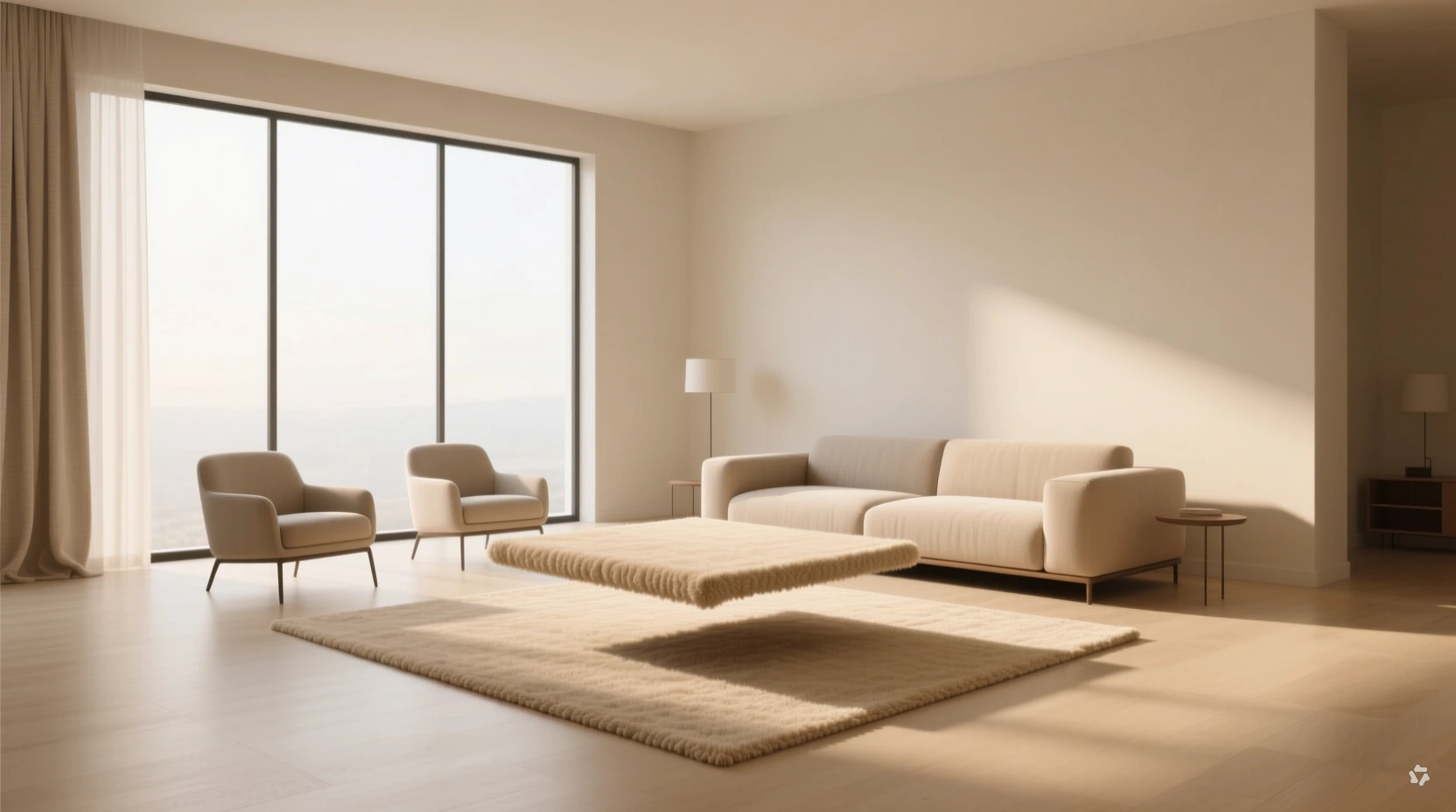
- Floating rug: Choosing a rug that only fits under the coffee table, leaving the sofa and chairs off it.
- Wall-centered, not furniture-centered: Centering the rug to the walls instead of the furniture grouping.
- Under-sized bedroom rug: Using a bedroom rug that sits too far under the bed, leaving little visible around the edges.
- Chairs off the rug: Selecting a dining rug that fits the table but not the chairs when pulled out.
- Too tight to the walls: Placing a rug too close to the walls, which visually shrinks the room.
- Skipping the rug pad: Beyond preventing slipping, a good underlay keeps the rug from bunching and adds a layer of cushioning underfoot.
When to Break the Rules (Awkward or Small Rooms)
Real rooms are rarely perfect rectangles. A fireplace might sit off-center, a door might swing into the space you'd otherwise use, or a room might simply be too narrow for the "ideal" rug size.
In these cases, treat the rules above as a starting point rather than a strict formula. If a queen bed leaves no room for an 8x10 rug without hitting the walls, a smaller size, or runners instead, is the better call. If a living room has an awkward corner, center the rug on the seating area rather than trying to force it into the room's exact geometry. The goal is always a room that feels balanced, not one that matches a diagram perfectly.
Frequently Asked Questions
How far should a rug be from the wall?
As a general rule, leave at least 15–20 cm (6–8 inches) of floor visible in smaller rooms, and up to 45–60 cm (18–24 inches) in larger rooms, so the rug reads as intentional rather than either overwhelming or lost in the space.
What size rug do I need for my living room?
Measure your seating area first. A rug should be large enough for at least the front legs of your sofa and chairs to rest on it, typically 240 x 300 cm (8' x 10') for medium rooms and 270 x 360 cm (9' x 12') for larger ones.
Should all furniture legs be on the rug?
Not necessarily. Front-legs-on is a flexible, widely used approach for small to mid-sized rooms. All-legs-on creates a more grounded, expansive look and suits larger or open-plan spaces. Either works, as long as it's applied consistently.
What size rug goes under a queen or king bed?
A queen bed typically pairs well with a 240 x 300 cm (8' x 10') rug, and a king bed with a 270 x 360 cm (9' x 12') rug, extending 45–60 cm (18–24 inches) beyond the sides where space allows.
How much rug should show around a dining table?
Aim for 60–90 cm (24–36 inches) of rug beyond the table's edge on all sides, so chairs remain on the rug even when pulled out.
Can a rug be too big for a room?
Yes. A rug that runs edge-to-edge with no visible floor can make a room feel smaller and the rug itself feel like wall-to-wall carpet rather than a defined piece. Some breathing room around the edges is part of what makes it look designed.
Do I need a rug pad or underlay?
It's worth using one in most cases. A good underlay prevents slipping and bunching, protects flooring underneath, and adds a layer of cushioning that also helps a rug feel more comfortable underfoot.
What's the best approach for small or awkward-shaped rooms?
Use the standard rules as a guide, not a strict formula. Prioritize keeping furniture connected and proportioned over hitting an exact measurement, and don't be afraid to size down or use runners if a "standard" size simply won't fit.
You don't need to memorize the exact measurements. Anchor the rug to your furniture, leave the room some breathing space, and let it pull everything together. Once that logic clicks, you'll start sizing up a room by eye, whether or not you've got a rug in hand yet.
Post a Comment for "Rug Placement Rules Every Homeowner Should Know"