
How to Place an Area Rug Under a Sectional Sofa
A sectional sofa takes up serious floor space, and without the right rug underneath it, the whole layout can end up looking unfinished. If you've stood in your living room wondering why the setup feels slightly off, the rug is usually the reason. This guide covers sizing, placement styles, and advice for specific sofa shapes, so you can get yours anchored properly.
Why Rug Placement Matters for a Sectional
A rug does more than soften the floor underfoot. It marks out the seating area, balances the visual weight of a large sofa, and connects the furniture to the rest of the room. Skip it, or size it wrong, and the sectional can end up looking stranded instead of pulled together.
Scale is why this matters more for a sectional than for a standard sofa. A sectional can take up an entire corner or wall, so the rug underneath ends up doing a lot of visual work. It's often the first thing that feels off in a new layout, before anyone can quite say why.
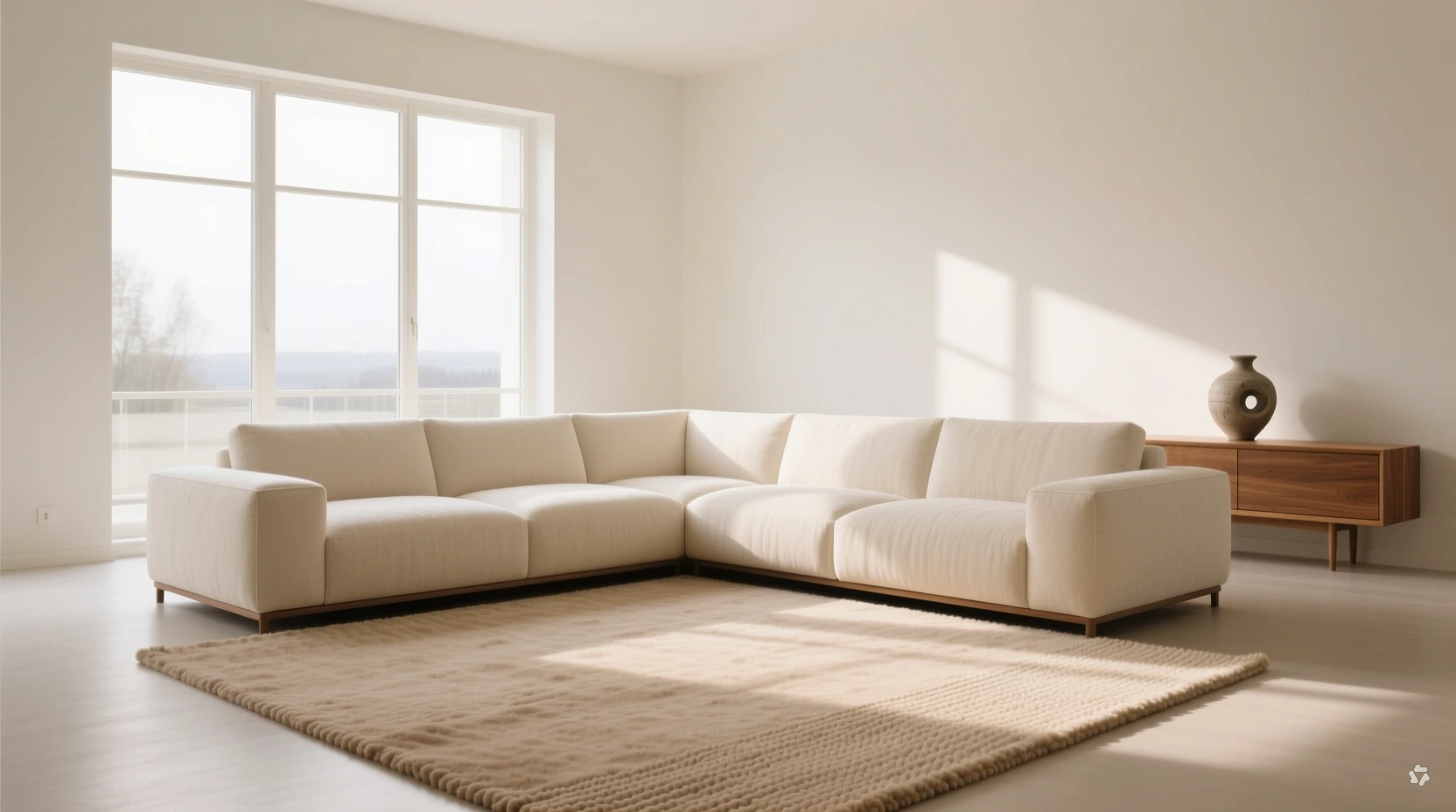
Step 1: Measure Your Sectional and Room
Before choosing a placement style, grab a tape measure. You'll want:
- The full length and depth of your sectional, including the chaise or corner unit
- The width of the room or seating area where the sectional lives
- The distance from the sectional to the nearest walls or walkways
How to Measure an L-Shaped or Curved Sectional
For an L-shaped sectional, measure the longest side (usually the main seating run) and the shorter chaise or return separately, then note the overall footprint as if it were a rectangle. For curved sectionals, measure the widest point of the curve and the depth at its center. That measurement is what helps you decide between a round and a rectangular rug later on.
Step 2: Choose the Right Rug Size
Rug size is the single most common place people go wrong. Too small, and the sectional looks like it's perched on an island. Too large, and the rug swallows the room and crowds your walkways.
Rug Size by Room Size
| Room Size | Suggested Rug Size (metric) | Suggested Rug Size (imperial) | Best For |
|---|---|---|---|
| Small living room | 150 x 215 cm – 180 x 275 cm | approx. 5'x7' – 6'x9' | Front-legs-only placement |
| Medium living room | 200 x 300 cm | approx. 6'6"x9'10" | Front-legs-only or all-legs-on |
| Large living room | 245 x 305 cm | approx. 8'x10' | All-legs-on, corner-to-corner |
| Large / open-plan space | 275 x 365 cm – 365 x 425 cm | approx. 9'x12' – 12'x14' | Oversized, all-legs-on |
Sizes are approximate and rounded for practical shopping purposes; always double-check the exact rug dimensions against your own room measurements before buying.
The Overhang Rule
As a general rule of thumb:
- Let the rug extend at least 15–30 cm (about 6–12 in) beyond the outer edges of the sectional
- Leave roughly 30–45 cm (about 12–18 in) of exposed floor between the rug and the walls, or 20–25 cm (8–10 in) in smaller rooms
- If in doubt, size up rather than down. A slightly larger rug almost always reads better than one that's too small
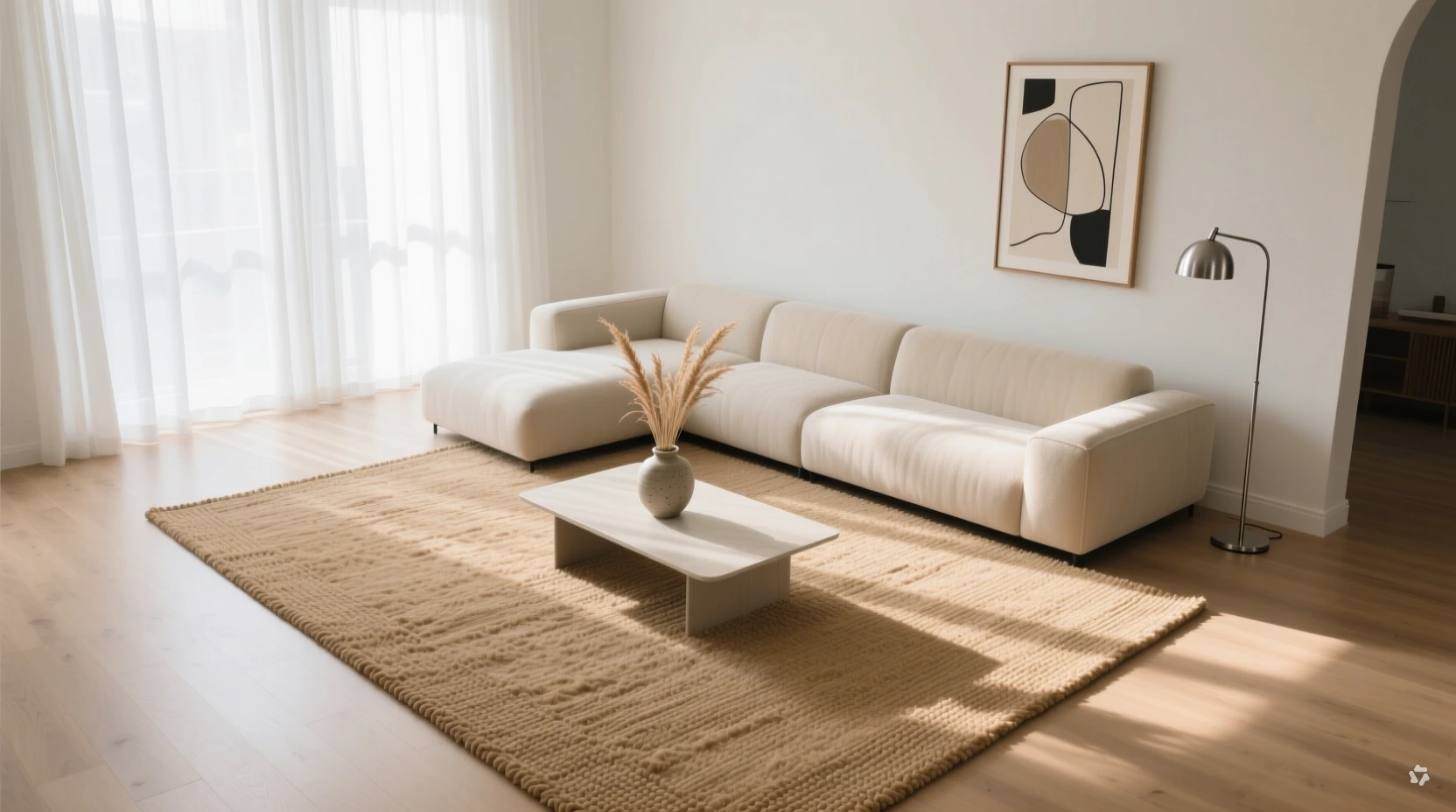
Step 3: Choose Your Placement Style
Once you know your rug size, the next decision is how much of the sectional actually sits on it. There's no single "correct" answer here. It depends on your room size and the look you're after.
All Legs On (Fully Anchored)
Every leg of the sectional rests on the rug, with the rug extending beyond the furniture on all sides. It's the look interior designers reach for most often, and it works best in larger or open-plan rooms with enough floor space to support an oversized rug.
Front Legs Only
Only the front legs of the sectional touch the rug, while the back legs sit on bare floor. It's a practical, budget-friendly option for small and medium rooms, and it still anchors the seating area without requiring a huge rug. It's also worth testing first if you're unsure, since it's the easiest one to adjust once you see it in the room.
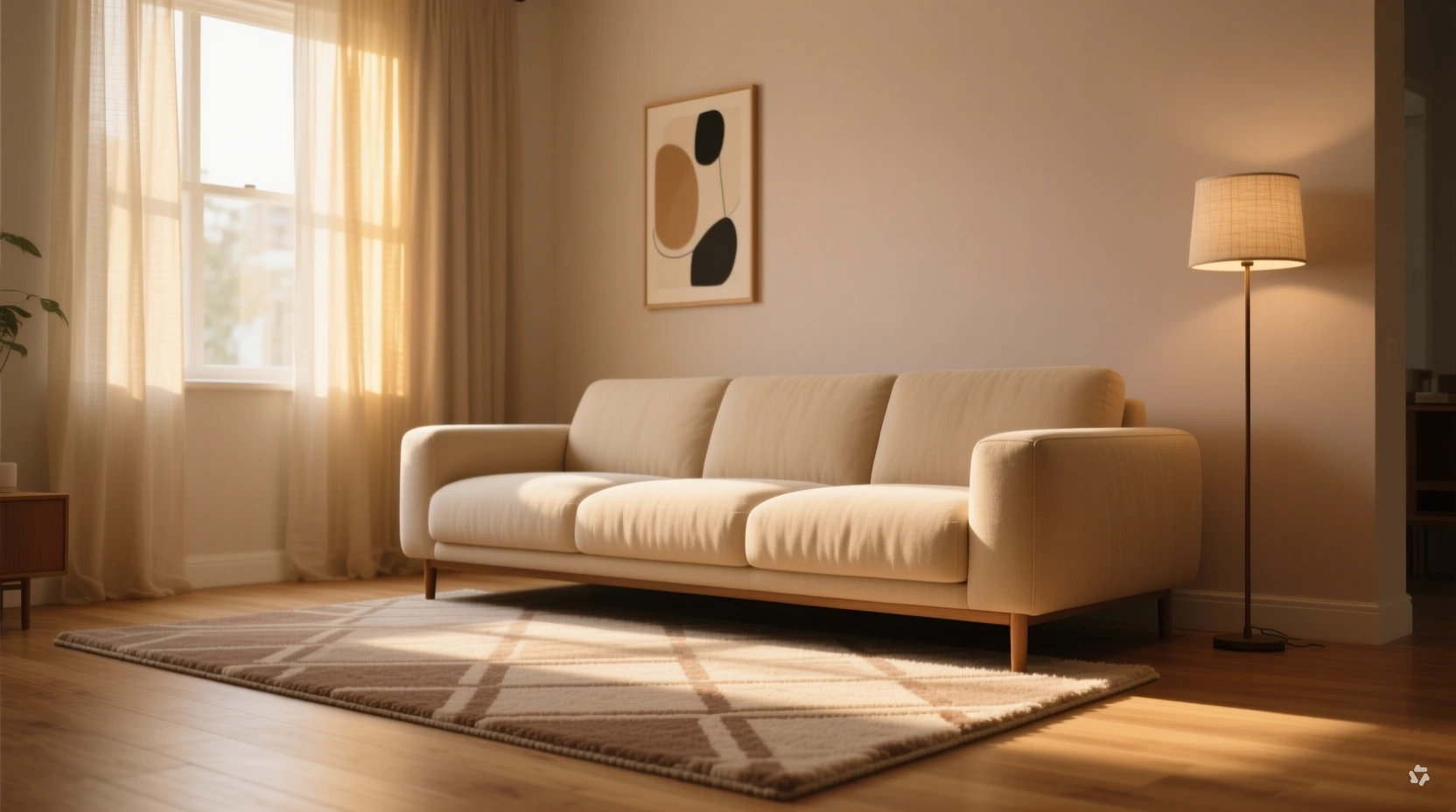
Corner-to-Corner Alignment
Line up one corner of the rug with the inside corner of the sectional. This creates a clean, balanced look that works particularly well for L-shaped sofas, since it echoes the sectional's own geometry.
Centered-in-Room (Rug-First Approach)
Instead of designing around the sectional, place the rug in the center of the room first, then arrange the sectional around it. This approach works well when the rug itself is a statement piece you want to showcase.
Off-Center / Asymmetrical Placement
Placing the rug intentionally off-center under one end of the sectional can create a more relaxed, lived-in feel, and it's a useful trick for stretching a smaller rug across a bigger room.
Diagonal Placement for Open-Concept Spaces
In open-plan layouts, angling the rug so one end points toward an adjoining space can visually connect two zones, for example a living area that flows into a dining or hallway space. If you're still finalizing the rest of your layout, our guide to arranging furniture in open-concept living rooms covers this in more depth.
Placement by Sectional Shape
Sectional shape changes the math slightly. Here's how to think through the most common configurations.
L-Shaped / Chaise Sectionals
The most common sectional type. Aim to get at least the front legs of the chaise onto the rug, and ideally the entire chaise if your rug is large enough. That keeps the chaise from feeling like a separate piece of furniture.
U-Shaped Sectionals
These are large by nature and usually call for a sizeable rectangular rug that sits fully within the open center of the seating arrangement, connecting all three sides visually.
Curved Sectionals
Curved sofas pair beautifully with round rugs, which echo their shape. Center the rug around the coffee table and under the front legs. Rectangular rugs work here too and can add a nice structural contrast to the sofa's soft lines.
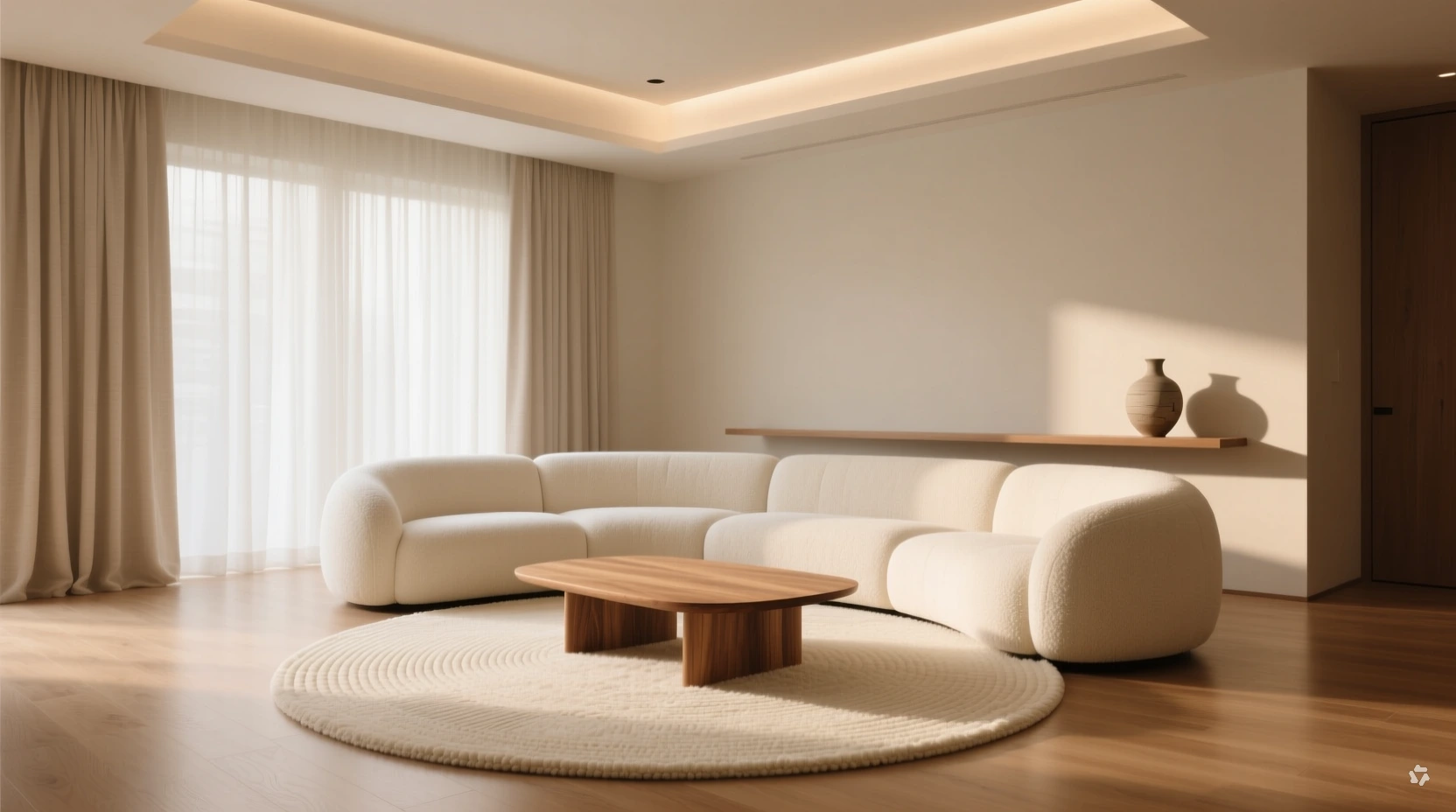
Corner Sectionals
Square or round rugs tend to suit corner sectionals well, since they mirror the symmetry of the seating area rather than competing with it.
Choosing Rug Shape: Rectangular, Round, or Square
- Rectangular: The safest, most versatile choice for standard L-shaped and U-shaped sectionals
- Round: A softening contrast for curved sectionals or square rooms; also useful for making a small space feel less boxy
- Square: A strong match for corner or L-shaped sectionals, especially in more compact layouts
Styling Tips: Color, Pattern, and Material
Pairing Light and Dark Tones
If your sectional is a deep, saturated color, a lighter rug in cream, oatmeal, or soft gray will keep the room feeling open rather than heavy. If your sofa is neutral, this is your chance to bring in color or pattern through the rug instead.
Best Materials for High-Traffic Sectional Areas
Sectionals tend to anchor the most-used part of a living room, so durability matters:
- Low-pile wool or wool-blend rugs generally hold up well to daily use and resist crushing over time
- Natural fibers like jute or sisal are sturdy and easy to maintain, though they tend to suit lower-traffic or more casual settings best
- Synthetic blends offer stain resistance, which can be a practical choice in households with children or pets
A Quieter, Scandinavian-Inspired Take
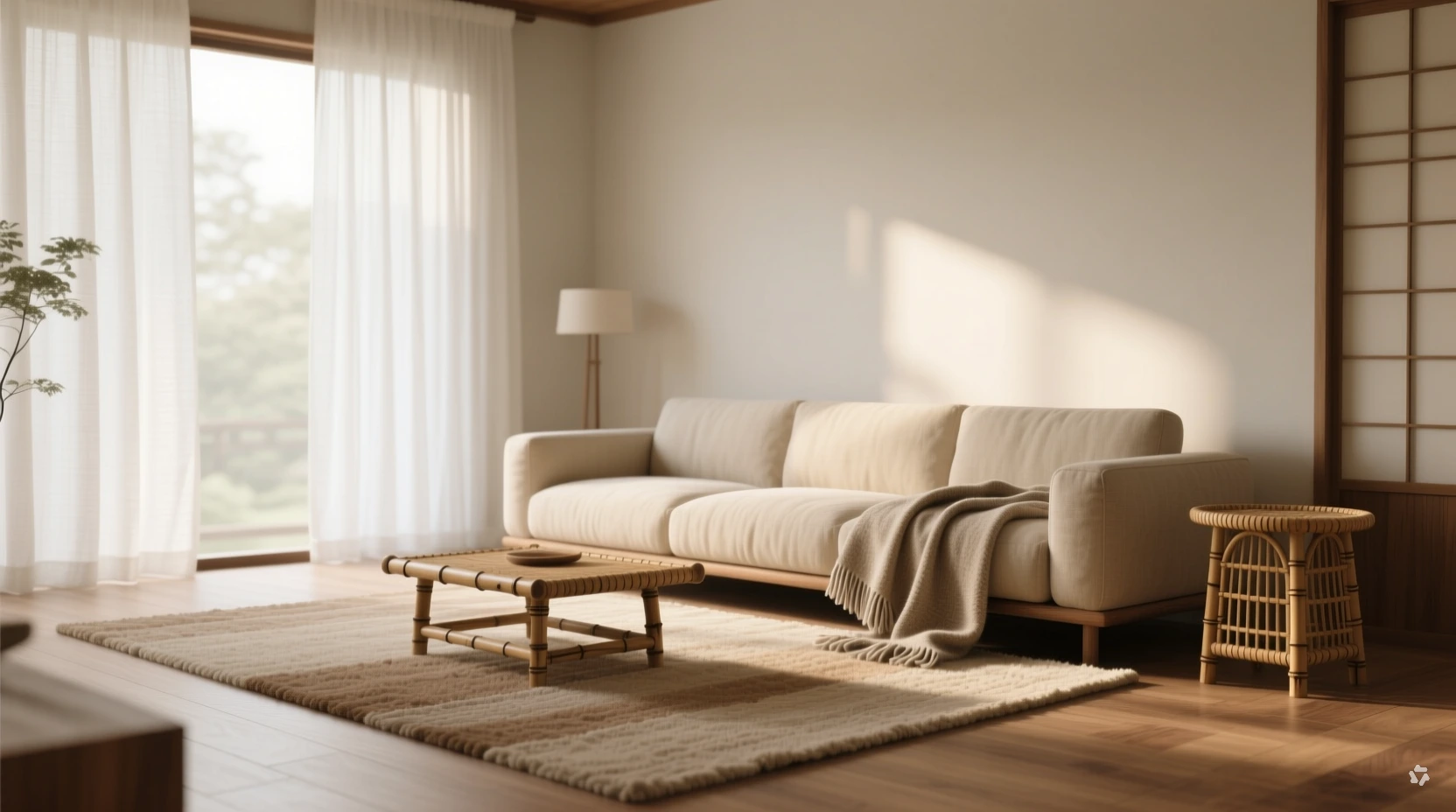
If your style leans Scandinavian or Japandi, a low-pile rug in a muted, warm-neutral tone tends to work harder than a bold pattern. The goal is a rug that grounds the sectional without competing with it. Let the texture do the talking rather than the color.
Common Rug Placement Mistakes to Avoid
A few small missteps show up again and again. For a broader look at layout issues beyond the rug itself, see our guide to common living room layout mistakes and fixes.
- Sizing too small: The single most common issue; a small rug makes even a beautiful sectional look unfinished
- Sizing too large: A rug that runs edge-to-edge in the room can eat up walkways and make the space feel smaller, not bigger
- Ignoring traffic flow: Always leave clear paths around the seating area so the rug doesn't become a tripping hazard
- Clashing patterns: A bold sectional paired with an equally bold rug can fight for attention; let one lead and the other support
Quick Decision Guide
| If your room is... | Try this placement | Rug size to aim for |
|---|---|---|
| Small | Front legs only | 150 x 215 cm (5'x7') – 180 x 275 cm (6'x9') |
| Medium | Front legs only or all legs on | 200 x 300 cm (approx. 6'6"x9'10") |
| Large | All legs on, corner-to-corner | 245 x 305 cm (approx. 8'x10') |
| Open-plan | Oversized, all legs on, or diagonal | 275 x 365 cm+ (approx. 9'x12'+) |
Frequently Asked Questions
What size rug do I need for a sectional sofa?
It depends on your room, but as a starting point, medium living rooms typically suit a rug around 200 x 300 cm (6'6"x9'10"), while larger or open-plan spaces often need 245 x 305 cm (8'x10") or bigger.
Should all the legs of my sectional be on the rug?
Not necessarily. All-legs-on creates the most polished look and suits larger rooms, but front-legs-only is a perfectly good option for smaller spaces. Either way, the key is that the rug visually anchors the seating area.
Can I use a round rug with a sectional sofa?
Yes, particularly with curved sectionals, where a round rug echoes the sofa's shape. It also works well in square rooms or when you want to soften a lot of straight lines.
How far should a rug extend past a sectional?
A good baseline is 15–30 cm (6–12 in) beyond the outer edges of the sofa, with some breathing room left between the rug and the walls.
What's the best rug placement for a small living room with a sectional?
Front-legs-only placement is usually the most practical choice, since it anchors the sofa without requiring an oversized rug that could crowd the room.
Should the rug go under the coffee table too?
In most layouts, yes. Having the coffee table sit on the rug helps tie the whole seating area together as one cohesive zone.
How do I place a rug under a curved or U-shaped sectional?
For curved sectionals, center a round or rectangular rug around the coffee table and front legs. For U-shaped sectionals, a large rectangular rug that fills the open center of the seating arrangement usually works best.
What's the biggest mistake people make with rug placement under a sectional?
Choosing a rug that's too small. It's an easy trap, since sectionals are large and a rug can look plenty big in the store, but once it's under a full-size sectional it often reads as undersized.
There's no single right way to place a rug under a sectional. It depends on your room, your sofa's shape, and honestly a bit of trial and error once the furniture is actually sitting in place. Start with the measurements, pick a placement style, and don't be afraid to shift the rug a few inches in either direction until it stops looking like an afterthought.
Post a Comment for "How to Place an Area Rug Under a Sectional Sofa"