
Sectional Sofa vs. Standard Sofa: How to Choose the Right Seating for Your Room
Choosing between a sectional and a standard sofa feels like a bigger decision than it should be, mostly because it is a big decision. This one piece of furniture shapes how your living room feels and how easily people can move through it, right down to whether a Sunday afternoon or a quiet night in actually works in the space you have. Here's how to think it through properly, without the guesswork.
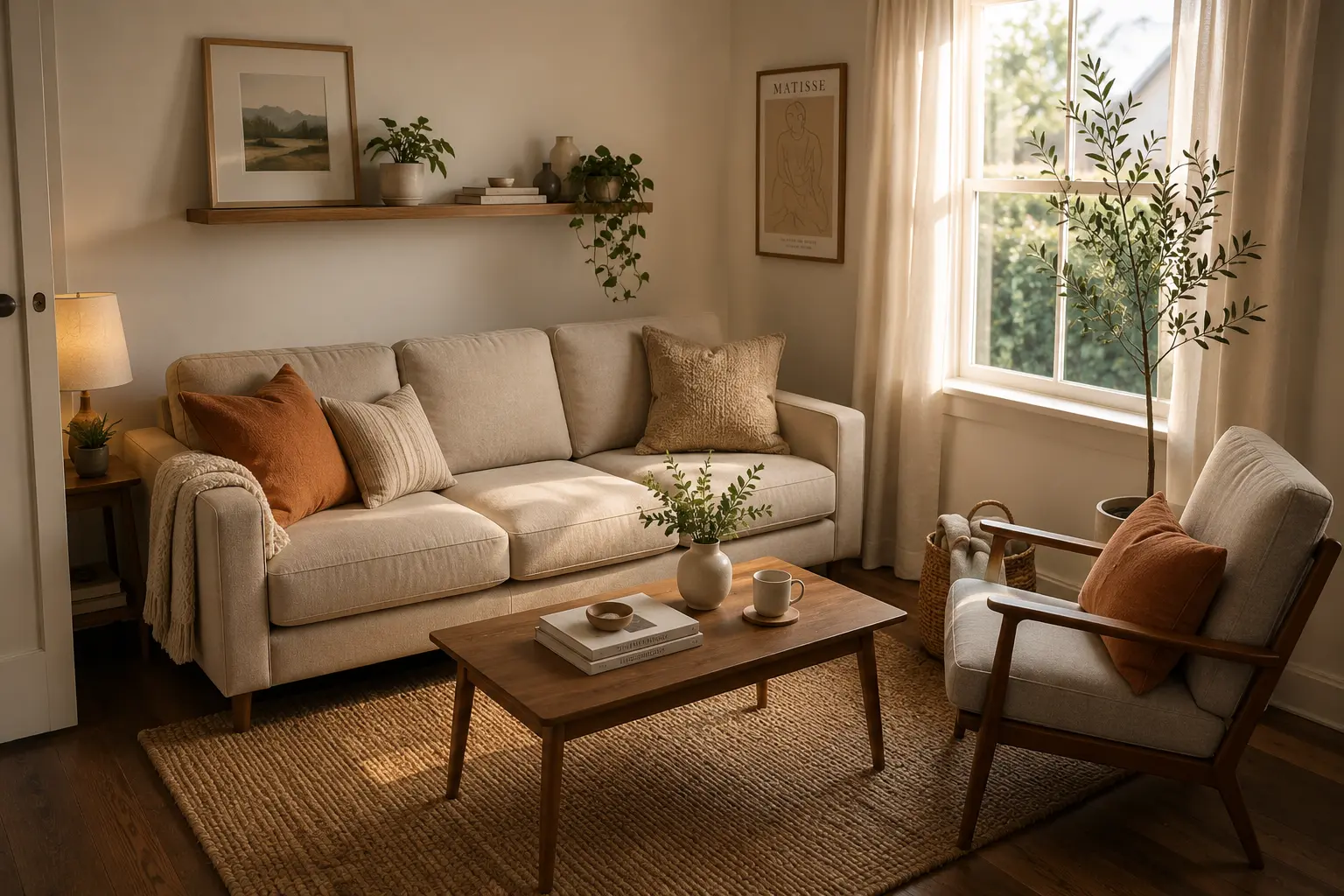
What's the Difference Between a Sectional and a Standard Sofa?
At the core, it comes down to structure. A standard sofa is one continuous, single-frame piece. A sectional is made of multiple connected sections that together form a larger seating arrangement, often in an L-shape or U-shape.
What Counts as a "Standard" Sofa
A standard sofa (also called a couch) is a single upholstered unit, typically with two or three cushions, seating two to four people comfortably. It has a fixed length and doesn't come apart into separate pieces. Most rooms are designed around this shape by default, which is part of why it remains the most common living room seat worldwide.
What Counts as a Sectional (L-Shape, U-Shape, Modular)
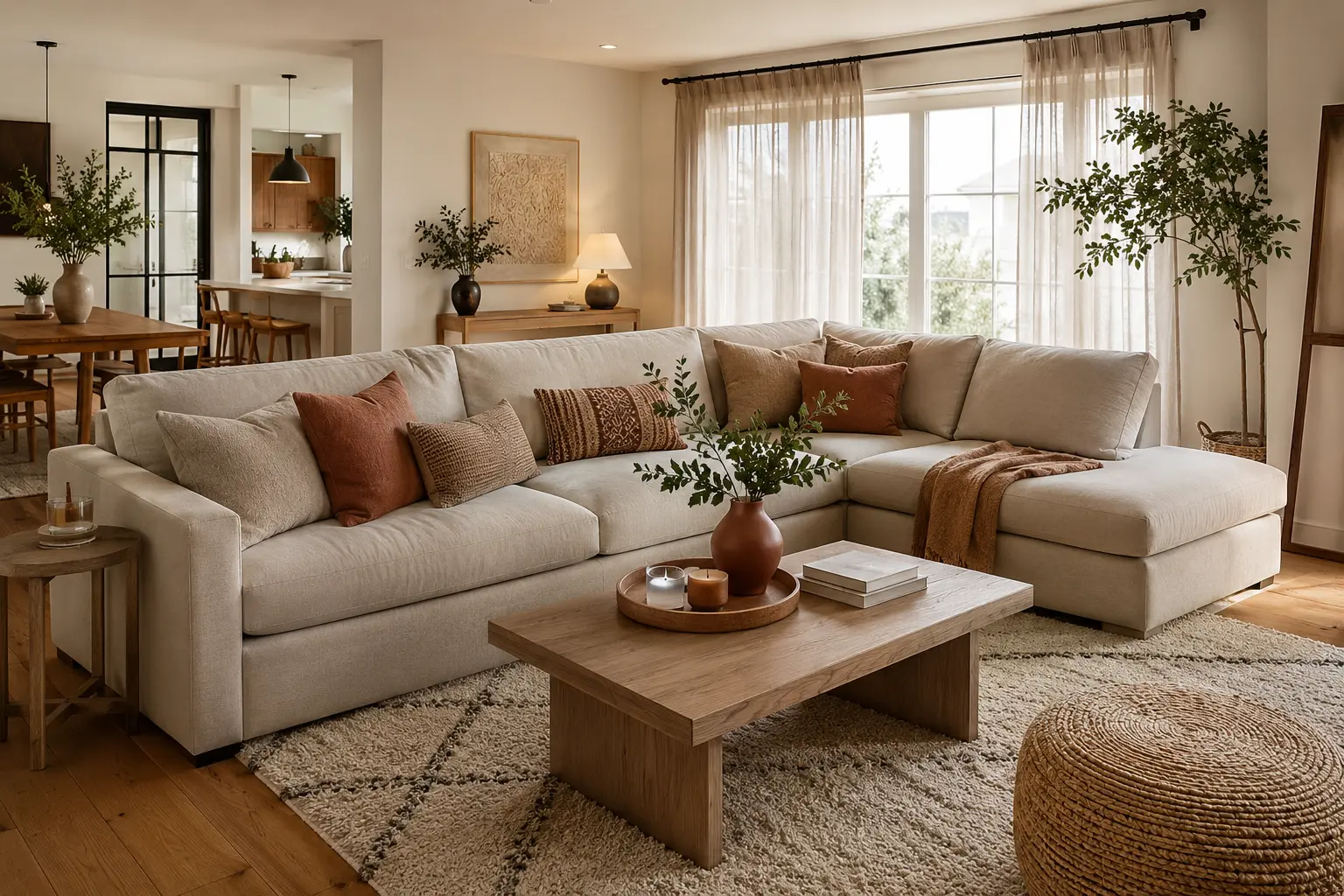
A sectional is built from multiple sections (a corner piece, a chaise, straight modules) that join together into one large seating arrangement. Common configurations include:
- L-shaped: a straight run plus a chaise or corner extension
- U-shaped: seating that wraps around three sides, ideal for large gatherings
- Modular: individual pieces that can be rearranged or expanded over time
If a sofa includes an attached chaise or ottoman, it's technically a sectional, even if it doesn't look like the classic "L" shape.
Sectional vs. Standard Sofa: Quick Comparison Table
Here's how the two options stack up across the factors that matter most when planning a living room.
| Factor | Standard Sofa | Sectional |
|---|---|---|
| Best room size | Small to medium | Medium to large |
| Seating capacity | 2-4 people | 4-7+ people |
| Layout flexibility | High, easy to pair with chairs, rearrange | Lower, often built for one configuration |
| Walkway impact | Minimal | Can consume walkway space in tight rooms |
| Cost per seat | Generally lower | Generally higher, but efficient for large groups |
| Moving/delivery | Easier through doorways and stairwells | Can be difficult depending on section size |
| Cleaning & upkeep | Simpler, single piece | More surface area, may need to move sections |
| Visual effect | Blends into the room, leaves it open | Anchors the room, creates a defined zone |
Room Size & Layout: Which Fits Your Space
Room size is usually the deciding factor, but it's less about square footage and more about what's left over once the sofa is in place. A large room can still feel cramped with the wrong sectional, and a small room can sometimes handle one better than you'd expect. In our experience, this is where most layout regrets start, not from the sofa itself, but from underestimating how much walking space it needs.
Measuring Walkways and Clearance
Before you fall in love with a shape, measure your walkways. As a general guideline that we come back to often:
- Leave roughly 75-90 cm (about 30-36 in.) of clear walking space around the main seating area
- Many standard sofas are around 90 cm (35 in.) deep, and once you add a coffee table zone in front, that can already use up a good portion of a small room's width
- In compact rooms, for example around 3 x 3.6 m to 3.3 x 4 m (10 x 12 ft to 11 x 13 ft), a standard sofa usually preserves better flow than a sectional
When a Small Room Can Still Fit a Sectional
Sectionals aren't automatically off-limits in smaller rooms. A compact sectional can work if:
- One wall can spare roughly 3-3.6 m (10-12 ft) of length
- There's a clear, unobstructed path from the entry to the seating area
- You're comparing it against two separate pieces (like a sofa and armchair) that would take up similar total space anyway, see our guide on ottoman vs. coffee table for how smaller pieces affect the same clearance math
The key test we always suggest: if the layout forces people to pivot sideways or squeeze past furniture, the sectional is working against the room, not for it.
Seating Capacity & Household Fit
If you regularly host groups, watch movies as a family, or simply like having room to stretch out, a sectional's extra capacity is hard to beat. A U-shaped or L-shaped layout can comfortably seat five to seven people without feeling like an overflow situation.
A standard sofa fits smaller households well: a couple, a small family, or anyone who prefers a room that can be reconfigured for different occasions. It's also the more natural choice if you like adding an armchair, loveseat, or ottoman rather than committing to one large fixed shape.
Cost Comparison: Price Per Seat
Sectionals typically cost more upfront due to their size and the number of sections involved, but they can be more cost-efficient per seat when you need capacity for five or more people. A standard sofa is usually the lower-cost entry point, especially for smaller households that don't need the extra seating.
It's worth pricing both options by "cost per seat" rather than sticker price alone. A well-made sectional that seats six can sometimes work out to a similar per-person cost as a smaller premium sofa.
Flexibility & Rearranging Over Time
This is where standard sofas tend to shine. Because they're a single piece, they're easy to angle differently, move to another room, or pair with new accent furniture as your style evolves.
Sectionals, particularly fixed ones, are built for a specific configuration and don't always adapt well to a different room shape later. Modular sectionals solve some of this (individual pieces can be split apart, rearranged, or expanded) but even these have more constraints than a single sofa.
- Choose a standard sofa if: you like changing your layout, move homes often, or want to add pieces gradually
- Choose a modular sectional if: you want some flexibility but still love the "big, connected" feel
- Choose a fixed sectional if: you've settled on a layout and don't plan to change it soon
Moving, Delivery & Apartment Access
Before you commit to a shape, think about how it gets into your home. Standard sofas are generally easier to maneuver through doorways, hallways, and staircases because they're one continuous piece.
Sectionals, especially larger sections, can be trickier in older buildings or apartments with narrow entryways. Many sectionals are designed to break down into individual modules for delivery, which helps, but it's worth confirming section dimensions against your doorways and stairwells before ordering.
Maintenance & Cleaning
A standard sofa is simple to maintain: one piece, one set of cushions, and typically easier to move for a thorough clean underneath. A sectional has more surface area and more individual cushions, which can mean more upkeep.
That said, a sectional's modularity has an upside: a single worn or damaged section can sometimes be reupholstered or replaced without redoing the entire piece. If you have pets, young children, or simply want low-maintenance furniture, factor in how easily the piece can be moved and cleaned, not just how it looks in the showroom.
Style & Visual Impact in a Room
A sectional has a strong presence. It becomes the room's anchor, often defining the whole seating zone on its own, which works beautifully in open-plan spaces that need a bit of visual structure.
A standard sofa is quieter by comparison. It leaves more breathing room and blends more easily with different design styles over time. Neither is inherently "better" here; it comes down to whether you want your seating to make a statement or simply support the room around it. If you're styling the space behind either option, our guide on how to style a console table behind a sofa covers how to finish the layout.
So, Which Should You Choose?
A quick way to decide: picture how your household actually spends an evening. If everyone piles onto one piece to watch a film, a sectional will likely feel more natural. If people tend to sit separately, chat, or move around the room, a standard sofa paired with a chair or two usually serves better.
- Go sectional if: you host often, have a larger or open-plan room, and want one clear lounging destination
- Go standard sofa if: your space is small to medium, you value flexibility, or you like to change your layout over time
- Consider a hybrid: a sofa plus two accent chairs can mimic a sectional's capacity while keeping the room adaptable
Frequently Asked Questions
Is a sectional considered a type of sofa?
Yes. A sectional is technically a category of sofa, one made from multiple joined sections rather than a single frame.
What size living room do you need for a sectional?
As a general guideline, look for at least one wall that can spare around 3-3.6 m (10-12 ft), plus enough clearance to maintain a walkway of roughly 75-90 cm (30-36 in.).
Is a sectional or a standard sofa cheaper?
Standard sofas usually have a lower upfront cost. Sectionals cost more overall but can offer better value per seat for larger households.
Can a sectional work in a small apartment?
It can, if the room has one long enough wall and a clear traffic path. Compact or modular sectionals are often designed specifically for this.
What's the difference between a sectional and a modular sofa?
A modular sofa is a type of sectional designed for easy reconfiguration: pieces can be added, removed, or rearranged. A traditional sectional often comes in one fixed shape.
How much walkway space should you leave around a sofa or sectional?
As a general rule, aim for at least 75-90 cm (30-36 in.) of clear space along main walking paths, so the room stays easy to move through.
Which is easier to move, a sectional or a standard sofa?
A standard sofa is generally easier, since it's a single piece. Sectionals often need to be broken down into sections for doorways and stairwells.
Do sectionals or standard sofas last longer?
Durability depends more on construction quality than shape. That said, sectionals allow for partial repair or reupholstering of individual sections, which can extend their usable life.
There's no universally "right" choice between a sectional and a standard sofa: only the one that fits how your room breathes and how your household actually uses it. Measure carefully and be honest about your habits, then let the space guide the decision rather than the other way around.
Post a Comment for "Sectional vs. Standard Sofa: How to Choose "