
Ottoman vs Coffee Table: Which Is Better for Your Living Room?
Standing in a furniture showroom, or scrolling through fifty browser tabs at midnight, it's easy to get stuck on this exact question. Both pieces anchor a living room beautifully, but they solve very different problems, and picking the wrong one means living with a piece that never quite fits your day-to-day. Here's how to think it through.
Ottoman vs Coffee Table at a Glance
Before diving into details, here's a quick visual snapshot of how the two compare on surface, storage, and safety.
| Ottoman | Coffee Table | |
|---|---|---|
| Surface | Soft, padded (fabric, leather) | Hard, stable (wood, glass, metal, stone) |
| Best for | Lounging, footrest, extra seating | Drinks, decor, electronics, everyday tasks |
| Storage | Often hidden storage under a hinged lid | Shelves, drawers, or open lower tier (varies by design) |
| Maintenance | Fabric needs occasional cleaning | Wipeable, but prone to scratches or water rings |
| Safety | No hard edges | Corners can be a hazard for small kids |
| Style feel | Cozy, casual, soft-edged | Structured, classic, versatile |
What Is a Coffee Table?
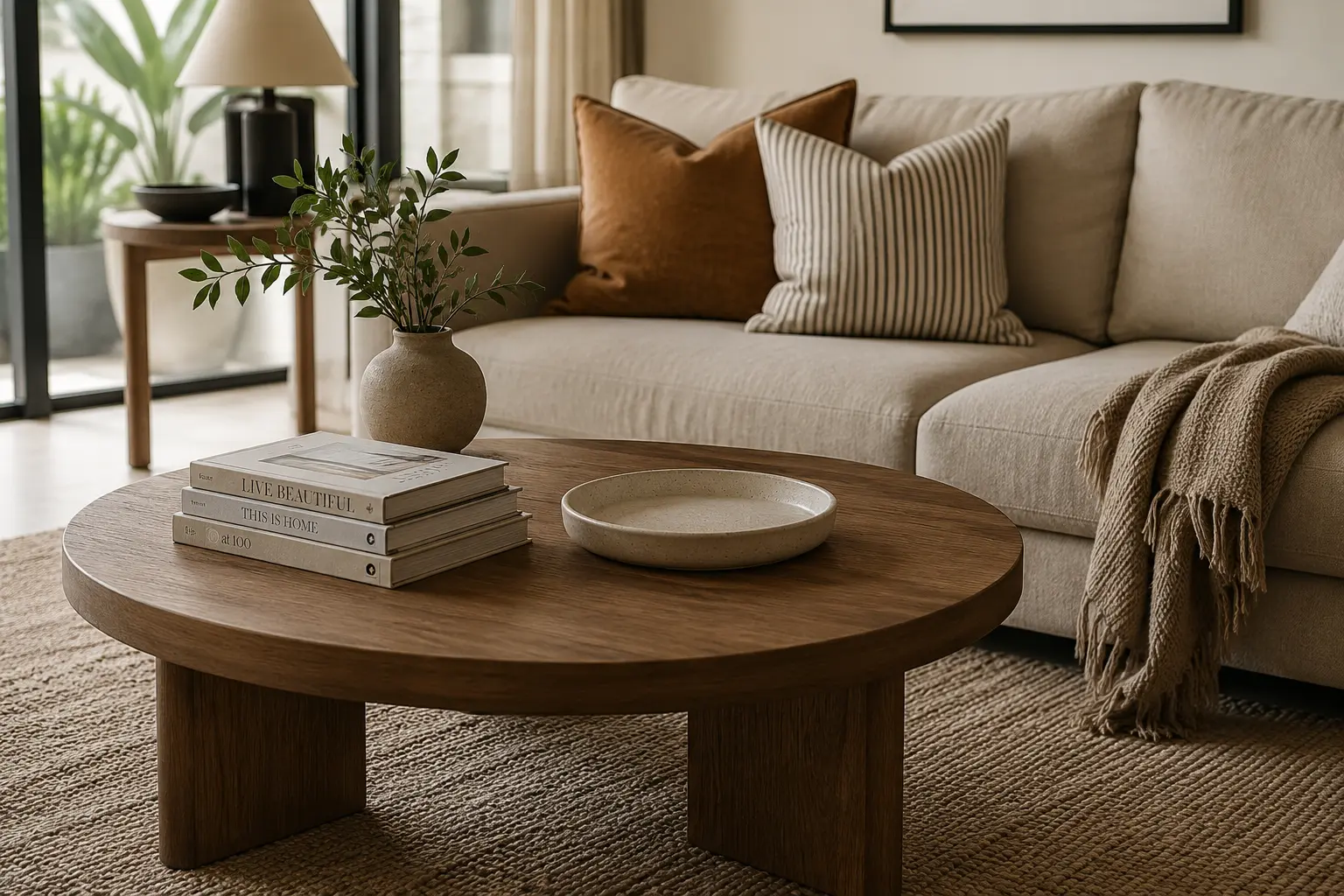
A coffee table is the classic centerpiece of a seating area: a low, flat-surfaced table positioned within easy reach of the sofa. Its job is simple: hold things. Drinks, books, remotes, a tray of snacks, a stack of design magazines.
Common Materials and Styles
Coffee tables come in a wide range of materials, each with its own character:
- Wood: warm, classic, and versatile across styles from farmhouse to mid-century
- Glass: visually light, great for smaller rooms where you don't want the table to feel heavy
- Metal: often paired with glass or wood for an industrial or contemporary look
- Stone or marble: a striking, elevated choice, usually as a tabletop rather than the full structure
Shapes range from rectangular and round to oval and irregular organic forms, and the shape you pick affects how the table interacts with your seating layout. If you're also weighing height alongside a sofa or end table, our end table height guide covers the same proportion principles.
What Is an Ottoman?
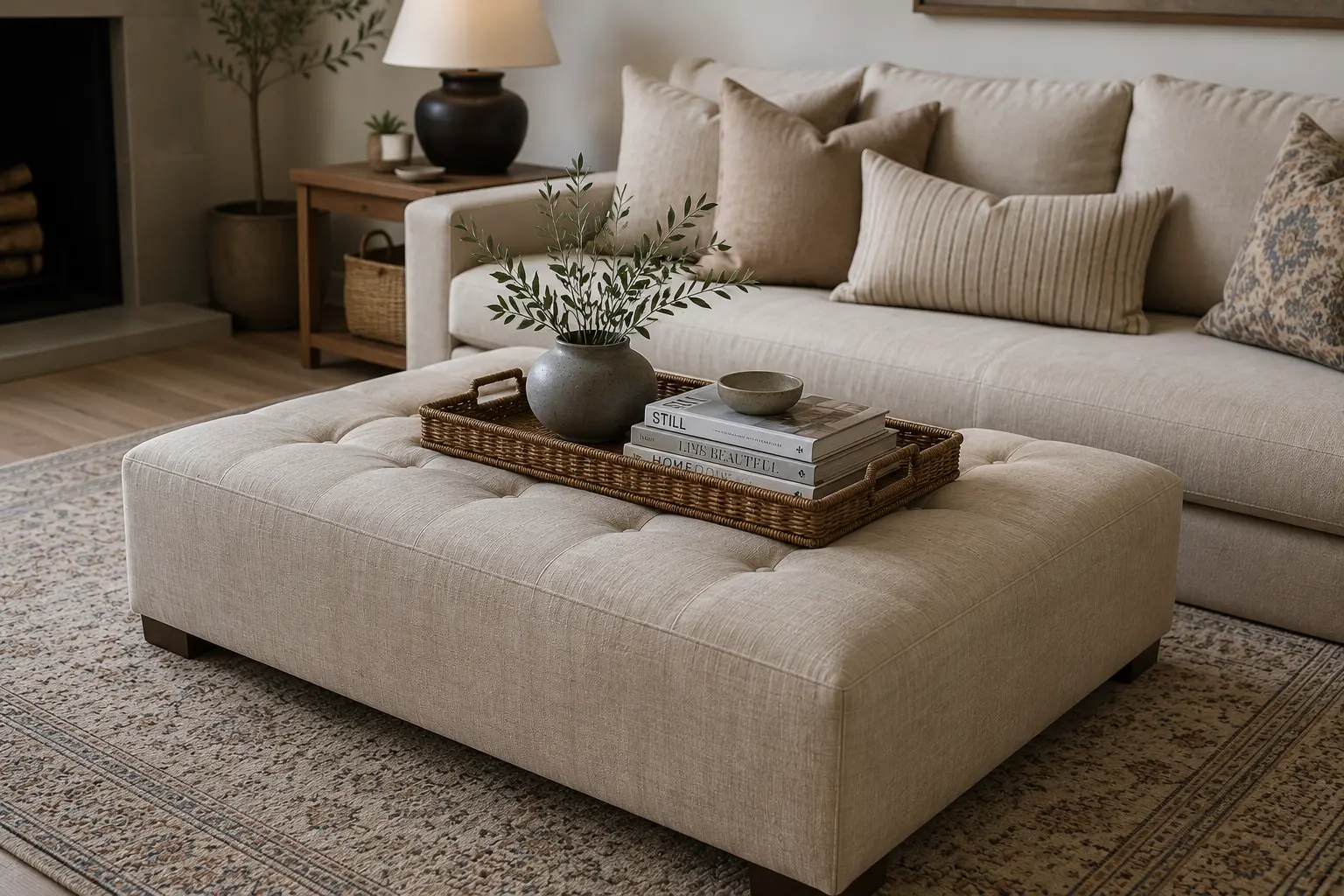
An ottoman is an upholstered piece, traditionally used as a footstool but now just as often used in place of a coffee table entirely. Its defining feature is the soft, padded top, with none of the hard edges or cold surface you'd get from a table.
Common Materials and Styles
- Fabric (linen, boucle, cotton blends): soft, casual, easy to mix into a relaxed living room
- Leather or faux leather: more structured and durable, often with a slightly dressier feel
- Velvet: adds richness and texture, popular in more curated or moody interiors
- Tufted or buttoned finishes: a classic detail that adds visual interest without extra bulk
Many ottomans double as extra seating when guests arrive, which a coffee table simply can't offer.
Key Differences to Consider
Surface Stability and Everyday Use
This is the single biggest practical difference. A coffee table gives you a firm, flat surface. Set a mug down and walk away without a second thought. An ottoman's padded top isn't built for that; drinks and plates are prone to tipping unless you add a tray on top, which somewhat defeats the "just set it down" convenience.
If your household relies on the coffee table for daily tasks (working from the sofa, eating dinner in front of the TV, doing homework), the stability of a hard surface matters more than it might seem.
Storage Space
Both can offer storage, but the type differs:
- Ottomans typically open from the top, revealing one deep, flexible cavity that's ideal for bulky items like blankets, throw pillows, or board games
- Coffee tables with drawers or shelves tend to offer shallower but more organized storage, better suited to remotes, coasters, or magazines
If your clutter is soft and bulky, the ottoman usually wins. If it's small and miscellaneous, a table with drawers tends to serve you better.
Comfort and Seating
An ottoman can be a footrest, a perch for extra guests, or even a makeshift bench when you're hosting more people than chairs. A coffee table doesn't offer any of this. It's purely functional, not a place to put your feet up or sit down.
Safety for Kids and Pets
For homes with young children, this often becomes the deciding factor. Hard corners on a coffee table can be a real hazard when a toddler is learning to walk, and even rounded coffee tables still have an unforgiving surface. An ottoman removes that risk almost entirely: no edge to bump into, and a fall onto a padded surface lands far gentler.
That said, ottomans upholstered in delicate fabrics may show wear faster in a household with pets or messy toddlers, so material choice matters just as much as the shape.
Maintenance and Cleaning
- Coffee tables: wood and glass surfaces are easy to wipe down but can show water rings, scratches, or fingerprints over time
- Ottomans: fabric surfaces need more regular care, vacuuming, spot cleaning, and occasionally professional cleaning for tougher stains; leather is more forgiving but still needs conditioning over time
Neither is maintenance-free, but the type of upkeep is very different, so it's worth matching the material to how the piece will actually be used.
Style and Room Aesthetic
Coffee tables tend to read as more structured and classic, which makes them a natural fit for traditional, formal, or minimalist rooms. Ottomans bring a softer, more casual energy and tend to suit cozy, lived-in spaces or rooms built around relaxation, like a media room or a reading nook.
Neither is inherently more "modern" or "traditional." It comes down to the specific material, shape, and how it's styled with the rest of the room. For more ideas on layering pieces around a sofa, see our guide on styling a console table behind a sofa.
Which Is Better for Small Living Rooms?
Both can work well in a compact space, but a few tricks make either option feel less bulky:
- Choose a round shape for either piece. No sharp corners means easier movement around the room and a softer visual footprint
- Go lighter in material: glass-top tables or lighter fabric ottomans feel less visually heavy than dark wood or deep upholstery
- Prioritize multi-functionality. A storage ottoman does double duty as seating and storage, which is especially valuable when square footage is limited
As a general guideline, in a small living room it helps to choose a piece that's roughly two-thirds the length of your sofa, leaving some open walking space, around 45 cm (about 18 inches), on at least one side. These are starting points rather than strict rules, so adjust based on your room's actual layout.
Can You Use Both an Ottoman and a Coffee Table?
Yes, and it's a popular solution for larger living rooms. A common approach is placing a smaller coffee table alongside or in front of an ottoman, or using nested tables that can slide out from under the ottoman when needed. This gives you the best of both: a stable surface for drinks and daily use, plus the comfort and flexibility of a padded footrest nearby.
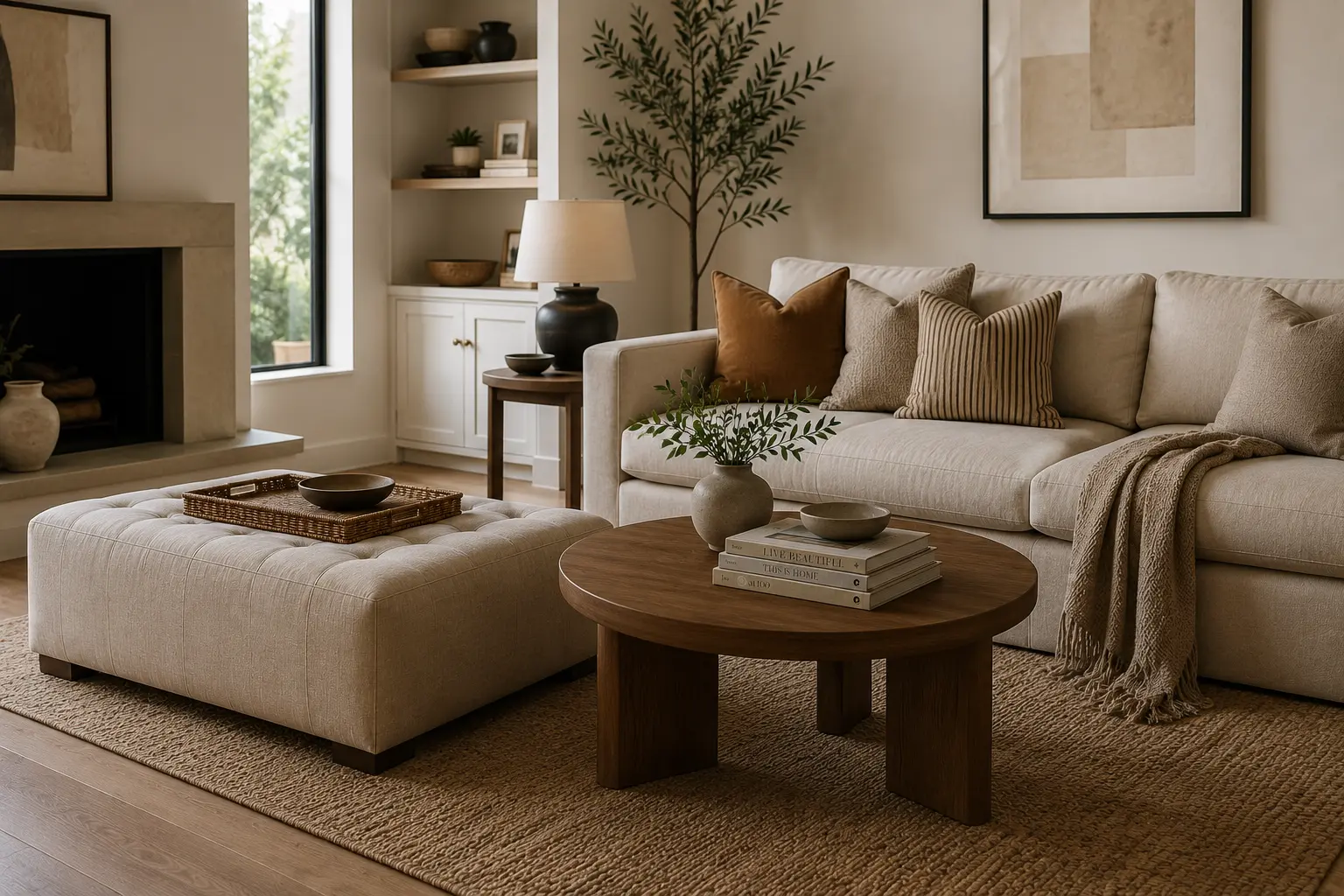
In smaller spaces, this combination tends to feel crowded rather than functional, so it works best when there's enough room for both pieces to breathe without competing for the same footprint.
How to Choose: A Quick Decision Guide
- Choose a coffee table if: you need a stable surface for everyday use, entertain often, or prefer a structured, classic look
- Choose an ottoman if: comfort and flexibility matter most, you have young kids, or you want a piece that can double as extra seating
- Consider both if: you have the space and want the practicality of a table with the coziness of an ottoman
Frequently Asked Questions
Is an ottoman better than a coffee table for a small living room?
It depends on your priorities. A round ottoman can feel softer and safer in a tight space, but a lighter-weight coffee table (like glass) can achieve a similar sense of openness while still offering a stable surface.
Are ottomans safer than coffee tables for kids?
Generally, yes. The padded surface and lack of hard edges make ottomans a gentler option for households with young children, though supervision and general childproofing still matter.
Can you put a drink or laptop on an ottoman?
You can, but it's not ideal without a tray. A tray placed on top of an ottoman gives you a flat, stable surface while keeping the comfort underneath.
What's a good size ottoman to use as a coffee table?
As a starting point, aim for a width of roughly 90–120 cm (about 35–47 inches) for a standard sofa setup, leaving enough clearance to walk around comfortably. Treat this as a general estimate rather than a fixed rule, since sofa size and room layout vary.
Do ottomans work well in modern/minimalist living rooms?
Yes, especially in a solid neutral fabric or leather with clean lines. Avoid overly tufted or textured styles if you're aiming for a more streamlined look.
How do you clean a fabric ottoman?
Regular vacuuming helps prevent dust buildup, and spot cleaning with a mild solution works for most spills. Always check the manufacturer's care label first, since some fabrics require specific cleaning methods.
Can I use an ottoman and a coffee table together?
Yes, this works particularly well in larger living rooms, giving you both a stable surface and a comfortable footrest without compromising on either.
What's better for entertaining guests, an ottoman or a coffee table?
A coffee table tends to be more practical for entertaining, since it offers a reliable surface for food and drinks. An ottoman can help if you need extra seating, but it's less ideal as a serving surface unless paired with a tray.
There's no universal right answer here, just the right answer for how your living room actually gets used. If your days revolve around function and easy cleanup, a coffee table will likely serve you better. If comfort, flexibility, and softness matter more, an ottoman might be the piece that finally makes the room feel like yours. And if you have the space, there's nothing wrong with letting both pieces share the job.
Post a Comment for "Ottoman vs Coffee Table: Which Is Better? | HavenNordic"