
The End Table Height Guide: How to Get the Proportions Right Every Time
You've found a side table you love, but somehow it looks wrong next to your sofa. Maybe you're reaching up for your coffee cup, or leaning down further than feels natural. Getting the height right isn't really about following strict design rules. It comes down to comfort, proportion, and how the piece sits next to the furniture around it. Here's how to figure out the right height for your space, whatever kind of seating you have.
A quick note: the measurements below are general guidelines drawn from common furniture sizing conventions, not official regulatory standards. Always measure your own furniture for the most accurate result.
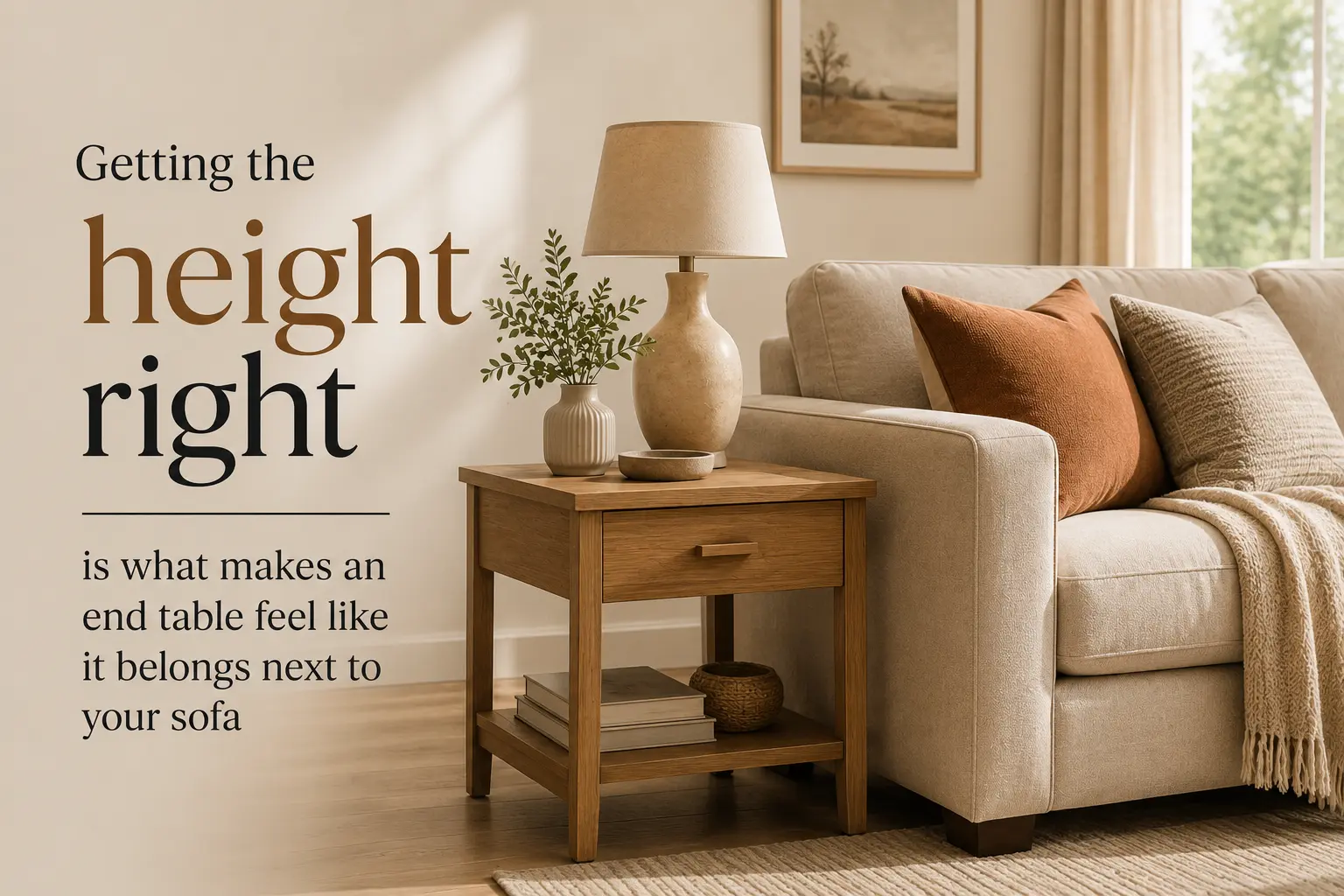
Quick Answer: The 2-Inch Rule
If you only remember one thing, remember this: your end table should sit within about 5 cm (2 in) of your sofa or chair armrest height, either level with it or slightly below.
This small margin matters more than you'd think. It keeps the tabletop within easy reach for a drink, a book, or your phone, and it lets the top of the table flow naturally from the arm of your sofa instead of interrupting the line. Go too tall and the table breaks that flow. Go too short and you end up stretching down further than feels comfortable.
Standard End Table Height Chart
Before you shop, it helps to know the general ranges most furniture falls into. Think of these as starting points rather than fixed rules. Your actual sofa or chair is always the real reference point.
Standard Sofa Arm Height
Most sofa arms generally sit somewhere between 56–64 cm (22–25 in) off the floor, though some traditional or formal designs run higher, up to around 81 cm (32 in).
Standard End Table Height by Type
| Furniture Pairing | Typical Height (cm) | Typical Height (in) |
|---|---|---|
| Standard sofa | 51–71 cm | 20–28 in |
| Accent chair | 56–61 cm | 22–24 in |
| Recliner | 66–71 cm | 26–28 in |
| Low-profile / platform sofa | 38–51 cm | 15–20 in |
| Nightstand (bedside) | 56–76 cm | 22–30 in |
| Desk-side table | 71–76 cm | 28–30 in |
These ranges overlap quite a bit, which is a good reminder that "standard" is a range, not a single correct number.
How to Measure Your Sofa or Chair for the Right Height
Skip the guesswork and grab a tape measure. It only takes a minute, and it'll save you from choosing a table that looks right online but feels off once it's actually in your living room.
- Armrest height — measure from the floor straight up to the top of the armrest.
- No arms? — measure the seat cushion height instead, and plan to add roughly 15–20 cm (6–8 in) for a comfortable reach.
- Seat depth — note the depth from the back cushion to the front edge of the seat, since this tells you the maximum depth your table can be without crowding your legs.
- Save the number — jot it down on your phone before you start browsing.
End Table Height by Furniture Type
The right table height shifts depending on what it's sitting next to. Here's how the 2-inch rule plays out across the most common setups.
Next to a Standard Sofa
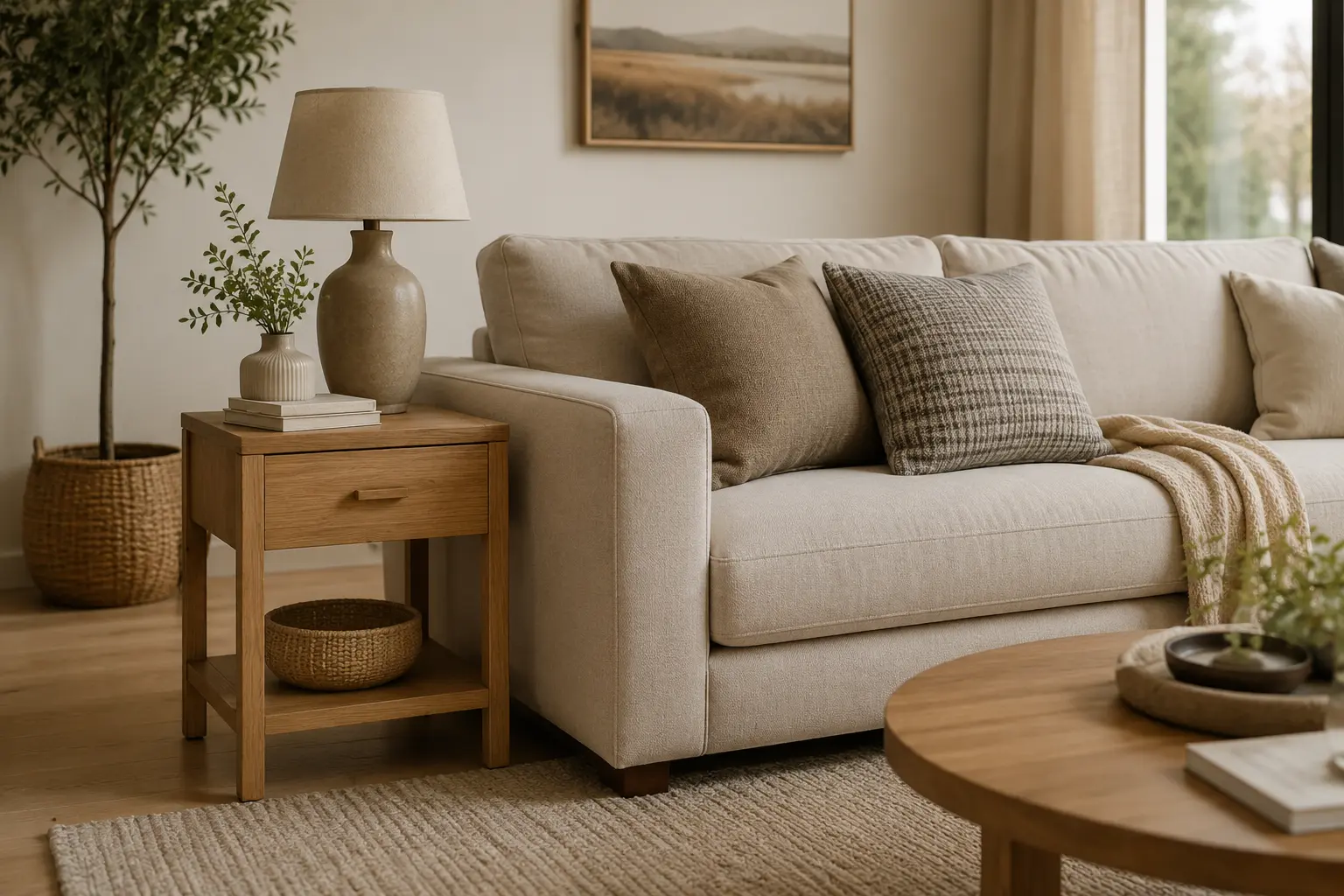
Aim for a table height within 5 cm (2 in) of the armrest. Most standard sofas pair well with tables in the 51–61 cm (20–24 in) range.
Next to an Armless Sofa
Without an arm to reference, use the height where an arm would typically sit: roughly 61–66 cm (24–26 in) from the floor.
Next to a Sectional
Measure the arm at the specific section where the table will actually sit, since sectional arm heights can vary slightly by module. Corner placements often work better with a slightly lower table, since it keeps sightlines open.
Next to a Recliner
Because the seat rises when the chair is reclined, size up rather than down. A table in the 66–71 cm (26–28 in) range tends to avoid interference when the chair is fully extended.
Next to a Low-Profile or Platform Sofa
Contemporary platform sofas often sit lower to the ground, with arms around 51 cm (20 in) or less. Pair these with a lower, lighter-feeling table — usually 38–51 cm (15–20 in) — so the proportions still feel balanced rather than top-heavy.
Next to an Accent Chair
Accent and lounge chairs typically pair well with tables around 56–61 cm (22–24 in). If you're placing one table between two chairs, measure both arms and size to the taller one so it works comfortably from either side.
Should the Table Be Taller or Shorter Than the Armrest?
When you're stuck between two heights, choose the shorter one. Here's why:
- A table that sits a little below the armrest is barely noticeable and still feels intentional.
- A table that sits above the armrest tends to create a visual barrier next to the sofa and can block your arm from resting naturally.
- As a general guideline, a table up to 7–10 cm (3–4 in) below the arm still works well. Once you cross about 12 cm (5 in) below, it starts to feel disconnected from the seating.
- Going above armrest height mainly works in a few specific cases: a very slim or low-profile sofa arm, for instance, or a taller lamp that needs the extra surface height to clear the back of the sofa.
Using End Tables as Nightstands or Desk-Side Tables
The same logic applies outside the living room, just with a different reference point.
- As a nightstand — measure from the floor to the top of your mattress, then aim for a tabletop within 5–7 cm (2–3 in) of that height. Standard mattress setups on platform frames typically land around 51–61 cm (20–24 in), though a topper can push that closer to 71–76 cm (28–30 in).
- Beside a desk — most desks sit around 71–76 cm (28–30 in), so a side table in that same range works well as extra surface space for a lamp, drink, or reference materials.
When to Break the Rule
These guidelines are meant to make shopping easier, not tie your hands. A few situations where it's worth bending them:
- Formal or traditional rooms — often look intentional with a slightly taller table and a more substantial silhouette.
- Lamp clearance — if your lamp needs to sit above the back of the sofa for even light distribution, a taller table can help.
- Petite users or lower seating — if you sit low in your favorite chair, trust how the height feels over what the tape measure says. Try stacking a few books at different heights beside your seat and sit down as you normally would; if reaching for them feels natural, that's your number. It's a simple test, but it tends to catch what measurements alone miss.
- Two-chair setups — when one table needs to serve two different chair heights, split the difference or favor the taller arm so neither side feels shortchanged.
For more on choosing the right side table shape and style for your space, see our guide on how to choose the right side table. If you're furnishing the whole seating area at once, our guide to the best coffee table shape for every sofa pairs well with these height guidelines.
Frequently Asked Questions
What is the standard height for an end table?
Most end tables range from about 38–71 cm (15–28 in), with 51–61 cm (20–24 in) being the most common range for standard sofas.
Should an end table be taller or shorter than the sofa arm?
Ideally within 5 cm (2 in) either way, but if you have to choose, go shorter. A table below the armrest reads as intentional; one that's too tall can feel like a wall next to your seating.
What height end table works for a recliner?
Something in the 66–71 cm (26–28 in) range tends to work best, since it accounts for the seat rising when the chair reclines.
How tall should a side table be next to an accent chair?
Around 56–61 cm (22–24 in) suits most accent and lounge chairs.
Can end tables double as nightstands?
Yes — just measure to the top of your mattress rather than an armrest, and aim for a tabletop within a few centimeters of that height.
What if my sofa arm is unusually low or tall?
Follow your own measurement over the general range. Every sofa is a little different, and the 2-inch rule works regardless of where your starting point falls.
How much shorter can an end table be than the armrest?
Up to about 7–10 cm (3–4 in) below still feels natural. Beyond around 12 cm (5 in), the table starts to feel disconnected from the seating.
Do round or square tables need different height rules?
The height guidelines stay the same regardless of shape. Shape mostly affects how the table works with foot traffic — round tables are more forgiving in tighter walkways, while square or rectangular shapes make better use of corner space.
The tape measure gets you close, but the real test is how the table feels when you're sitting there with a coffee in hand. Get the height near your armrest, trust your own comfort over the guidelines, and adjust from there if something still feels off.
Post a Comment for "End Table Height Guide: How to Get the Proportions Right"