
How to Choose the Right Side Table: A Size, Shape & Style Guide
Picking a side table sounds simple until you're standing in a showroom with a tape measure, realizing the one you love is three inches too tall for your sofa. Get the proportions wrong and even a beautiful table looks off in the room. This guide walks through the sizing, shape, and style decisions that actually matter, so you can shop with some confidence instead of guessing.
Why Side Table Sizing Matters More Than You Think
A side table is a functional extension of wherever you sit, not just a decorative surface. Too tall, and you're lifting your arm awkwardly every time you set down a cup. Too short, and you're leaning over to grab your glasses or your phone.
There's a visual side to it too. A table that towers over your sofa arm gives the whole seating area a strange, top-heavy look, while one that's dramatically undersized can read like an afterthought. Getting the height right is a small thing, but it's usually the difference between a room that feels put together and one that just feels assembled.
Step 1: Measure Before You Shop
It's tempting to shop by eye, but a few minutes with a tape measure will save you a return trip. Get these two numbers before you fall in love with anything.
How to Measure Your Sofa Arm Height
Measure straight up from the floor to the top of your sofa's armrest. This one number is your anchor for almost every height decision that follows. Write it down and keep it on your phone while you shop.
How to Measure for Armless Sofas and Chairs
No arm on your sofa or chair? Measure from the floor to the top of the seat cushion instead. You'll generally want the table a little above the cushion, enough that your hand lands naturally without reaching down.
Getting the Height Right
The 2-Inch Rule, Explained
A common guideline in furniture styling is to keep your side table within about 2 inches (5 cm) of your sofa arm height, ideally matching it or landing just slightly below. It isn't a strict industry standard, more a starting point worth testing against your own furniture. A table taller than the arm tends to block the sofa visually and can feel obstructive when you reach over it. A table a little shorter is barely noticeable, so if you're stuck between two sizes, that's the safer pick.
When in doubt, size down rather than up.
Height Guide for Accent Chairs and Reading Nooks
Accent and reading chairs usually sit lower than sofas, so size the table to the seat height, not an armrest. A table level with or just above the seat cushion lets you reach a mug or a book without leaning.
Bedside Table Height (If Styled as a Nightstand)
The same side table can often double as a nightstand. Roughly level with or slightly below your mattress top usually works, which lands in the 24–28 inch (61–71 cm) range for standard bed heights. That range shifts depending on your frame and mattress thickness, though, so measure your own setup rather than trusting the range blindly.
Choosing the Right Shape
Shape isn't purely aesthetic. It affects how a table behaves in your space day to day.
Round Tables — Best for Open Floor Plans and Tight Walkways
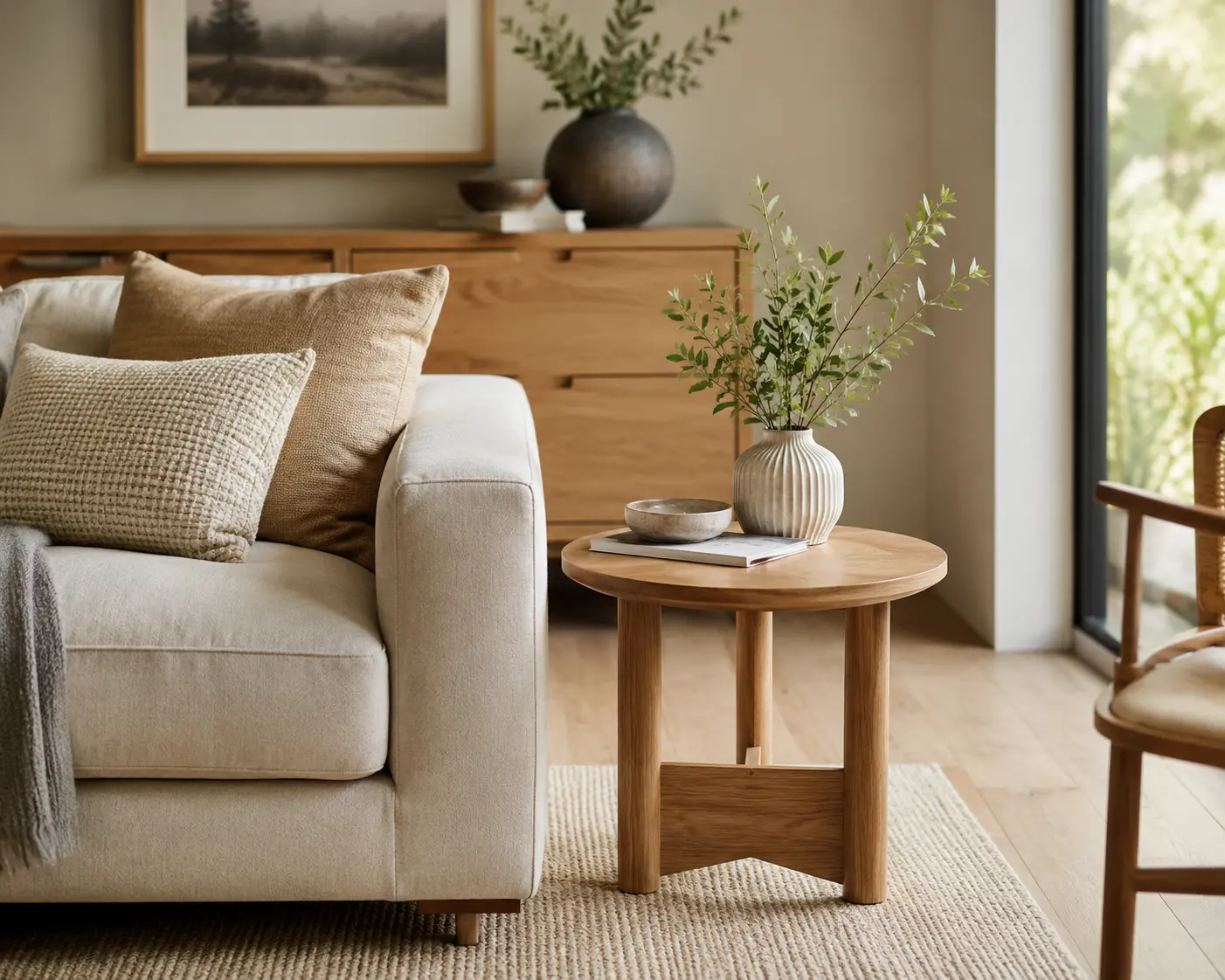
No corners means nothing to catch a hip or a shin, which is why round tables tend to be the safer pick in walkways or open-plan rooms where people are constantly moving past. They also soften a room that's otherwise full of straight edges.
Square and Rectangular — Best for Corners and Larger Surface Needs
Tucked into a corner or against a wall, a square or rectangular table makes better use of the space and gives you more surface for a lamp, books, or a drink. These work fine when foot traffic isn't really a concern.
Organic and Kidney Shapes — Modern, Softer Lines
Organic or kidney-shaped tables have caught on as a way to bring something softer and more sculptural into a room, especially in contemporary or Scandinavian-leaning interiors. They pair naturally with curved sofas and rounded lighting.
Sizing for Width, Depth & Clearance
How Much Surface Space Do You Actually Need?
Think about what will actually sit on the table. About 18–20 inches (46–51 cm) of usable surface fits a lamp and a drink or phone comfortably. Want room for a book or a small tray too? Go toward the wider end.
Leaving Room to Walk Comfortably
Leave enough clearance around the table for movement. As a general guide:
- Keep 1–2 inches (2.5–5 cm) of space between the table and the sofa arm
- Leave 4–12 inches (10–30 cm) between the table and the seat cushion edge
- Maintain at least 18–24 inches (46–61 cm) of walking clearance in any path people regularly use
Matching Style and Material to Your Room
Wood Tones and Finishes
Your side table doesn't need to match every other wood piece in the room exactly, but it should relate to them in tone: warm woods with warm woods, cooler tones together. A little contrast adds interest. Too much just reads as mismatched.
Metal, Glass, and Mixed Materials
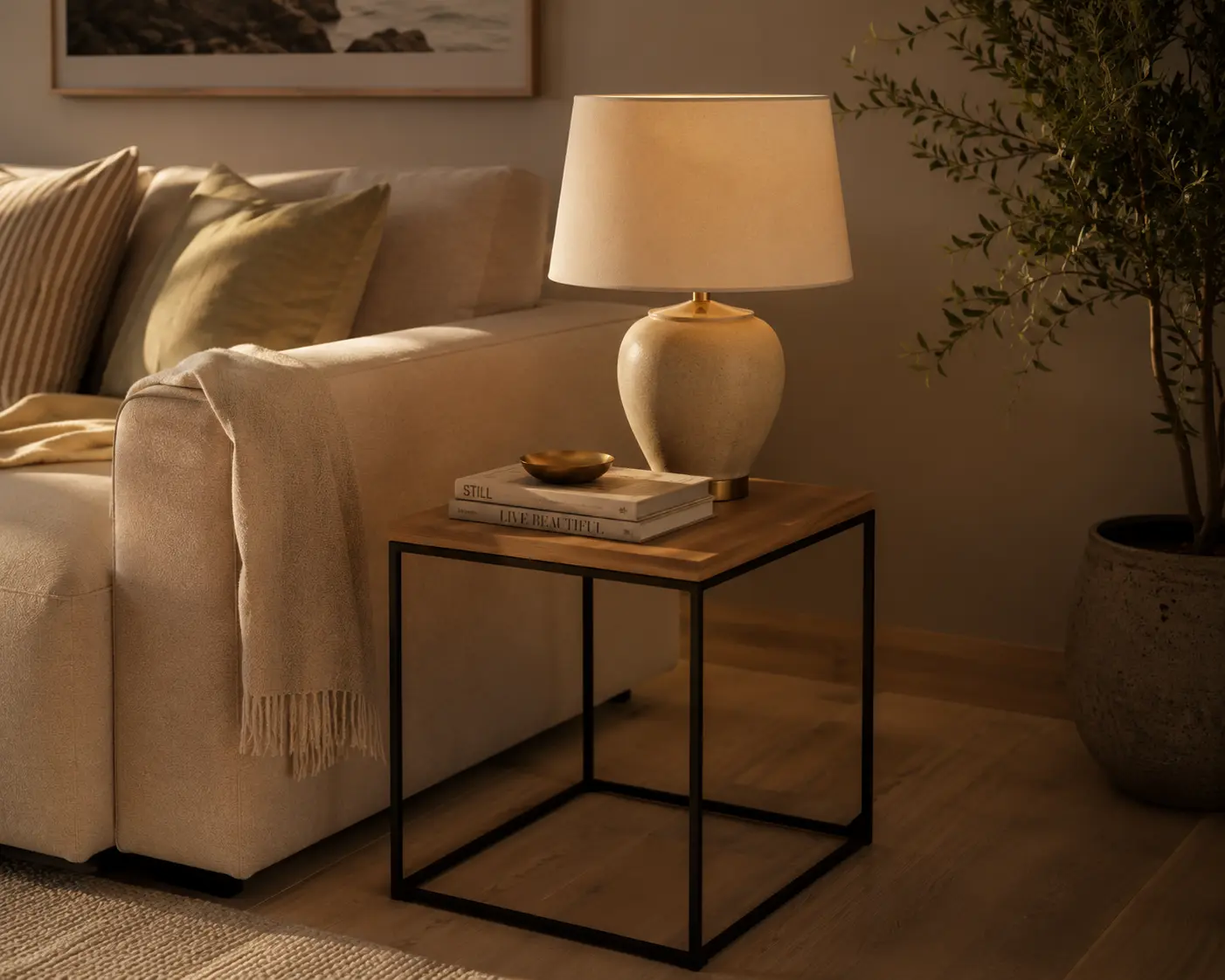
Metal and glass tables feel lighter in a room, which helps in smaller spaces where a solid wood piece can feel heavy. Mixed-material tables, say a metal frame with a wood or stone top, are a decent way to bridge a room's warmer and cooler elements.
Matching vs. Contrasting Your Coffee Table
Your side table and coffee table don't need to match, but they should feel like part of the same room. One habit worth borrowing: keep the side table 2–4 inches (5–10 cm) taller than the coffee table. It gives the seating area a natural sense of hierarchy instead of everything sitting flat. For more on getting that pairing right, see our guide to choosing the best coffee table shape for every sofa.
Nesting Tables and Multi-Table Layouts
Nesting tables, a taller table with a shorter one tucked underneath, are worth considering if you want flexibility. The 2-inch guideline still applies to the primary, visible table. The smaller nested piece can be sized more loosely, since it usually only comes out when you need extra surface, for guests or during entertaining. If you're furnishing a compact living room, this pairs naturally with our guide on choosing the best sofa size for small living rooms.
Common Side Table Mistakes to Avoid
A few missteps come up again and again when people shop for side tables.
- Choosing a table taller than the sofa arm. Even an inch or two can make the piece feel like a wall.
- Ignoring surface space. A stylish table that can't hold a lamp and a drink at once gets old fast.
- Skipping the walkway check. A table that looks fine in a showroom can turn into an obstacle once it's in your actual floor plan.
- Matching materials too literally. Matching every wood tone in the room exactly can flatten the space instead of pulling it together.
- Shopping without measurements. This is the most common mistake, and the easiest one to avoid.
Quick Reference: Side Table Sizing Cheat Sheet
Use this table as a fast reference while you shop.
| Use Case | Recommended Height | Recommended Width/Depth | Notes |
|---|---|---|---|
| Next to a standard sofa | Within 2 in (5 cm) of arm height, typically 22–25 in (56–64 cm) | 16–24 in (41–61 cm) | Match or sit slightly below the arm |
| Next to an armless sofa/chair | 1–2 in (2.5–5 cm) above seat cushion | 16–24 in (41–61 cm) | Use seat height as your anchor, not an arm |
| Accent or reading chair | Level with or just above seat height | 14–20 in (36–51 cm) | Prioritize easy reach over surface size |
| As a nightstand | Roughly 24–28 in (61–71 cm), near mattress top | 18–24 in (46–61 cm) | Depends on your specific bed frame and mattress |
| Nesting set (primary table) | Follow standard sofa/chair guideline | Varies | Secondary table height is flexible |
Frequently Asked Questions
How tall should a side table be next to a sofa?
Aim for a height within about 2 inches (5 cm) of your sofa's arm, ideally matching it or sitting just slightly lower.
What's the standard side table height in cm and inches?
Most side tables fall between 22–25 inches (56–64 cm), which suits the arm height of most standard sofas. It's a general guideline, not a fixed rule.
Should a side table be the same height as a coffee table?
Not necessarily. Many designers keep the side table 2–4 inches (5–10 cm) taller than the coffee table to create a natural visual hierarchy.
Round or square side table — which is better for a small living room?
Round tables are usually easier to move around in tight spaces since there are no corners to bump. Square tables give you more surface area if you're tucking one against a wall.
How much space should be between a sofa arm and a side table?
Roughly 1–2 inches (2.5–5 cm) is comfortable: close enough to reach easily, not so close that it crowds the cushions.
Can I use a side table as a nightstand?
Yes, plenty of side tables work fine as nightstands. Just check that the height lands near your mattress top, generally around 24–28 inches (61–71 cm) depending on your bed frame.
What size side table do I need for a lamp and drinks?
Look for at least 18–20 inches (46–51 cm) of usable surface space to fit both comfortably.
Do side tables need to match the coffee table?
No. They should feel related in tone or material, but an exact match isn't necessary, and can sometimes flatten the room.
Choosing a side table really just comes down to a few honest measurements and paying attention to how you actually use the space. Get your numbers first, and the rest of the decision gets a lot easier.
Post a Comment for "How to Choose the Right Side Table: Size, Shape & Style Guide"