
Best Coffee Table Shape for Every Sofa Style
You've spent weeks picking the perfect sofa, and now you're standing in front of a wall of coffee tables having no idea where to start. Round, oval, square, rectangular, freeform. The options multiply the moment you start looking, and most of them will technically "fit" in your living room. But fitting and belonging are two different things, and the shape of your coffee table has more influence over how a room feels than almost any other single piece of furniture.
The good news is that once you understand a few simple pairing principles, the decision gets a lot easier. This guide walks through which shape tends to work with which sofa style, plus the sizing and spacing details that make the difference between a table that feels intentional and one that feels like an afterthought.
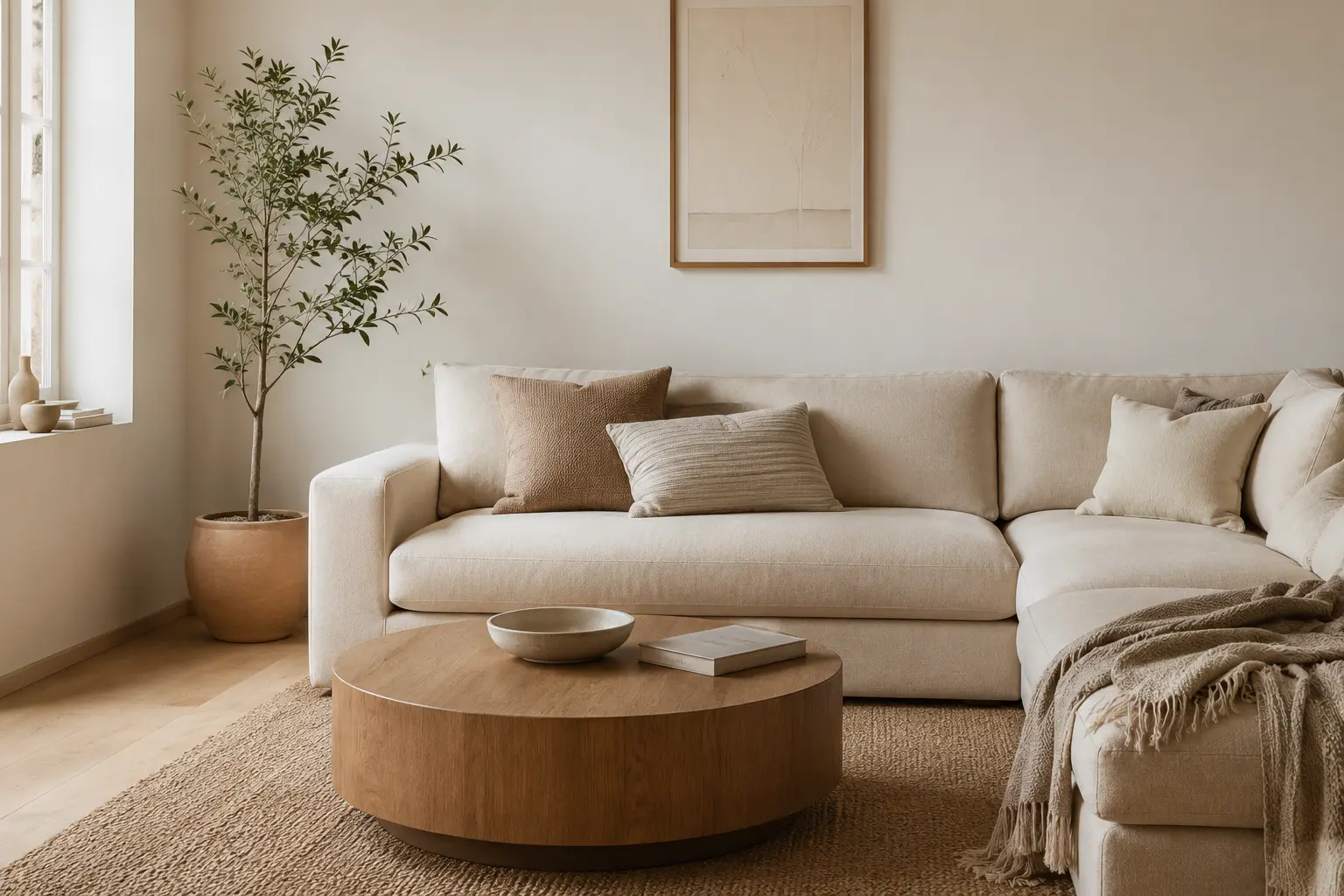
Why Coffee Table Shape Matters (Not Just Style)
A coffee table does more than hold your coffee mug. It anchors your whole seating arrangement, and it's usually the first thing your eye lands on when you walk into the room. It's also the piece that either ties your furniture together or makes the layout feel disjointed.
Proportion, Flow, and Balance Explained
Three things determine whether a coffee table shape works, regardless of how much you love it in a showroom:
- Traffic flow: can people walk around it without squeezing past sharp corners?
- Balance: does its shape echo or soften the lines of your sofa?
- Functionality: does it support how you actually use your living room day to day?
Get these three right, and almost any style of table will feel at home in the space.
The Golden Rules: Size, Height & Clearance
Before you even think about shape, a few widely used sizing guidelines apply no matter what kind of sofa you have. These aren't strict measurement standards, but they're the "measurements first, aesthetics second" principles that come up again and again in real living room layouts.
The Proportion Guideline
A common rule of thumb is that your coffee table should be roughly two-thirds the length of your sofa. So a sofa that's 210 cm (approx. 6'11") long tends to pair well with a table around 140 cm (approx. 4'7") long. This keeps the table substantial enough to be useful without overwhelming the seating area. In practice, we've found it's worth adjusting slightly based on how much walking space your room actually allows.
Ideal Height vs. Sofa Seat
Most designers suggest keeping your coffee table close to the height of your sofa seat cushions, level with them or about 2.5 to 7.5 cm (roughly 1 to 3 inches) lower. A table that's dramatically lower or higher can feel out of sync, even if you can't immediately put your finger on why.
How Much Clearance Space You Need
A frequently cited spacing guideline is to leave about 35 to 45 cm (roughly 14 to 18 inches) between the edge of your sofa and the edge of the coffee table. This tends to give enough room to sit down, stretch your legs, or walk past comfortably, without the table disappearing into "just for show" territory.
Best Coffee Table Shape by Sofa Type
This is the part most people are really here for. Below is a breakdown of which shapes tend to work best with common sofa and sectional layouts, and why.
Standard Three-Seater Sofa → Rectangular or Oval
A classic straight sofa has clean, linear proportions, and a rectangular table follows that same logic naturally. If you'd like to soften the look a little, an oval table keeps the length but loses the sharp corners, which can feel gentler in smaller rooms.
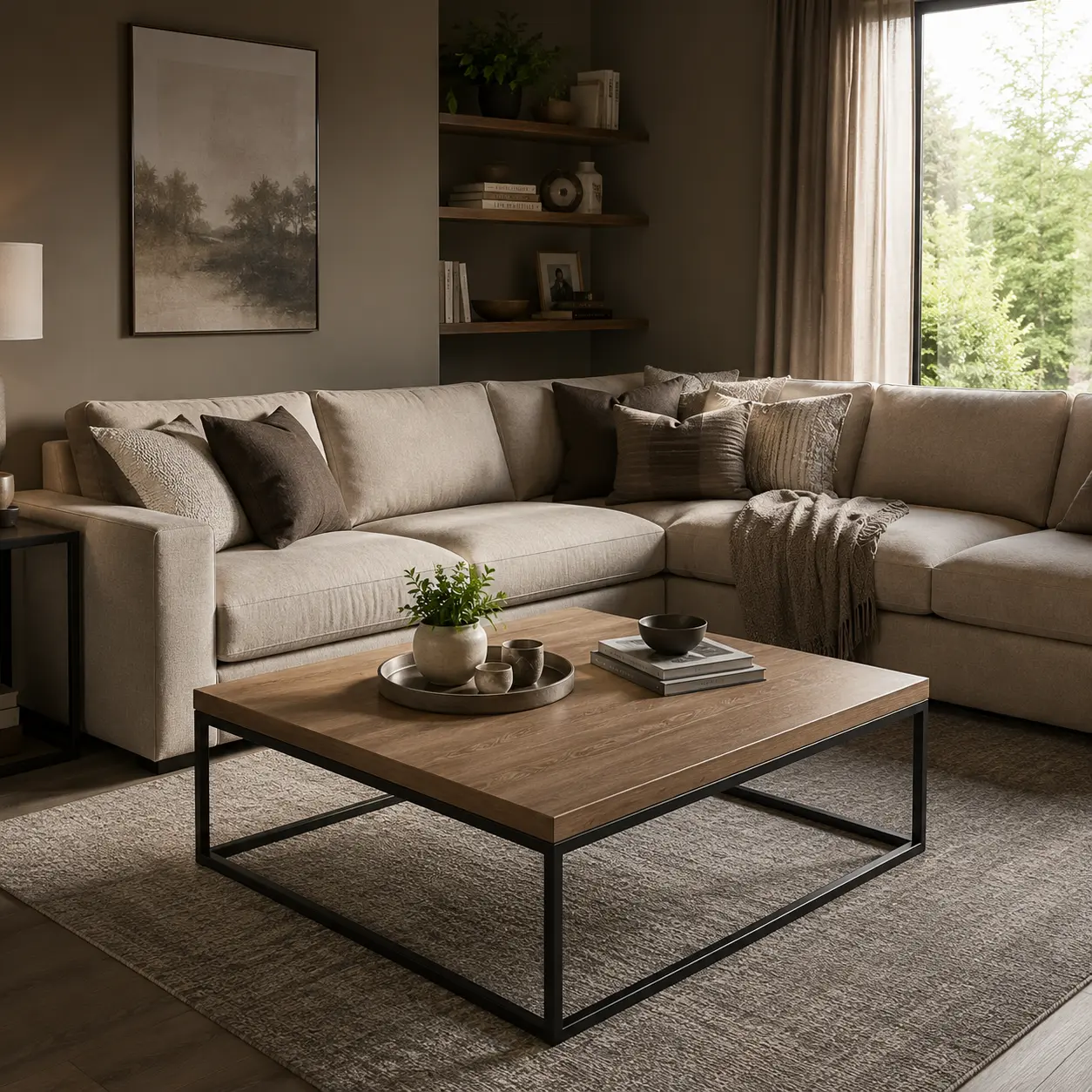
L-Shaped Sectional → Square or Rectangular
An L-shaped sectional creates a natural corner, and a square or rectangular table tends to sit well within that footprint. Rectangular works especially well when the sectional is long, since it echoes that same horizontal line and stays easy to reach from every seat.
U-Shaped Sectional → Round or Large Square
U-shaped sectionals wrap around three sides of the room, creating a central zone that needs a strong, centered anchor. A round table draws the eye to the middle and gives equal access from every seat, while a large square table offers a bolder alternative. Just make sure there's enough walking room on all sides.
Loveseat or Settee → Small Round or Square
Smaller seating calls for a smaller table, and a compact round or square shape keeps the proportions in check. Round tables in particular help a petite arrangement feel airy rather than boxed in.
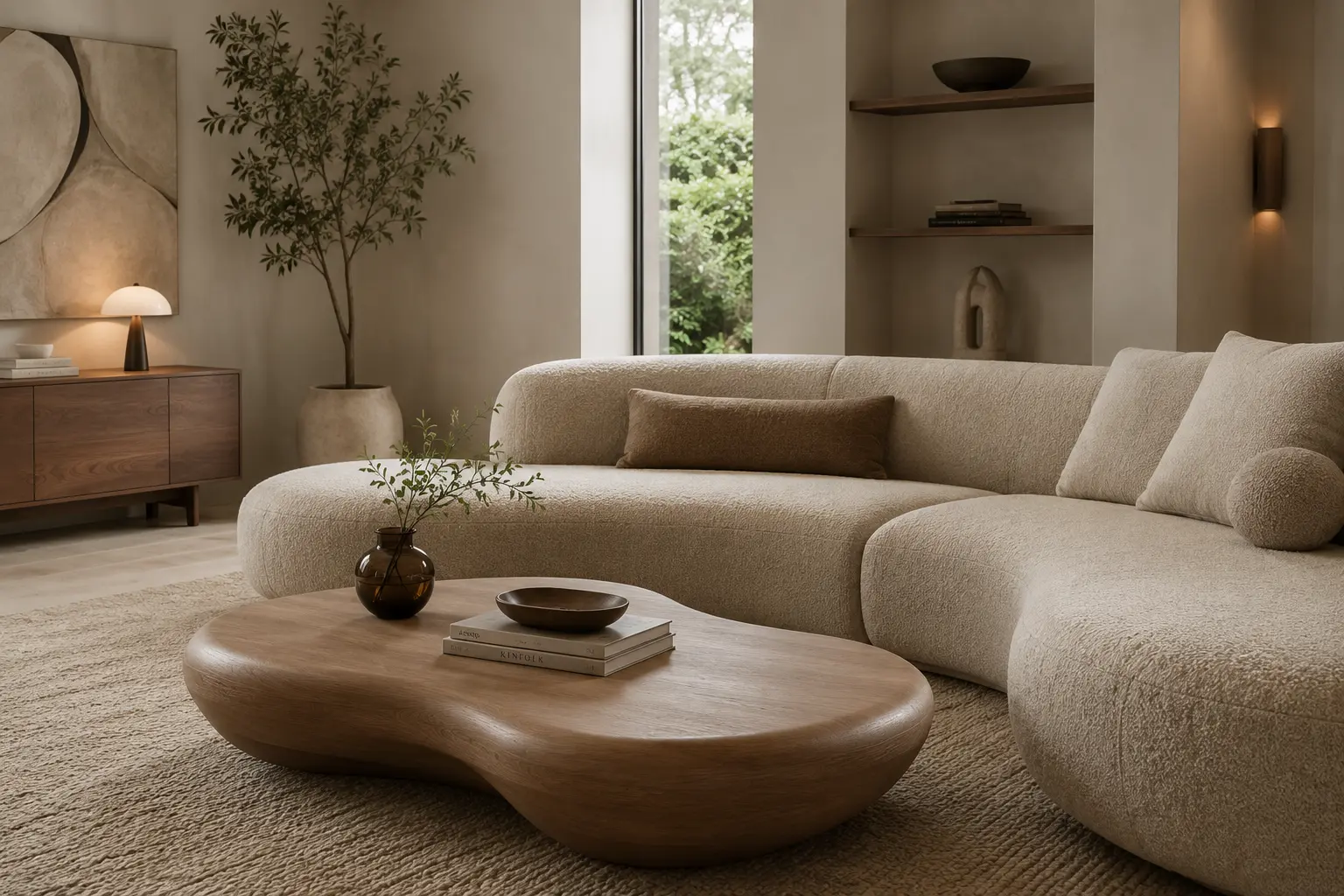
Modular or Curved Sofa → Round, Oval, or Freeform
Modular and curved sofas already lean organic, so a table with soft or irregular edges tends to feel more cohesive than a strictly geometric one. Freeform tables (asymmetrical or sculptural shapes) work particularly well here if you want something with a bit more personality.
Sofa + Accent Chairs Setup → Round or Square
When you're working with a sofa paired with one or two accent chairs rather than a single long piece, a round or square table gives every seat equal, easy access. This layout is less about echoing a single line and more about creating a shared central point.
Matching Shape to Design Style
Shape and sofa layout are the practical side of the equation, but style matters too. Here's how shape tends to align with a few common interior aesthetics:
- Scandinavian & minimalist: round or oval tables in light wood or pale finishes keep the look airy and uncluttered.
- Mid-century modern: organic curves, tapered legs, and round or kidney-shaped tops feel true to the era.
- Traditional & transitional: rounded or rectangular tables with classic detailing suit almost any sofa pairing.
- Industrial & contemporary: rectangular tables with clean, sharp lines and metal or glass elements feel most at home.
Special Considerations
A few practical scenarios are worth planning around separately, since they can override the "usual" shape recommendation.
Best Shapes for Small Living Rooms
In a compact space, round and oval tables tend to feel less imposing than their angular counterparts, since there are no corners jutting into your walking path. Nesting tables are another smart option: you get flexible surface area without committing to one large piece.
Best Shapes for Kids & Pets
If you're navigating a busy household, round or oval tables are generally considered the safer choice simply because there are no hard corners at exactly the height of a running toddler. An upholstered ottoman is worth considering too, since it doubles as extra soft seating.
Storage-Friendly Shapes
Square and rectangular tables generally offer the most straightforward options for built-in storage, whether that's a shelf, drawers, or a lift-top surface. If keeping remotes, coasters, and clutter out of sight matters to you, these shapes tend to have the most practical designs available.
Quick Reference Table
Here's a fast-glance summary of the shape pairings covered above.
| Sofa / Sectional Type | Best Shape(s) | Why It Works |
|---|---|---|
| Standard 3-seater sofa | Rectangular, Oval | Echoes the sofa's straight lines; oval softens corners |
| L-shaped sectional | Square, Rectangular | Fills the corner; rectangular suits longer sofas |
| U-shaped sectional | Round, Large Square | Anchors the central zone; equal access from all sides |
| Loveseat / settee | Small Round, Small Square | Keeps proportions light and airy |
| Modular / curved sofa | Round, Oval, Freeform | Matches the organic, flowing lines of the layout |
| Sofa + accent chairs | Round, Square | Gives every seat equal reach to the table |
Frequently Asked Questions
What is the best coffee table shape for a sectional sofa?
It depends on the sectional's layout. L-shaped sectionals generally pair well with square or rectangular tables, while U-shaped sectionals do better with a round or large square table that anchors the central seating area.
What size coffee table should I get for my sofa?
A helpful starting point is about two-thirds the length of your sofa. For a 200 cm (approx. 6'6") sofa, that means looking for a table somewhere around 130 to 140 cm (roughly 4'3" to 4'7") long, though we'd always recommend measuring your actual walking space before committing.
How far should a coffee table be from the sofa?
Aim for roughly 35 to 45 cm (about 14 to 18 inches) of clearance. This is a commonly used guideline that leaves enough room to sit comfortably and walk around without feeling cramped.
What coffee table shape is safest for kids and pets?
Round or oval shapes are generally considered safer, since they remove the sharp corners that can be a hazard for little ones or excitable pets.
Should a coffee table be higher or lower than the sofa seat?
A common approach is to keep it level with your sofa's seat cushions, or slightly lower, about 2.5 to 7.5 cm (1 to 3 inches) below. This tends to keep the proportions feeling natural, though personal preference plays a role too.
What's the best coffee table shape for a small living room?
Round and oval tables tend to work best in tighter spaces, since their curved edges make it easier to move around them. Nesting tables are another good option for flexible, space-saving use.
Round vs. rectangular coffee table: which is better?
Neither is universally "better." It comes down to your sofa's shape and your room's proportions. Round tables suit smaller or curved layouts, while rectangular tables suit longer, straight sofas where surface area matters more.
Can I use two small coffee tables instead of one large one?
Yes, and it's a popular solution for flexible layouts or smaller rooms. A pair of matching or nesting tables gives similar total surface area while staying easier to rearrange.
There's no single "correct" coffee table shape, just the one that makes sense for your sofa, your room, and how you actually live in the space. Start with the proportions, let the shape follow the lines of your seating, and the rest tends to fall into place on its own.
Post a Comment for "Best Coffee Table Shape for Every Sofa Style (Complete Guide)"