
How Much Space Should Be Between Your Sofa and Coffee Table? The Ultimate Guide
We have all been there: you either bump your shins every time you sit down, or you perform an awkward stretch just to reach your drink. Get the distance between your sofa and coffee table right, and the room just feels easier to sit in. Get it wrong, and you notice it every single day, even if you can't quite say why. A tape measure and a few minutes of adjusting can fix most of it.
The Golden Rule of Coffee Table Spacing
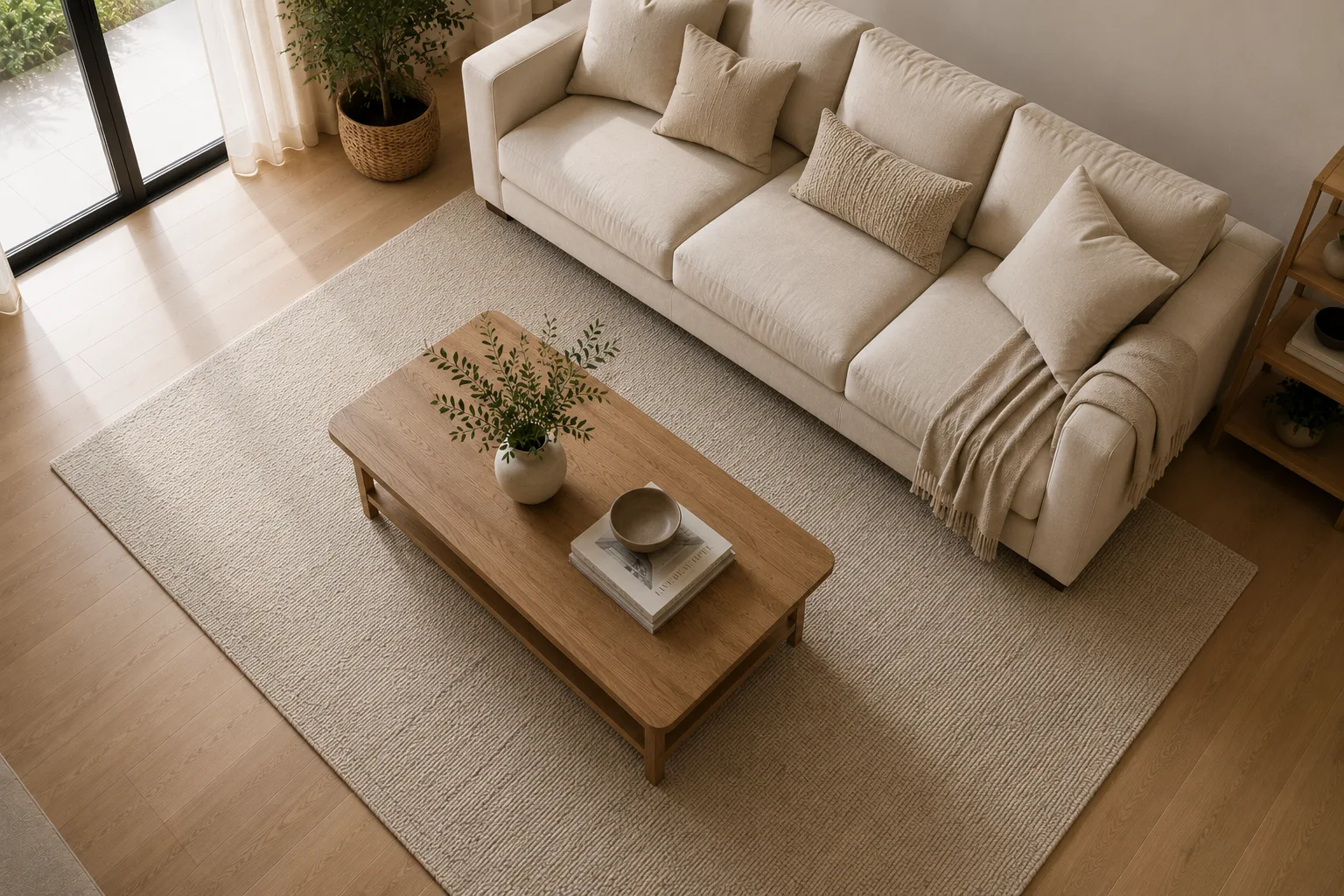
If you want the quick answer to fix your room right now, here it is: leave exactly 40 to 45 cm (approx. 16 to 18 inches) of space between the edge of your sofa and the edge of your coffee table.
The number comes from basic ergonomics, not a passing design fad. It sits at the point where an average person can still reach forward from a seated position while leaving enough room for someone else to walk past.
At this distance, you can set down a book or a cup of tea without straining your back, and there's still enough room to walk between the sofa and the table without turning sideways or catching your knee on the corner.
Diagnosing Your Current Layout
Often you can sense something is "off" in a room before you can put your finger on why. If your living space feels visually cramped or physically uncomfortable, spacing is a likely culprit.
Here are the three most common ways this goes wrong:
- The Shin-Bumper: If you have less than 35 cm (approx. 14 inches) of clearance, the space will feel cramped. You will likely find yourself constantly kicking the table legs or feeling trapped once you sit down.
- The Awkward Lean: If the gap is wider than 50 cm (approx. 20 inches), the table becomes practically useless. When you have to slide to the edge of your seat to reach your laptop, the table is too far away.
- The Bottleneck: If navigating to your favorite seat requires a complex side-step maneuver, your primary traffic flow is blocked.
If any of these sound familiar, grab a tape measure. Moving the table just 5 centimeters (2 inches) is often enough to fix it.
Planning a New Purchase: Sizing for Your Space
If you are currently shopping for a new coffee table, a larger sofa, or a perfectly sized area rug, getting your measurements right before you buy is crucial. A table that looks stunning in a massive showroom can easily overwhelm a standard living room once it is delivered.
When you're planning a purchase, the goal is to make sure the new piece actually fits your room, not just your sofa. The gap from the sofa is only part of it; the length of the table relative to the sofa matters just as much.
A common rule of thumb: your coffee table should run roughly two-thirds the length of your sofa. Go much shorter and it looks lost. Go longer and it starts to dominate the room. Once the furniture itself is sized right, small details like hanging your curtains the right way can round out the proportions of the space.

Furniture Sizing and Spacing Cheat Sheet
| Sofa Size | Ideal Coffee Table Length | Recommended Spacing Gap |
|---|---|---|
| Small / Loveseat (150 cm / approx. 60") | 90-100 cm (approx. 35-40") | 40-45 cm (approx. 16-18") |
| Standard (210 cm / approx. 84") | 120-140 cm (approx. 48-55") | 40-45 cm (approx. 16-18") |
| Large / Sectional (270+ cm / approx. 106+") | 150-180 cm (approx. 60-70") | 45-50 cm (approx. 18-20") |
Mastering Visual Balance and Scale
Getting the numbers right is only half the job. Once the measurements work, the room's overall balance comes down to proportion, scale, and how much open space is left around the furniture.
Visual weight matters here more than people expect. A heavy, solid coffee table needs more open space around it than a delicate glass-topped table with thin metal legs. If you're pairing a bulky sofa with a solid wood table, lean toward the wider end of the gap, around 45 cm (18 inches), so the room doesn't feel heavy.

Table shape also dictates flow and spatial perception:
- Rectangular and square tables provide maximum surface area but define a very strict traffic lane.
- Round and oval tables are excellent for tight spaces because the lack of sharp corners creates a smoother, more forgiving walkway, even if the gap is slightly smaller.
- Nesting tables give you more flexibility than any other option: pull them apart for extra surface when you're hosting, then tuck them back together to free up floor space day to day.
Frequently Asked Questions
Does the spacing rule change if I have a reclining sofa?
Yes, absolutely. If your sofa features a manual or power recliner, you must measure the gap when the footrest is fully extended. You need at least 15 to 20 cm (approx. 6 to 8 inches) of clearance between the extended footrest and the coffee table so you can stand up without collapsing the seat first.
Editor's Fact-Check Note: Always verify your specific recliner's extension length before placing furniture. "Wall-hugger" models have different spatial requirements than standard reclining mechanisms.
What if my living room is too small for a 40 cm (16-inch) gap?
If a traditional coffee table chokes the room, skip it entirely. Instead, use a combination of slim side tables or "C-tables" that slide directly over the arm of your sofa. This gives you the functional surface area you need without taking up precious central floor space.
How does an area rug factor into this spacing?
Your rug anchors the whole seating arrangement. Ideally, all four legs of your coffee table sit on the rug. The rug should also reach under the front legs of your sofa, so it spans the 40 to 45 cm (16 to 18-inch) gap in one continuous piece.
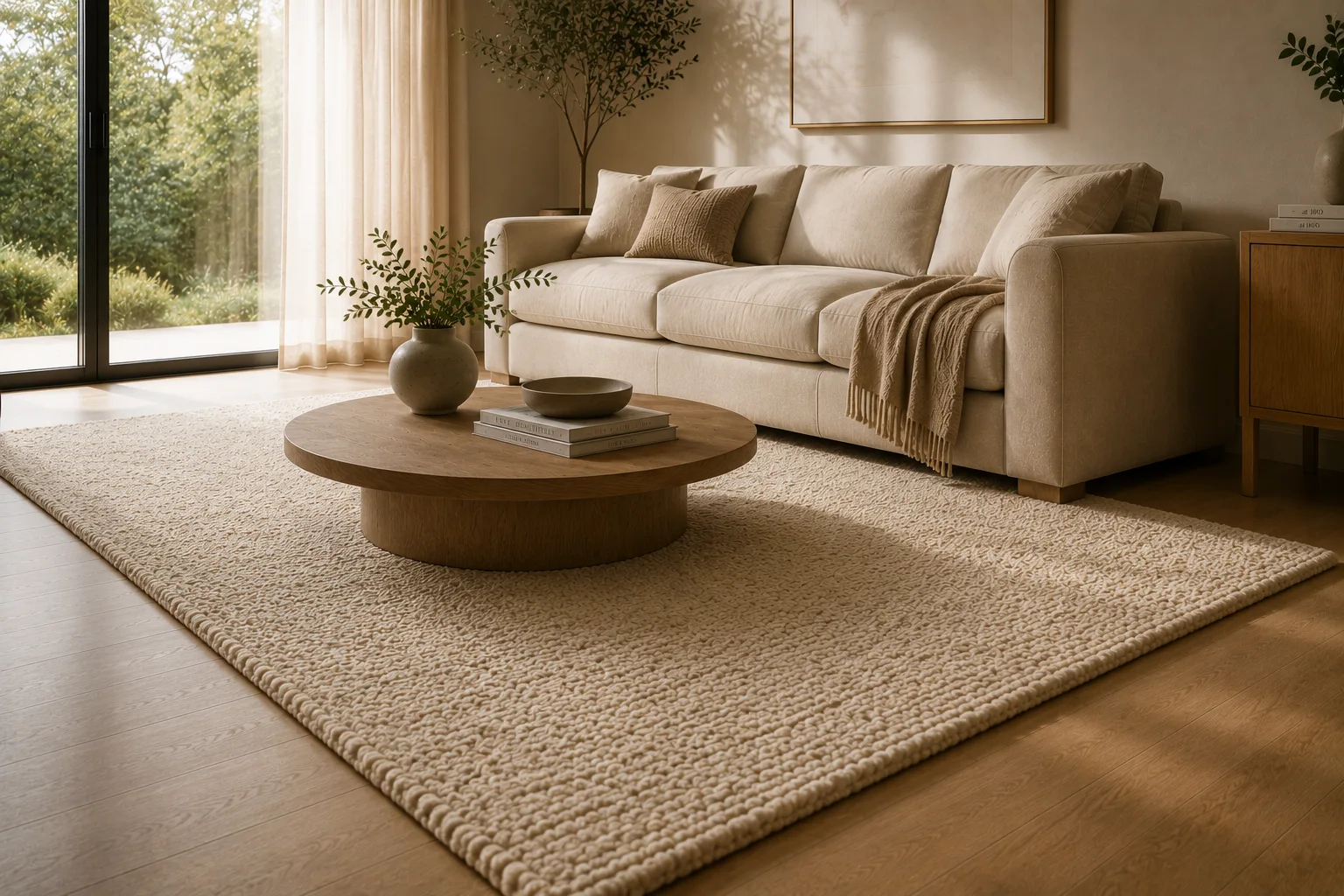
You don't need a design degree to get this right, just a tape measure and ten minutes. Keep that 40 to 45 cm (16 to 18-inch) gap between your sofa and coffee table, and the room works the way it should: easy to sit in, easy to move through. Go check yours now. There's a decent chance you just need to nudge the table a few centimeters.
Post a Comment for "How Much Space Should Be Between Your Sofa and Coffee Table? The Ultimate Guide"